

 En
 Español
Call Us
+86 0572-5911661
 Home / News / Industry news / Nylon vs Heavy-Duty Casters for Different Floor Types | Selection Guide

2026-10-26
When an office chair order ships from a Zhejiang factory to a buyer whose facility mixes oak parquet, carpet tile, and sealed concrete, the casters decide whether that order ends in repeat business or a damage claim. The procurement question that surfaces most often is how to compare nylon casters and heavy-duty casters for different floor types without relying on guesswork.
A standard ergonomic chair with a gas lift distributes roughly 60 to 80 kg across five caster wheels at rest. The moment a user leans back or pushes off, dynamic load shifts onto two or three wheels and can spike by 50 to 100 percent. Static weight alone is therefore the wrong baseline for comparing casters, and it explains why so many office chairs fail their first floor test.
Content
The material that touches the floor, not the stem diameter or the wheel width, is the single variable that separates nylon casters from heavy-duty casters on different floor types.
Nylon chair casters such as the 5013AL PU wheels combine a nylon core with a polyurethane tread that measures 75 to 85 Shore A hardness. That soft tread creates a larger contact patch, spreading point loads and protecting polished surfaces from scuffs and dents. Heavy-duty casters use harder compounds in the 90 Shore A to Shore D range, sometimes with steel or cast-iron wheels, to carry loads above 100 kg per caster and survive abrasive concrete. The difference shows up immediately in rolling sound, floor marking, and the force needed to start moving.
| Parameter | Nylon Caster (PU Tread) | Heavy-Duty Caster |
| Tread hardness | 75-85 Shore A | 90+ Shore A to Shore D |
| Typical dynamic load | 40-80 kg per caster | 100-450 kg per caster |
| Floor protection | Non-marking, scuff-resistant | Can scratch wood and tile |
| Noise on hard floors | Quiet | Audible rolling |
| Rolling resistance | Moderate | Low on concrete |
| Best-matched floors | Hardwood, tile, short carpet | Concrete, epoxy, asphalt |
Shore A is the standard durometer scale for soft elastomers. A 10-point drop on the scale roughly doubles the tread contact area, which is why a softer wheel feels smoother and protects floors better, while a harder wheel rolls with less effort and carries more load.
For load tables and weight calculations, review our heavy-duty chair caster selection guide before setting a rating threshold.
Each floor type has one dominant property, surface hardness and scratch sensitivity, and the correct caster is the one whose tread hardness and wheel diameter match that property rather than the one with the highest load rating.
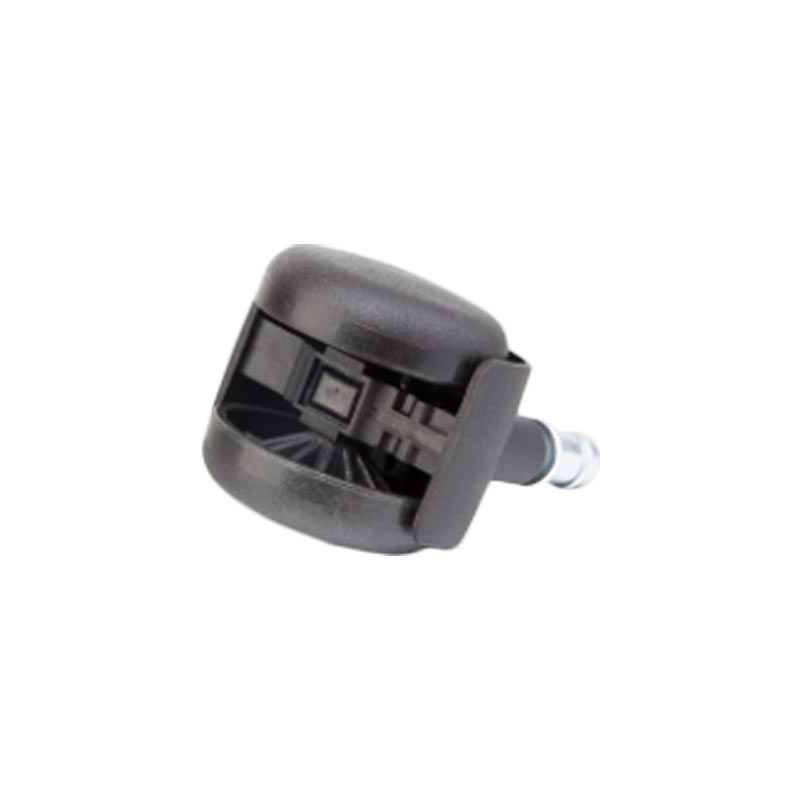 5013AL Chair Caster with Aluminum Core and PU TreadThis caster pairs an aluminum wheel frame with a polyurethane tread and nylon housing, combining stable load distribution with quiet rolling. It suits hard, scratch-sensitive floors where tread softness matters more than maximum load rating.View Product →
Rule of thumb: If you can scratch the floor with a key, choose a nylon caster with a polyurethane tread. If the floor is harder than the wheel, such as concrete or stone, heavy-duty geometry takes over.
A reliable caster comparison takes three steps: calculate the dynamic load per caster, classify the floor's scratch sensitivity, then match tread hardness, wheel diameter, and stem format.
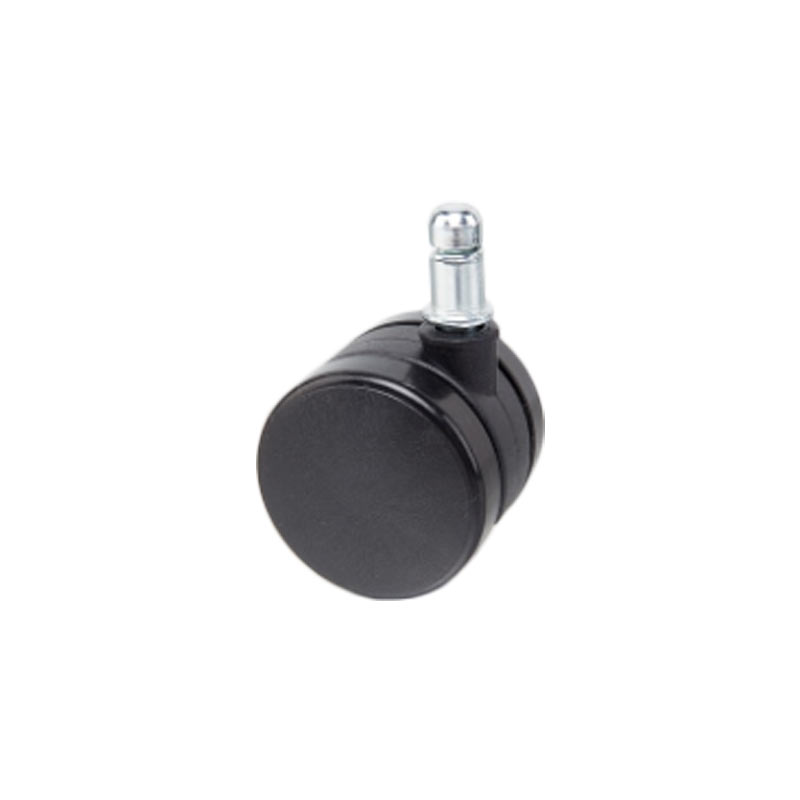 5016PU/E Dual-Wheel Chair Caster with Polyurethane TreadA dual-wheel caster with a standard stem interface and polyurethane tread, designed for balanced movement across tile and short-pile carpet. Its reinforced core and anti-slip treatment support stable rolling in home and office seating.View Product →
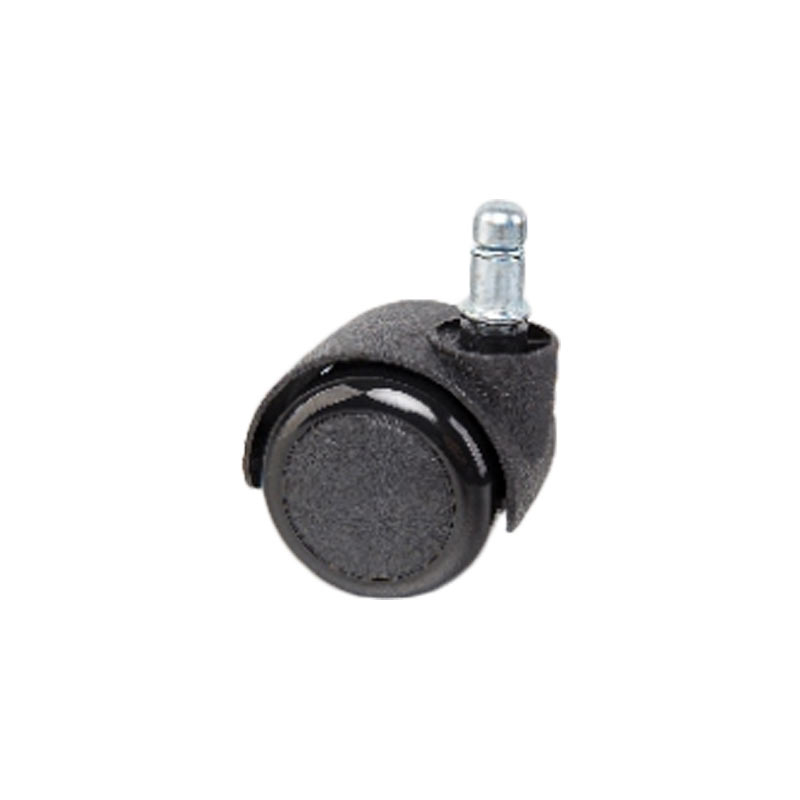 5026PU/Nylon Chair Caster with PU Tread and Nylon CoreThis caster combines a soft polyurethane outer tread with a reinforced nylon inner core, offering reduced noise and floor protection while maintaining structural strength. It provides consistent rolling on hard floors and low-pile carpet for heavier users.View Product →
For general office chairs that alternate between tile and short-pile carpet, the 5016PU E-type caster provides a balanced middle ground, while the 5026PU nylon caster adds strength for heavier users. Buyers who need a customized tread compound, wheel color, or stem format can specify those changes through an ODM or OEM program, which matters when the same chair model ships to different markets with different floor conditions.
Procurement rule: Add a 20 percent load margin above the calculated dynamic value. A caster running at 80 percent of its rating lasts roughly three times longer than one running at 95 percent.
At Zhejiang Lubote Plastic Technology Co., Ltd., we manufacture both nylon chair casters and heavy-duty caster lines and validate them on the floor types described above, so the full range is tested under the same conditions you face.
These are the questions buyers most often ask when comparing the two caster families.
No. Heavy-duty casters use hard tread compounds that scuff and dent wood within weeks. Use a nylon caster with a 75 to 85 Shore A PU tread and a brake.
A larger-diameter nylon caster with a PU tread, 50 mm or more, rolls over carpet with lower resistance than a hard tread, which digs in and wears fast.
Typical dynamic ratings sit between 40 and 80 kg per caster. Heavy-duty casters begin around 100 kg and extend to 450 kg for industrial carts.
Lower Shore A values mean a softer tread, more grip, and stronger floor protection. Higher values mean better load capacity and lower rolling resistance on hard industrial floors.
Final comparison shortcut: Floor scratching means the tread is too hard. Premature wheel wear means the load rating is too low. Match the floor first, then the load.
Recommended Products

Call Us
+86 0572-5911661

Need Support

Head Office
ADD:Baishuiwan Industrial Park, Anji County, Zhejiang Province
Copyright © 2025Zhejiang Lubote Plastic Technology Co. , Ltd.
All Rights Reserved.Custom Chair Replacement Accessories Factory

