

 En
En
 Español
Call Us
+86 0572-5911661
 Home / News / Industry news / How to Choose Heavy Duty Chair Caster Wheels That Support Maximum Weight?
2026-01-20
Selecting the right heavy-duty caster wheels for your chair is not merely a matter of convenience; it is a critical decision impacting safety, floor protection, and long-term value. For environments where chairs are subjected to constant use and significant weight loads—such as in industrial settings, healthcare facilities, or for ergonomic office chairs designed for larger users—standard casters will inevitably fail. This comprehensive guide delves deep into the engineering and practical considerations behind choosing casters that truly support maximum weight, ensuring durability, smooth mobility, and workspace integrity.
Content
To make an informed choice, one must first understand what separates a heavy-duty caster from its standard counterparts. Every component, from the wheel core to the top plate, plays a role in its load capacity and performance. The construction philosophy of a heavy-duty caster prioritizes material integrity and mechanical reinforcement at every stress point. Unlike lighter versions, which may use thinner metals or simpler bearing systems, heavy-duty models are built to withstand not just static weight but also the dynamic forces of movement, impact, and constant use over many years. This foundational understanding is crucial before evaluating specific features or ratings.
The load capacity of a caster is a carefully engineered figure derived from the strength of its individual parts. A failure in any single component can lead to a total collapse. Therefore, a holistic assessment of each element is necessary. The wheel itself is the most visible component, but the fork, bearing, axle, and mounting mechanism work in concert to define the caster's ultimate strength. When manufacturers assign a load rating, they are certifying that this complete assembly can handle that force. It is a common misconception that a thick wheel alone guarantees high capacity; a weak fork or a low-grade axle will compromise the entire system, regardless of the wheel's robustness.
Understanding this interplay is fundamental when evaluating options like heavy duty office chair wheels for thick carpet, where the added friction of the carpet places extra rotational stress on the bearing and axle, demanding a more robust construction than what is needed for hard floors. The constant tug and resistance require components that won't degrade from the persistent torque.
Simply picking a caster with a high weight rating is insufficient. The real-world application requires a nuanced approach that considers dynamic forces, safety margins, and environmental factors. A caster's published load capacity is typically a static load rating, meaning the weight it can hold when stationary. However, when a chair is moved, turned, or even sat down in forcefully, dynamic loads can be two to three times higher than the static weight. Therefore, a strategic selection process that builds in a buffer is essential for safety and longevity, preventing catastrophic failure and ensuring smooth operation throughout the product's life.
The static weight of the chair and user is just the starting point. Dynamic forces from movement, braking, and impacts can multiply the effective load. A common industry guideline is to use a safety factor. This is a multiplier applied to your calculated weight to account for these unpredictable forces and to provide a margin of safety. Ignoring this factor is the most frequent error leading to premature caster failure. The process requires careful consideration of the chair's use case—is it for gentle, occasional movement in an office, or for frequent, rapid transit in a busy workshop? The answer directly influences the necessary safety factor.
This calculation is paramount for specialized applications such as extra wide chair casters for stability on uneven floors. On uneven surfaces, the load is not evenly distributed; one or two casters may temporarily bear most of the weight, necessitating an even higher per-caster capacity and a wider wheel for balance. The safety factor here is not just about force, but also about stability to prevent tipping when a wheel drops into a crack or dips on an irregular surface.
The wheel material is a compromise between floor protection, noise, rolling ease, and durability. The choice becomes especially critical when searching for the best floor protecting caster wheels for hardwood. A poor material choice can lead to costly floor repairs, excessive noise that disrupts a work environment, or wheels that wear out prematurely because they are unsuited to the floor type. Each material has a specific hardness, measured on the Shore Durometer scale, which influences its behavior. Softer materials (lower Shore A) grip better and are quieter but may mark floors and wear faster. Harder materials (higher Shore A or D) are more durable and protect floors but can be noisy and transmit vibrations.
While soft rubber wheels offer excellent grip and vibration dampening, they can mark and wear hardwood over time. Conversely, hard nylon wheels might protect the floor but can be noisy and transmit vibrations. Let's compare the key attributes of common heavy-duty wheel materials in the context of floor protection and load. The following table outlines the trade-offs to guide your decision, focusing on performance under heavy loads.
| Material | Floor Protection | Noise Level | Rolling Resistance | Ideal For | Load Capacity |
|---|---|---|---|---|---|
| Soft Polyurethane | Good (may mark soft wood) | Low | Low | Carpet, linoleum, epoxy floors | High |
| Hard Polyurethane | Excellent | Medium | Very Low | Hardwood, laminate, tile, vinyl | Very High |
| Nylon | Excellent | High | Low | Industrial floors, debris-heavy areas, concrete | Highest |
| Vulcanized Rubber | Fair (can leave marks) | Very Low | Medium | Quiet environments on resilient floors like linoleum | Medium-High |
| Forged Steel | Poor (damaging) | Very High | Very Low | Heavy industrial, rugged terrain, moving extremely heavy loads | Extreme |
For hardwood floors, a hard polyurethane or a specially formulated soft-roll polyurethane wheel is often the best compromise, offering a combination of floor-friendly properties, good load capacity, and smooth maneuverability. The key is to look for wheels explicitly labeled as "non-marking" or "floor friendly," as these are compounded to avoid leaving scuffs or discolorations. It is also wise to test the caster on an inconspicuous area of the floor if possible, as floor finishes and wheel formulations can interact differently.
Not all heavy-duty environments are the same. Specific challenges require casters with specialized features to maintain performance and safety. A caster perfect for a smooth warehouse concrete floor may be a disaster on a plush office carpet, and vice versa. This section addresses common but challenging scenarios and outlines the caster specifications that turn a potential problem into a non-issue. By matching the caster's design to the environmental challenge, you ensure optimal performance, reduce maintenance, and extend the life of both the caster and the chair.
Standard wheels can get bogged down or fail prematurely when faced with carpets, gaps, or debris. This is where specialized designs prove their worth. The goal is to maintain mobility and load capacity without causing damage to the surface or the caster itself. The solution often involves altering the wheel's size, shape, or tread pattern to better interface with the specific terrain. It's an exercise in applied physics, ensuring the wheel can overcome the surface's resistance while maintaining its structural integrity under load.
Heavy duty office chair wheels for thick carpet need to address two main issues: rolling resistance and sinkage. Larger diameter wheels (at least 3 inches) reduce sinkage by distributing weight over a larger area. Wheels with a broader tread width also help. Most importantly, a wheel material with moderate hardness, like polyurethane, provides the necessary "bite" to roll without deforming the carpet excessively, while a high-quality bearing ensures the initial torque to start moving is manageable. This stands in contrast to very soft rubber wheels, which can "grab" the carpet too aggressively, or small, hard wheels, which will dig in and become immobile. The tread design can also play a role; a slightly textured or ribbed tread can help on carpet compared to a completely smooth tread. Furthermore, when a chair must frequently cross the metal transition strip between a carpeted area and a tiled one, a larger, robust wheel handles the impact and gap far better than a small one, preventing damage to the strip and providing a smoother ride for the user.
For workshops, garages, or outdoor use, stability is non-negotiable. Extra wide chair casters for stability on uneven floors are designed with a larger contact patch. This width prevents the caster from tipping into cracks or depressions and provides a more stable base when the chair is stationary. A wider wheel also helps bridge small gaps between floor panels. When comparing a standard 2-inch wide caster to a 3-inch wide version on a gravelly concrete floor, the wider caster will noticeably reduce wobble and the sensation of the chair "catching" on imperfections. In some cases, a dual-wheel caster (two wheels side-by-side on one fork) may be the optimal solution for extreme unevenness, as it effectively creates an even wider, more stable platform. The trade-off for this stability is often slightly higher rolling resistance on perfectly smooth surfaces, but for uneven terrain, the stability benefit far outweighs this minor drawback.
Scratches, scuffs, and dents on expensive flooring are a major concern. The role of the best floor protecting caster wheels for hardwood extends beyond just being non-marking. True protection is a multi-faceted achievement. First, the wheel material must be genuinely non-marking, which is a specific chemical formulation, not just a color. Many black rubber wheels contain carbon black that can transfer onto light floors. Second, the wheel must be free of embedded abrasives. Some wheels are designed to be "lint-free" or to resist picking up dirt and grit that then grinds into the floor. Third, the wheel's hardness must be sufficient to not deform under load and trap hard particles against the floor, acting like sandpaper.
True floor protection involves a combination of material softness, tread design, and cleanliness. A wheel should be non-marking (often indicated by a "non-marking" or "NMR" rating), but also free of embedded grit that can act as sandpaper. Some premium protectors feature a tread design that channels debris away from the contact surface. Crucially, the wheel material must be consistently homogeneous; cheaper wheels can have impurities that harden and scratch over time. When evaluating, consider that a soft, gray polyurethane wheel is often a more reliable floor protector than a black rubber wheel, which can sometimes contain carbon black additives that transfer onto light-colored floors. For ultimate protection on sensitive surfaces like polished hardwood or luxury vinyl plank, consider a caster with a fully encapsulated outer tread, where the wheel core is made of a hard material for strength, but is completely surrounded by a thick layer of soft, non-marking polyurethane.
Selecting the perfect caster is only half the battle. Proper installation and routine care are essential to reaching their full lifespan and ensuring consistent performance. Even the best-engineered caster can fail if installed incorrectly or neglected. This section provides a detailed, practical guide to getting your casters securely mounted and keeping them in optimal working condition. A proactive maintenance routine is simple, quick, and can prevent small issues from becoming major failures, saving money and ensuring safety over the many years of service a heavy-duty caster should provide.
Incorrect installation can void any load rating. For stem casters, the most common type, the process must be done correctly to ensure a tight, secure fit that won't loosen or fail under stress. The primary goal is to achieve a full-seated, wobble-free connection between the caster stem and the chair leg. A loose fit creates play, which leads to uneven wear, strange noises, and eventually, damage to the chair leg socket or stem. Taking your time during installation is a critical investment in the long-term performance of the product.
This attention to detail is especially important for complex systems like dual wheel chair casters weight capacity per wheel, where the load distribution across two wheels on a single fork depends on a perfectly aligned and secure installation to function as designed. An uneven installation on a dual-wheel caster can cause one wheel to bear more weight than the other, leading to premature wear and potential failure of the overloaded wheel.
Heavy-duty casters are built to endure, but they are not maintenance-free. A simple routine can prevent premature failure. The main enemies of casters are dirt, debris, and lack of lubrication. A regular, simple maintenance schedule takes only minutes but can extend the functional life of your casters by years. It involves visual inspection, cleaning, and occasionally, minor lubrication. This is not about overhauling the caster, but about preventing small problems from escalating.
Understanding how to measure chair caster stem size for replacement is a key part of maintenance planning. The two critical dimensions are stem diameter and length. Use a caliper to measure the old stem's diameter precisely (common sizes are 7/16", 11mm, 3/8", etc.). Length is measured from the base of the collar to the tip. Having this information on hand allows for quick and accurate replacement when the time comes, minimizing chair downtime. It also prevents the frustration of ordering incompatible parts. Keep a note of these measurements in a maintenance log or on the chair itself with a label.
Beyond basic specifications, several advanced features can enhance functionality, particularly in demanding or safety-conscious settings. These features address specific needs like preventing unwanted movement, improving hygiene, or facilitating movement in specialized environments. While they may add to the initial cost, their value in terms of safety, convenience, and specialized performance can be immense. Evaluating whether these features are necessary for your application is the final step in tailoring your caster selection to your exact requirements.
For medical chairs, workshop stools, or chairs on inclines, a braking system is essential. Heavy-duty casters offer several options. A simple wheel lock (brake) stops the wheel from rolling but typically allows it to swivel. A swivel lock prevents the fork from rotating, locking the chair in a fixed direction. For maximum stability, a total lock function applies both brakes simultaneously. When selecting a caster with a brake, verify that the braking mechanism is itself rated for the chair's weight and that it engages positively without requiring excessive force to operate. Some advanced designs feature a central braking system that locks two or more casters with a single lever. In environments where cleanliness is paramount, such as laboratories or food preparation areas, consider stainless steel construction or casters with minimal crevices to prevent the accumulation of contaminants.
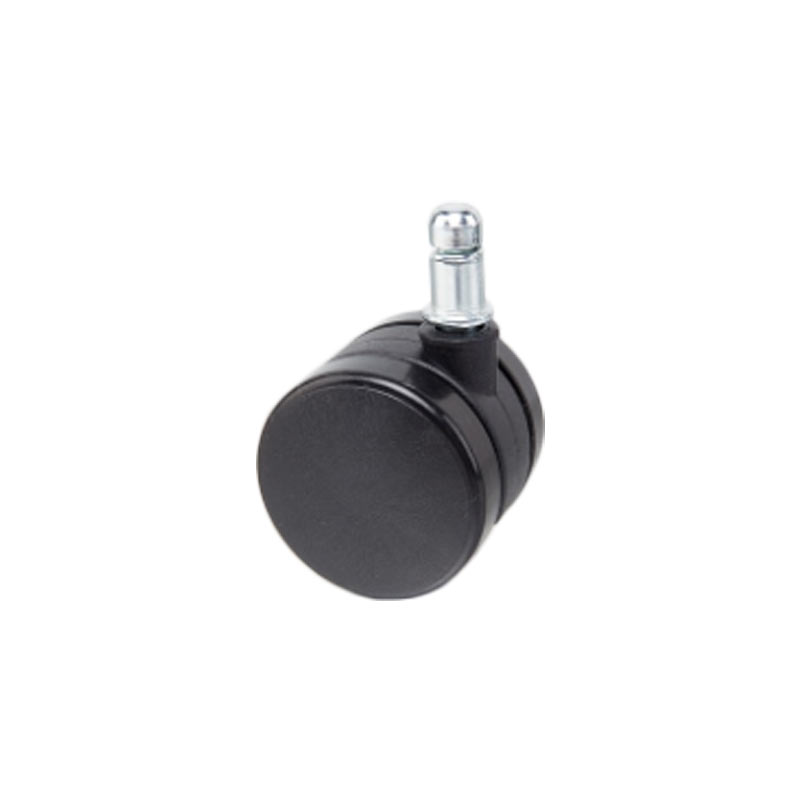
Before purchasing, create a final checklist based on your comprehensive analysis. This checklist synthesizes all the information gathered—from load calculations and floor type to special features and installation requirements. Using it as a final verification step ensures no critical factor has been overlooked. It turns the complex decision-making process into a simple, confirmatory task, giving you confidence that the selected casters will perform as expected in your specific environment.
By methodically working through these considerations—from understanding core components and calculating true load needs to selecting the right material for your floor and ensuring proper installation—you transform the simple act of buying chair casters into a strategic investment. This investment pays dividends through enhanced safety, preserved flooring, and reliable performance that stands up to maximum weight demands day after day. The right heavy-duty caster wheels provide not just mobility, but also peace of mind, knowing that your seating solution is built on a foundation of strength and engineering suited to its task.
Recommended Products

Call Us
+86 0572-5911661

Need Support

Head Office
ADD:Baishuiwan Industrial Park, Anji County, Zhejiang Province
Copyright © 2025Zhejiang Lubote Plastic Technology Co. , Ltd.
All Rights Reserved.Custom Chair Replacement Accessories Factory

