

 En
 Español
Call Us
+86 0572-5911661
 Home / News / Industry news / Why Heavy-Duty Casters Are Critical for Long-Life Office Chairs and Seating

2026-11-09
Heavy-duty casters are not a comfort upgrade. They decide whether a chair reaches year eight or enters the warranty pile in month eighteen, because they are the only part of the chair in constant motion under constant load. Specification meetings usually open with mesh density and foam thickness. The durability conversation should open with the wheel.
Content
A caster qualifies as heavy-duty when it clears four thresholds at once: a dynamic load rating of 60 kg or more per unit, a wheel diameter of 50 mm or larger, a double-ball or precision raceway, and a reinforced yoke. Miss any one of them and the chair is likely to be back in service within two years.
The load rating matters most and is the figure most often misread on a datasheet. Catalog numbers are usually dynamic ratings measured at walking speed on a hard floor, while static ratings run two to three times higher. A caster advertised at 150 kg static can still flatten under a 95 kg user who drops into the seat all day.
| Parameter | Light-duty | Heavy-duty | Practical impact |
| Dynamic load | 20 to 35 kg | 60 to 110 kg | Sets the maximum user weight |
| Wheel diameter | 40 to 50 mm | 50 to 75 mm | Larger wheels clear carpet pile and floor joints |
| Raceway | Single ball in a molded housing | Double ball or precision bearing | Swivel stiffness appears after 300,000 rotations |
| Tread | Rigid nylon at 75 Shore D | PU at 90 to 95 Shore A | Controls noise and floor marking |
| Stem | 8 x 38 mm or 10 x 22 mm | 10 x 22 mm, 10 x 25 mm, 11 x 22 mm grip ring | A wrong stem means base re-tooling |
| Cycle test | Rarely documented | 100,000 cycles under ANSI/BIFMA X5.1 | Gives procurement an auditable number |
Casters accumulate fatigue faster than any other part of an office chair because they move every time the user shifts weight, slides back from a desk, or rolls across a floor joint. A gas lift cycles a few dozen times a day. A caster cycles thousands of times a day.
That redistribution is why caster quality shows up in warranty data rather than in showroom feel. Buyers who upgrade upholstery first and casters last usually pay twice: once for the premium textile, and again for the field service visit a better wheel set would have prevented.
Divide the total load by three, not four, then multiply by 1.5. That result is the minimum dynamic rating to specify per caster.
The three-caster rule exists because a five-star base never shares load evenly. On deep carpet or a sloped floor, one wheel can lift clear of the ground while the opposite pair carries the rest. A 110 kg user plus a 15 kg chair gives 125 kg, or about 42 kg per caster across four contact points and 62 kg per caster once the load shifts to three. A 1.5x factor for sit-down impact pushes the target to roughly 93 kg, which lands in the 60 mm to 75 mm wheel range.
Sit-down impact is the variable most specifications ignore. A 110 kg user settling into a chair produces a momentary spike well above body weight, and that spike travels through the base, the casters, and the floor in under a second. Casters designed only for rolling loads survive the first thousand impacts and deform in the next ten thousand.
Polyurethane tread for hard floors, hard nylon for carpet, and a wheel diameter of 60 mm or more for anyone above 100 kg. Material choice is a floor decision, not a style decision.
PU treads typically sit at 90 to 95 Shore A: soft enough to absorb vibration and protect vinyl, timber, and polished tile from scuffing, hard enough to resist flat spotting. Hard nylon runs at 75 Shore D and above, rolling with less effort on low-pile carpet but transmitting more noise and marking soft flooring. Wheel diameter compounds both effects, and moving from 50 mm to 75 mm noticeably lowers rolling resistance on carpet and lets the caster cross a 12 mm floor joint without stalling.
In installations we review, replacing a 40 mm plain-bearing wheel with a 50 mm PU wheel on a precision bearing typically cuts caster-related service calls by more than half within two years. A part such as the 5013AL PU nylon chair caster follows that pattern, pairing a PU tread with a nylon core for hard-floor offices.
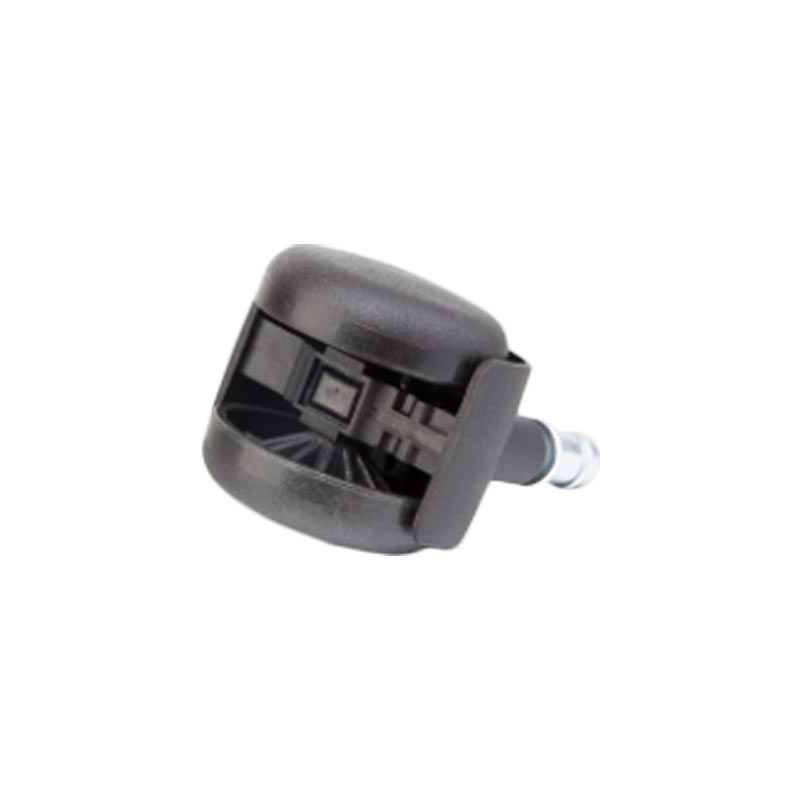 5013AL/ PU/ Nylon Chair Casters (wheels)The 5013 chair casters are made of high-quality aluminum alloy (AL) materials to create a wheel frame, ensuring stable load bearing, light and flexible; the wheel part...View Product →
Every caster purchase order should lock five variables: rated dynamic load, wheel diameter and tread, raceway type, stem standard, and a documented cycle count. Anything left unstated gets optimized toward the lowest cost.
The detail that catches most teams is temperature. PU treads stiffen in cold warehouses and unheated showrooms, and flat spots appear on chairs that sit loaded and motionless for weeks. If part of the fleet spends winter in a 5 degree Celsius showroom, specify a compound tested at that temperature instead of assuming the office specification transfers.
For the full selection logic from the parts side, this guide on how to choose heavy-duty chair caster wheels that support real loads covers the same criteria step by step.
Mid-size PU options such as the 5016PU E-type chair caster suit hard-floor deployments where desk clearance limits wheel diameter.
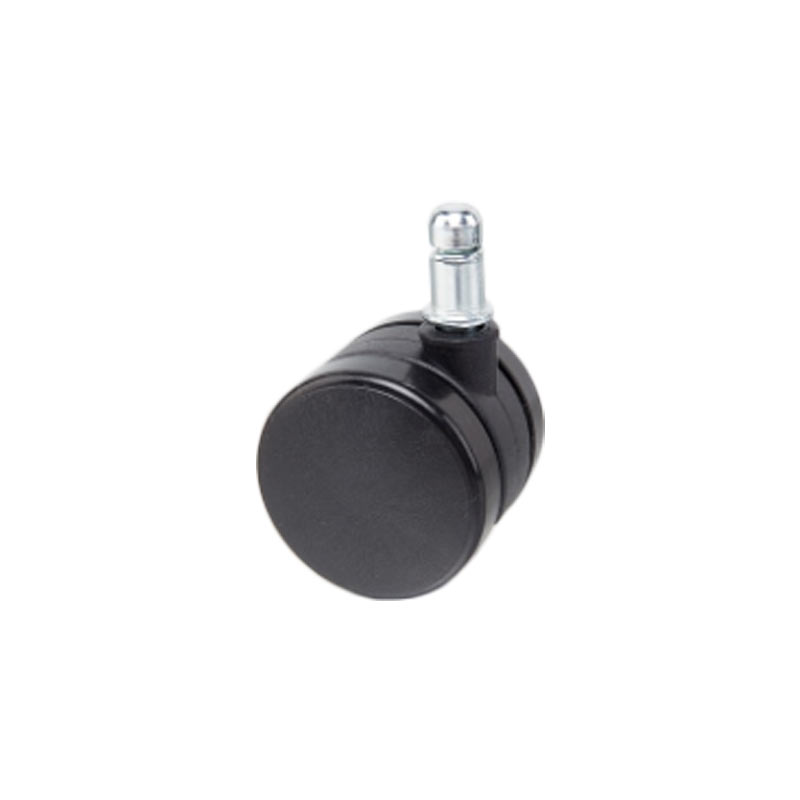 5016PU/E Chair Casters (wheels)5016 Chair casters, selected high-quality PU material, wear-resistant and silent, and does not damage the floor. Its 360-degree rotating design allows furniture to mov...View Product →
A caster set costs roughly 1 to 3 percent of a new chair, and a grip ring stem swaps out by hand in under 15 minutes. That ratio makes caster specification a financial decision.
Chairs that fail for caster reasons rarely need a new base, gas lift, or back frame. They need four wheels and occasionally a base socket insert. Keeping spares at 5 percent of the installed fleet covers units that fail between service visits, and one stem size means the same spare fits every chair in the program.
A PU nylon caster such as the 5026PU covers hard floors and low-pile carpet with a single part number, which simplifies spare management across a mixed fleet.
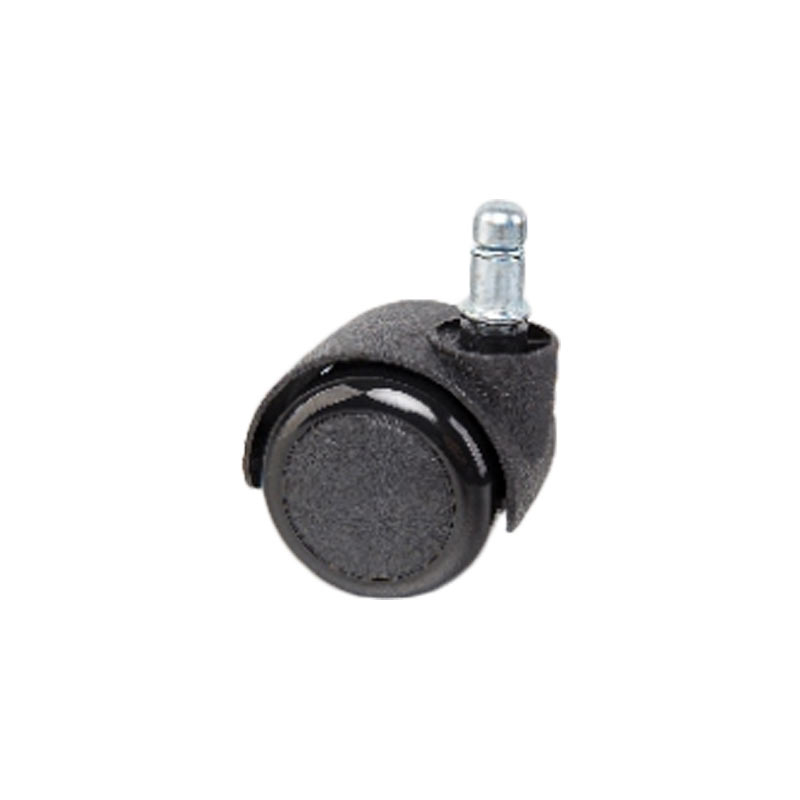 5026PU /Nylon Chair Casters (wheels)5026 Chair casters combine the essence of PU and nylon material to create a new silent and wear-resistant experience. The PU outer wheel surface is soft and comfortabl...View Product →
Replacing complete chairs because of worn wheels costs 30 to 50 times more per unit than a caster swap and does nothing to fix the underlying gap. If the replacements ship with the same light-duty wheel, the failure pattern repeats on the same schedule.
Most bases accept 10 x 22 mm or 11 x 22 mm grip ring stems, the two most common office standards. Check socket depth before ordering: a 25 mm stem bottomed out in a 22 mm socket will not seat, and a 22 mm stem in a 25 mm socket wobbles. Threaded stems and 8 x 38 mm fittings still appear on older and imported bases.
In a standard 40-hour office, a heavy-duty set should reach five years without tread failure. Inspect at 24 months for flat spots, swivel stiffness, and wrapped debris. In 24/7 shift use, plan on replacement at 12 to 18 months regardless of the rating printed on the box.
Hard nylon rolls more easily on low-pile carpet because less tread material deforms under load. On medium and deep pile, diameter matters more than hardness: a 60 mm PU wheel outperforms a 40 mm nylon wheel because it bridges the pile instead of plowing through it.
Yes. Moving from a 50 mm to a 75 mm wheel raises the seat by 12.5 mm, which is enough to change the fit for shorter users. Confirm the gas lift still covers the required seat-height range before changing wheel diameter across a fleet.
Recommended Products

Call Us
+86 0572-5911661

Need Support

Head Office
ADD:Baishuiwan Industrial Park, Anji County, Zhejiang Province
Copyright © 2025Zhejiang Lubote Plastic Technology Co. , Ltd.
All Rights Reserved.Custom Chair Replacement Accessories Factory

