

 En
En
 Español
Call Us
+86 0572-5911661
 Home / News / Industry news / Why BIFMA Certification Matters When Sourcing Office Chair Bases | A Buyer's Guide
2026-09-23
The standard itself is written around a defined user weight. ANSI/BIFMA X5.1, the general-purpose office chair standard, is engineered around a 115 kg (253 lb) user. ANSI/BIFMA X5.11 covers heavy-duty seating up to 181 kg (400 lb). Both documents treat the base as a structural assembly, not as trim.
For buyers who purchase bases rather than complete chairs, the useful question is narrower: what does the certification actually test, and does the report on the supplier's desk describe the base in your drawing?
Content
BIFMA certification means a finished product has been tested to an ANSI/BIFMA performance standard by an independent, accredited laboratory, and that the result is documented in a report tied to that specific model and configuration.
That distinction shapes sourcing decisions. A factory can hold BIFMA membership and still have no tested base in its catalogue. What you want is a test report, issued by a laboratory such as SGS, TUV, Intertek or Bureau Veritas, that names the base model you are buying.
On a base assembly, the test families that matter most are:
The two failure points that show up first in testing are the spoke root where the leg meets the hub, and the caster socket where the stem is retained.
Both are geometry problems before they are material problems. A five-leg base spreads load across more paths than a four-leg base and is the default for task seating for that reason. Base diameter does the rest: a 320 mm base is lighter and ships in a smaller carton, while a 350 mm base widens the support polygon and lowers the load each caster carries during a tip event. Caster stem sizing is the third variable. Grip-ring stems in 11 mm and 10 mm formats dominate the market, and a socket moulded for one will not retain the other correctly.
Material choice changes the failure mode rather than removing it. Glass-filled polyamide bases are stiff and carry load well but are more sensitive to impact at low temperatures. Polypropylene bases tolerate impact but creep under sustained load. Powder-coated steel five-star bases resist both, at a weight and cost penalty.
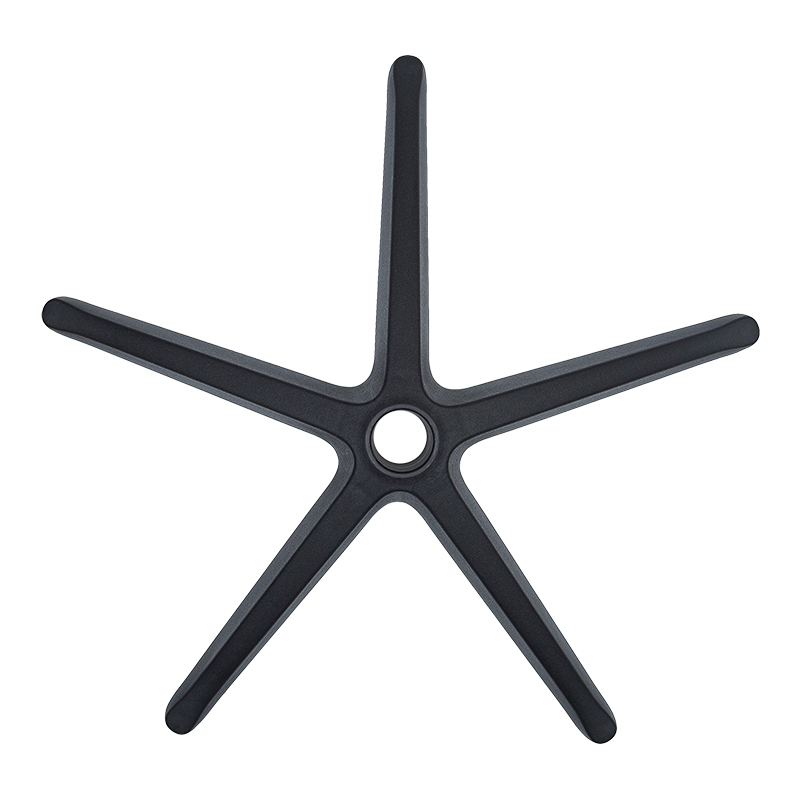
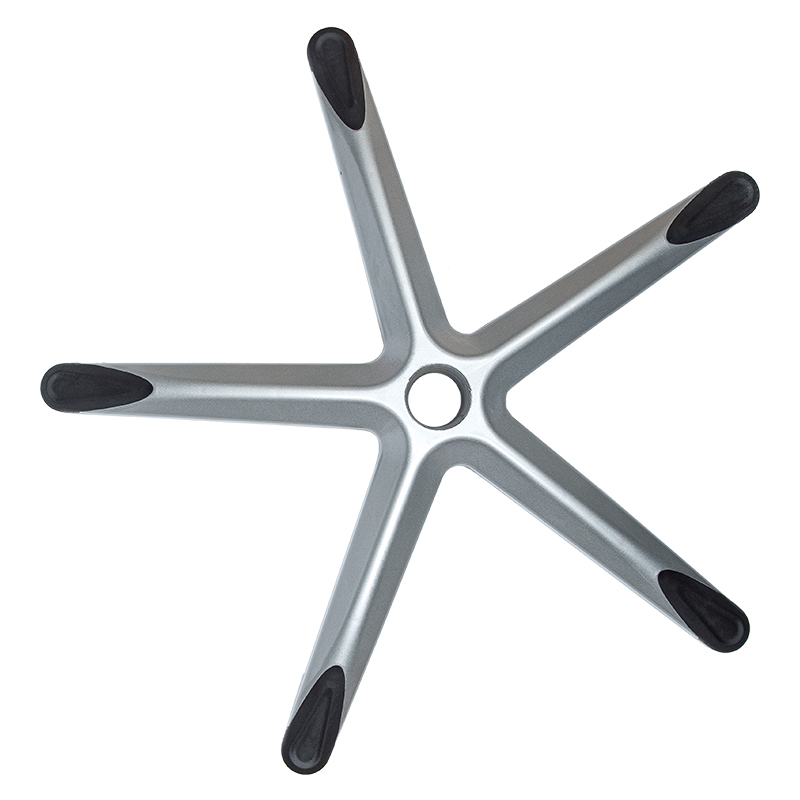
Bases of this class come from manufacturers such as Zhejiang Lubote Plastic Technology Co., Ltd., which produces nylon, PP and powder-coated steel bases under ODM and OEM arrangements. A useful reference point for a 350 mm steel five-star base:
 Powder-Coated Steel Five-Star Chair Base, 350mmThis steel base offers a durable powder-coated finish and increased load capacity, making it suitable for commercial or executive seating where surface hardness and metallic appearance are specified.View Product →
Match the standard to the destination market before you negotiate price, because a base tested only to EN 1335 will not satisfy a North American specification that names ANSI/BIFMA X5.1.
The practical consequence is simple: a programme that ships to both the United States and the European Union needs two reports, or one base design tested twice. The test scope differs as well, and the differences concentrate in the base.
| Standard or method | Primary market | Rated user weight | Base-relevant focus |
| ANSI/BIFMA X5.1 | North America, general office | 115 kg / 253 lb | Leg strength, base cyclic loading, caster drop and cycling, stability |
| ANSI/BIFMA X5.11 | North America, heavy duty | 181 kg / 400 lb | Same test families at higher loads, wider and stiffer base geometry |
| EN 1335, parts 1 to 3 | European Union and UK | 110 kg / 242 lb | Dimensions by type A, B and C, plus strength, durability and stability |
| In-house factory test | Internal use only | Not defined | Single-direction static load and drop checks on a sample |
If you need to compare spoke profiles and diameter options before choosing which base goes to which market, this guide to nylon chair base types and load ratings sets out the common constructions and where each one is specified.
Six documents are routinely presented as proof of BIFMA compliance. Only one of them is.
None of these substitutions is always dishonest. Most come from suppliers who genuinely believe their product is compliant. The cost of accepting them lands on the buyer, who discovers the gap only when a tender specification is challenged or a batch of bases starts cracking in service.
Budget a full third-party base programme at roughly USD 2,000 to 8,000 per model in testing fees and four to eight weeks of laboratory turnaround, plus a per-unit premium of a few percent at volume.
The premium looks small against the alternative. One container of replacement bases, shipped on an expedited schedule, usually costs more than certifying the entire base line. The calculation changes further when the failure is in the field: a cracked leg on a task chair is a safety event with a batch-level response, not a spare-part conversation.
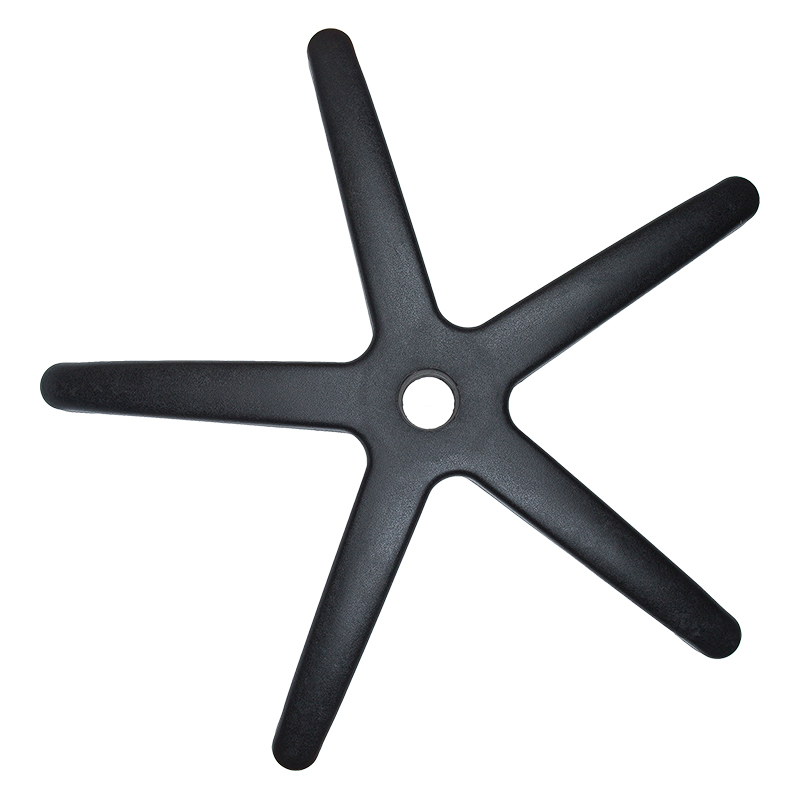
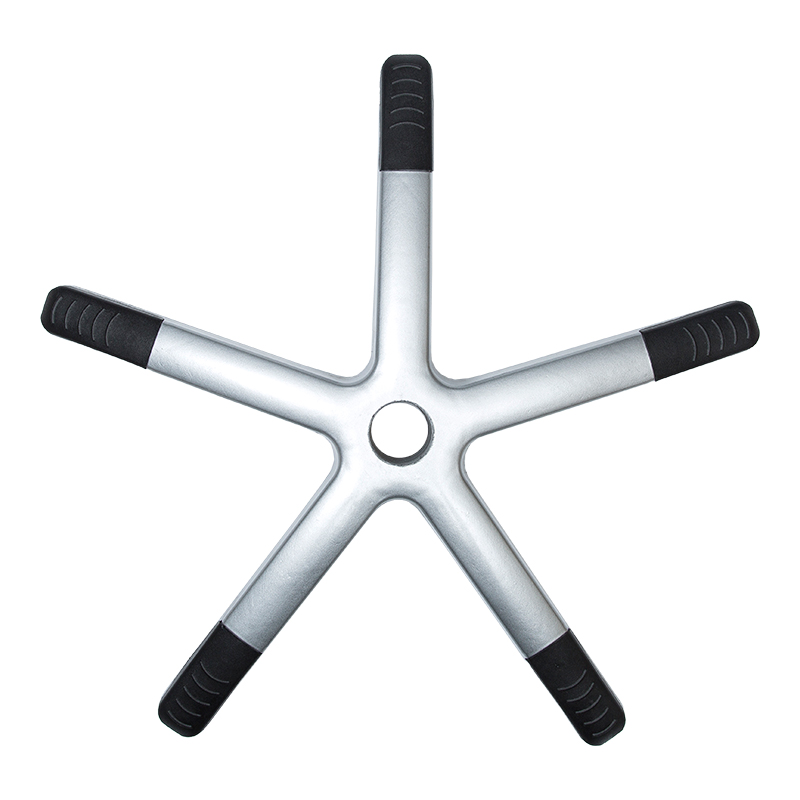
The base is also the component where material decisions are hardest to inspect visually. A leather-grain textured finish can hide surface marks, but not a thin spoke wall. For programmes that need a 350 mm base with a decorative finish and a defined load path, a textured nylon option such as this reference model is worth comparing against the steel version:
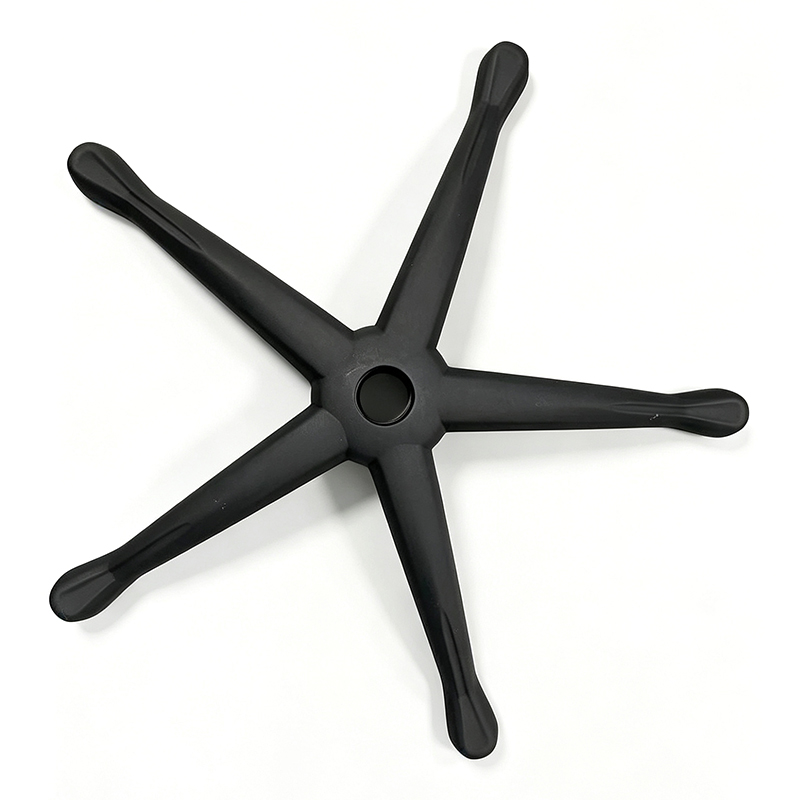 Leather-Grain Textured Nylon Chair Base, 350mmWith an embossed leather-grain texture, this nylon base provides a premium look at a lower cost than steel, while masking scuffs—ideal for comparing aesthetics and durability in mid-range task chairs.View Product →
A verified base can be cleared in under a week if you request the right documents in the first email and hold the purchase order until they arrive.
Reports contain the sample description, conditioning, test sequence, applied loads and results. A certificate image proves nothing.
A report that predates a tooling change is history rather than evidence.
Confirm base diameter, spoke count, material grade, colour and finish against the report before anything else.
A test house owned or directed by the manufacturer is not a third party in any meaningful sense.
If a supplier claims a BIFMA Compliant listing, look the model up directly rather than accepting a screenshot.
Reference the report number and revision in the purchase order so each shipment is tied to tested geometry.
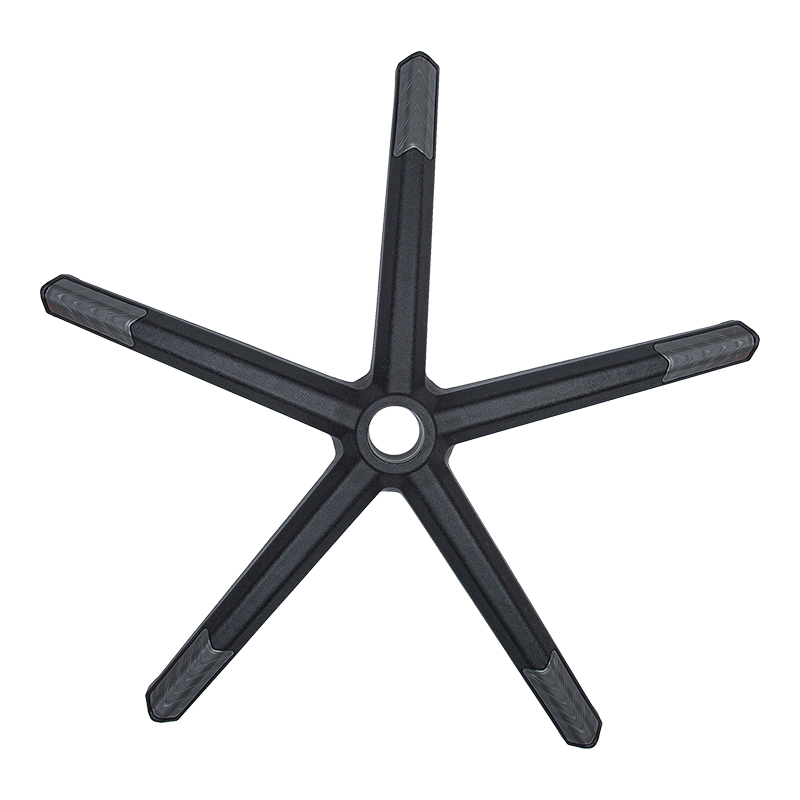
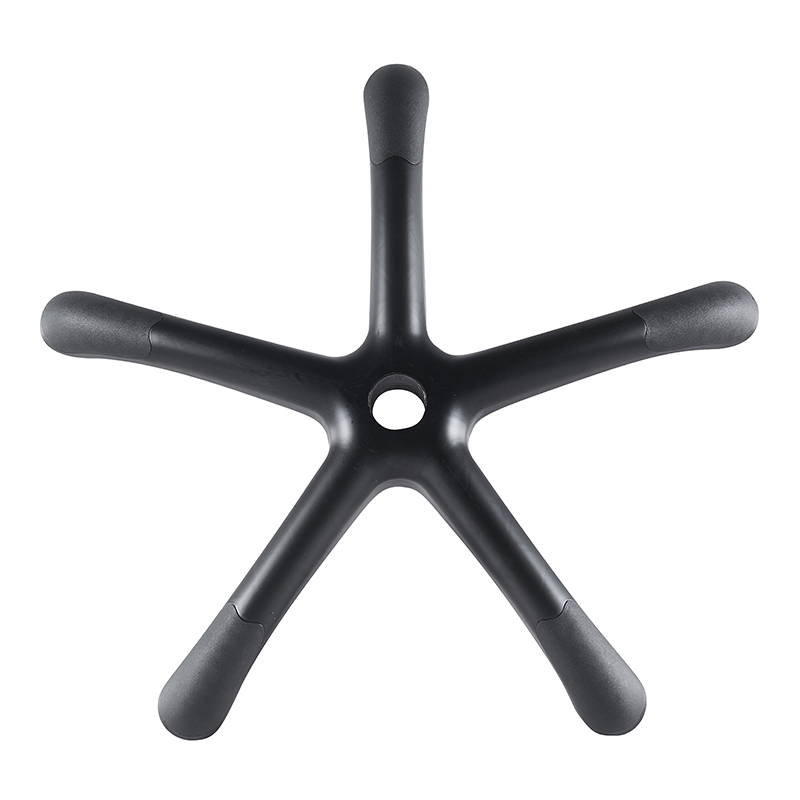
For programmes that mix base types across several chair families, the wider guide to chair base materials and selection covers how hub design, column interface and caster retention interact. Modular constructions, where the base and legs are supplied as separate replaceable parts, also simplify after-sales support:
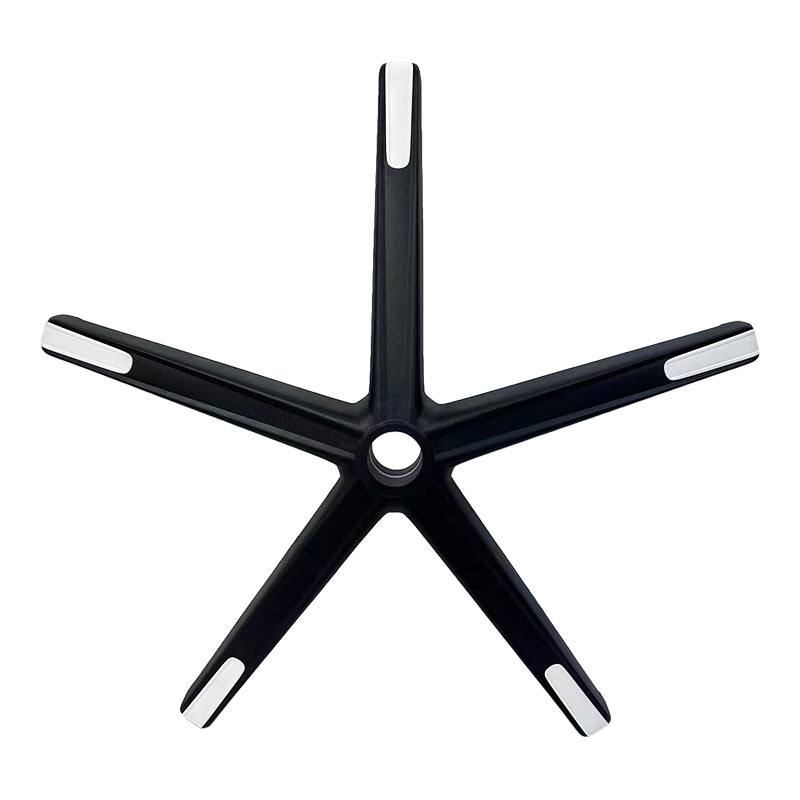 Disassembled Nylon Chair Base with Glass Fiber, 350mmMade from 60% PA66 and 40% glass fiber, this modular five-star base offers easy disassembly for maintenance and replacement, supporting mixed product lines with consistent stability and corrosion resistance.View Product →
No. BIFMA membership is an association status held by a company. Certification is a test result for a specific product, produced by an independent accredited laboratory and documented in a report. Membership and conformity are separate things, and a supplier that conflates them is usually aware of the difference.
ANSI/BIFMA X5.1 applies to general-purpose office chairs engineered around a 115 kg (253 lb) user. ANSI/BIFMA X5.11 applies to heavy-duty seating rated up to 181 kg (400 lb). If the chair will be sold into multi-shift, bariatric or 24-hour environments, specify X5.11, because a base that passes X5.1 is not automatically qualified at the higher load.
No. EN 1335 is written for the European market around a 110 kg user and uses its own test methods and dimension types. A North American specification that names ANSI/BIFMA will not accept an EN 1335 report as an equivalent, even when the base itself is identical in geometry.
The cost normally sits with the supplier as part of the development programme, though it is ultimately reflected in unit price. Expect four to eight weeks of laboratory time per model, several thousand US dollars in fees, and a repeat programme whenever a tooling change alters wall thickness, gate position or material grade.
Recommended Products

Call Us
+86 0572-5911661

Need Support

Head Office
ADD:Baishuiwan Industrial Park, Anji County, Zhejiang Province
Copyright © 2025Zhejiang Lubote Plastic Technology Co. , Ltd.
All Rights Reserved.Custom Chair Replacement Accessories Factory

