

 En
En
 Español
Call Us
+86 0572-5911661

2026-06-23
Content
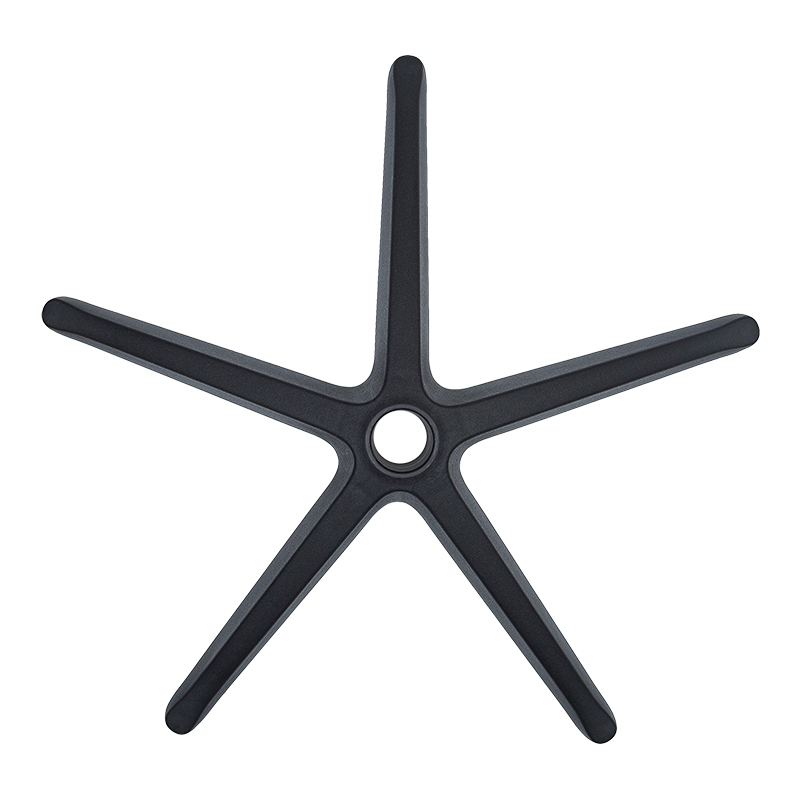
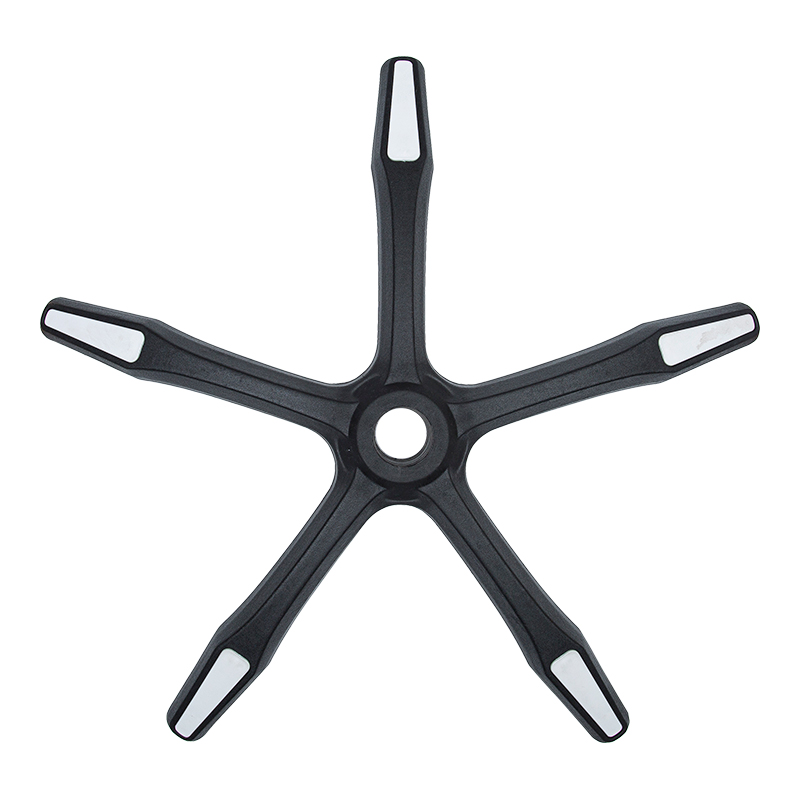
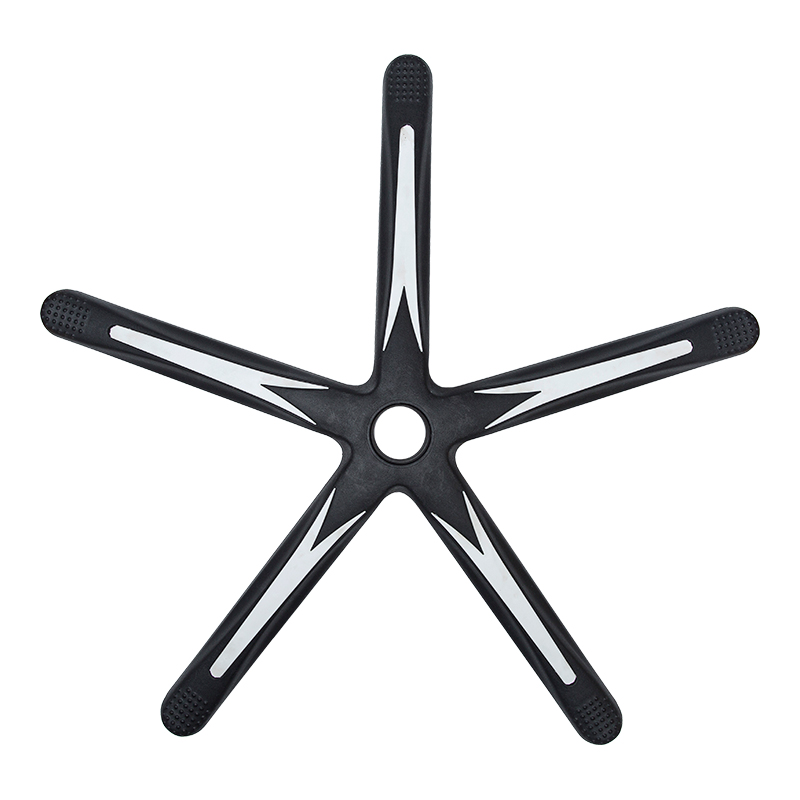
A nylon chair base is the five-star or four-star pedestal assembly that supports the seat of an office or task chair, typically injection-moulded from glass-filled polyamide (PA6 or PA66). The material choice is deliberate: nylon absorbs impact energy rather than transmitting it, which means legs flex slightly under dynamic load instead of cracking or permanently deforming the way cheaper polypropylene bases do. This elastic behaviour is why nylon bases consistently outlast PP equivalents in high-cycle commercial seating.
The standard five-star geometry distributes the occupant's weight across five contact points at roughly 72-degree intervals, keeping the tipping moment below thresholds set by seating safety standards such as BIFMA X5.1 and EN 1335. A four-star base trades one arm of stability for a lower profile, commonly specified in conference and executive chairs where aesthetics outweigh aggressive rocking behaviour.

Specifying a chair base material involves trade-offs across weight, cost, load capacity, and end-of-life recyclability.
| Property | Nylon (PA66 GF30) | Die-Cast Aluminium | Powder-Coated Steel |
|---|---|---|---|
| Typical weight | 1.2 – 1.8 kg | 2.5 – 4.0 kg | 3.0 – 5.5 kg |
| Static load rating | 150 – 200 kg | 200 – 300 kg | 250 – 350 kg |
| Floor scratch risk | Low | Medium (anodised edge) | Medium–High |
| Corrosion resistance | Excellent | Good | Moderate (coating-dependent) |
| Relative unit cost | Low | High | Medium |
For most commercial office environments with standard 120 kg dynamic load requirements, a nylon base rated to 150 kg static load is sufficient and offers the lowest total cost of ownership. Aluminium becomes worth the premium in hospitality and executive settings where the polished finish is a design requirement, or in bariatric applications exceeding 180 kg user weight.
Not all nylon chair bases are equivalent. The critical differentiator is the glass fibre reinforcement percentage blended into the polyamide resin before moulding. Standard grades used in budget seating typically contain 15–20% GF, producing a base that passes basic certification tests but shows measurable fatigue after 18–24 months of daily use. Commercial-grade bases specified for contract furniture use 30% GF (PA66-GF30) as a baseline, with premium variants reaching 50% for heavy-duty or outdoor hospitality applications.
Higher glass content increases tensile strength and stiffness but reduces impact toughness slightly—the base becomes stiffer rather than more elastic. For environments prone to impact loading (stacking, shipping, rough handling), a 30% GF formulation with a toughened PA66 matrix offers the best balance. Manufacturers supplying to European markets are increasingly specifying recycled nylon content of 20–40% to meet procurement sustainability criteria without compromising structural performance.
A nylon chair base is only as functional as the casters and gas cylinder it accepts. Standardisation in the industry has converged on two key interfaces.
When purchasing nylon chair bases in volume for OEM chair assembly or replacement programmes, three areas warrant scrutiny beyond price per unit.
Moulding quality: request cross-section samples from production runs to check for sink marks, weld lines, and voids at the hub junction—the highest-stress point in the assembly. Well-controlled injection parameters and adequate gate sizing eliminate internal voids invisible on surface inspection.
Material traceability: ask for the resin batch certificate identifying the PA66 grade, glass fibre content, and any recycled material percentage. Reputable manufacturers can provide SGS or Intertek test reports confirming tensile strength, flexural modulus, and impact resistance against ASTM D638 and ISO 179 standards.
Drop and fatigue testing: a credible supplier will have conducted drop tests simulating 100,000+ load cycles and can share results. For markets requiring BIFMA X5.1 or EN 1335 compliance, verify that the test was conducted on the actual production base geometry rather than a prototype—tooling changes between sampling and production are common and can meaningfully alter stiffness characteristics.
Recommended Products

Call Us
+86 0572-5911661

Need Support

Head Office
ADD:Baishuiwan Industrial Park, Anji County, Zhejiang Province
Copyright © 2025Zhejiang Lubote Plastic Technology Co. , Ltd.
All Rights Reserved.Custom Chair Replacement Accessories Factory

