

 En
En
 Español
Call Us
+86 0572-5911661
 Home / News / Industry news / Key Factors to Evaluate in SGS-Certified Gas Springs for Office Chair Safety
2026-09-13
An office chair gas spring is a sealed cylinder pressurized with nitrogen to roughly 150 bar. When the rod seal fails, the seat drops to its lowest travel in under one second with no audible warning. That failure mode is exactly why procurement teams ask for SGS certification: it is independent proof that a gas spring survived endurance, pressure, and leakage testing. But the certificate alone does not tell you whether that spring is safe for your seat travel range, your user weight mix, or your production quality controls.
Content
SGS certification for a gas lift cylinder means a sample from a production batch passed a defined test sequence in an accredited laboratory. For office seating, the relevant benchmark is usually BIFMA X5.1 endurance combined with gas-spring-specific pressure and seal tests.
A typical certified gas spring must pass five categories of testing:
The critical point for a buyer: certification is sample-based. It proves the tested model and production batch meet the standard, but not every unit that follows. SGS certification must be paired with incoming inspection and batch traceability to protect your chair line.
The load rating tells you the maximum seated weight a gas spring can support without accelerated seal wear or rod buckling. Pick a force class lower than the seated weight and the rod will not rise reliably. Pick one too high and the seat will jump upward when the adjustment lever is released.
Force is expressed in newtons and grouped into load classes. For a standard office chair used by a mixed population of up to 100 kg, a 120 N spring is the safe default. Heavy-duty and gaming chairs need a higher class because users sit longer and the mechanism cycles more often.
| Force class | Nominal force | Max user weight | Typical application |
| Class 2 | 80 N | 65 kg | Light task chairs, visitor seating |
| Class 3 | 120 N | 100 kg | Standard office chairs, mesh chairs |
| Class 4 | 150 N | 120 kg | Heavy-duty operator seating |
| Class 5 | 160-200 N | 140-160 kg | Oversized and bariatric-rated chairs |
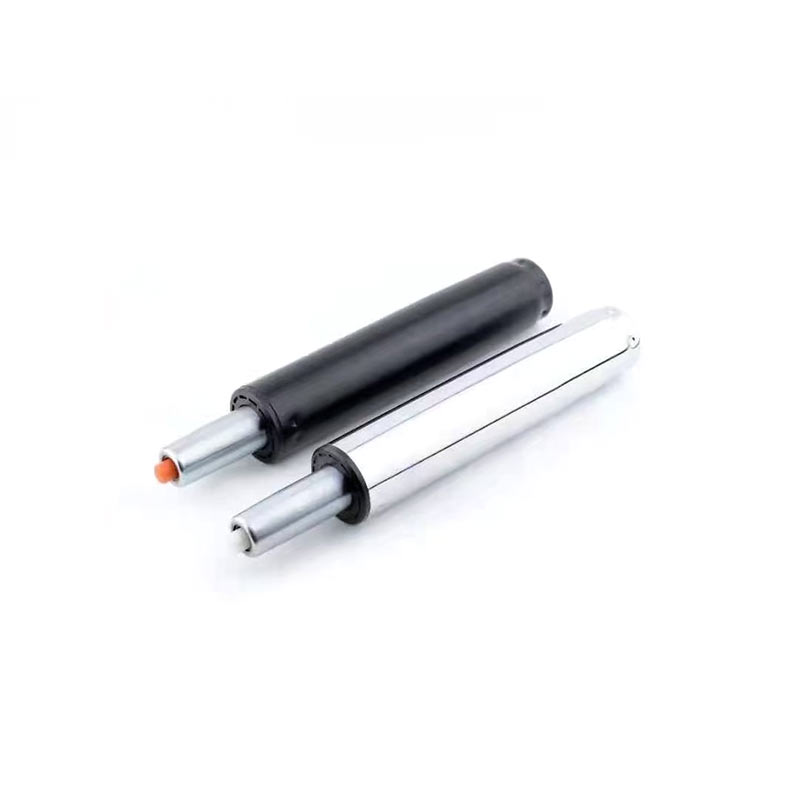
For standard office seating, the 120 type stable and durable chair gas stick covers the common 80-100 kg user range with a proven seal package. The 160 type weight-bearing chair gas stick adds margin for high-cycle and heavy-duty chairs. Both are available as verified components with batch traceability.
 Stable and Durable 120# Chair Gas Lift for Standard Office SeatingDesigned for standard office chairs, this 120# gas stick covers the common 80-100 kg user range with a proven seal package, offering stable and durable height adjustment with batch traceability.View Product →
 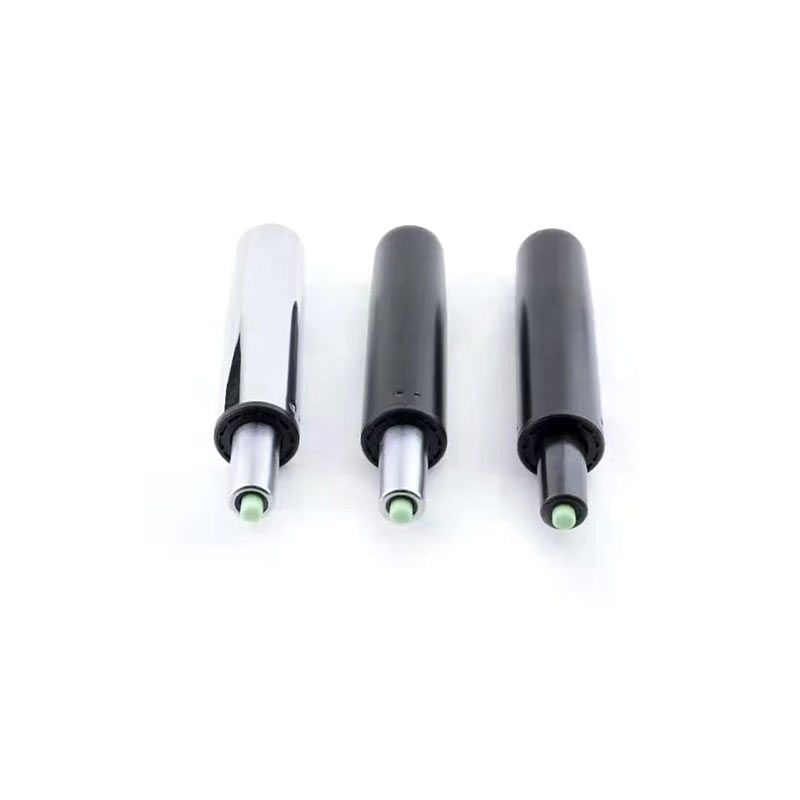 Heavy-Duty 160# Chair Gas Lift for High-Cycle and Heavy-Duty ChairsAdding margin for high-cycle and heavy-duty chairs, this 160# gas lift provides robust load-bearing capacity and durable performance, ideal for frequent use and higher weight support in office or home environments.View Product →
Stroke length determines how much vertical travel the seat has. A spring with an 80 mm stroke delivers roughly 80 mm of height adjustment; longer strokes of 100 to 150 mm support taller users and sit-to-stand setups.
Two dimensions matter: the stroke (rod travel) and the extended center-to-center length. Both must match the chair mechanism's mounting geometry. Office chair gas cylinders commonly use a 45 mm or 50 mm upper taper and a lower sleeve sized for the base hub, but brands differ.
When a chair height range is wrong after assembly, the cause is usually a stroke mismatch, not a defective gas spring. Confirm the stroke in the dimensional drawing before ordering, and test one sample on the actual chair model.
For chairs that target the 80 to 100 kg seated range with a compact height travel, the 100 type durable chair gas stick is the component we specify most often.
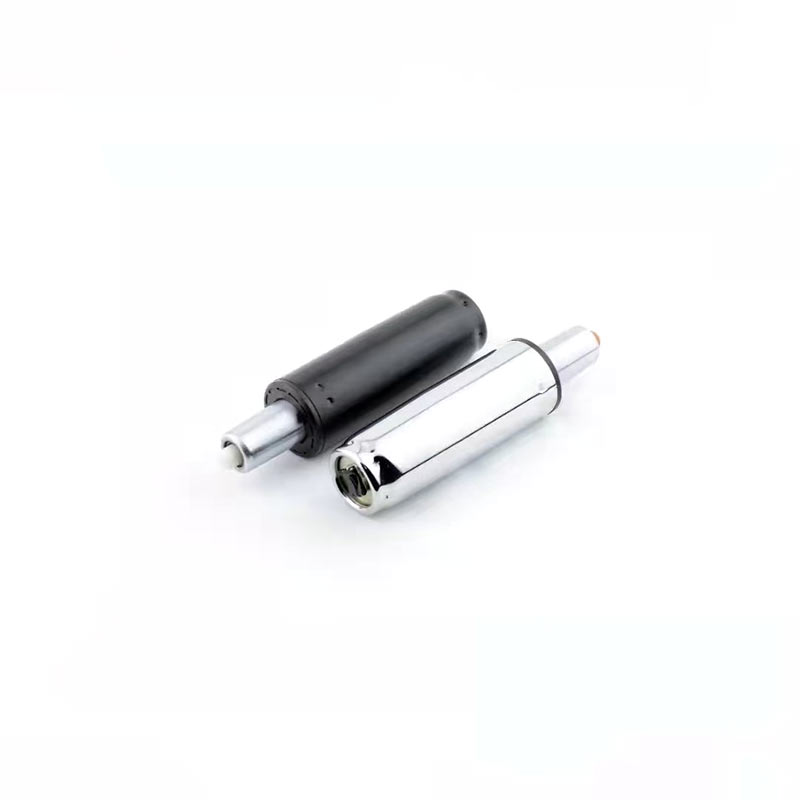 Durable 100# Chair Gas Stick for Compact Height TravelFrequently specified for chairs in the 80-100 kg seated range with compact height travel, this 100# gas stick features a smooth lifting mechanism and corrosion-resistant chrome finish for reliable daily seating adjustments.View Product →
Wall thickness, rod diameter, and seal material decide how many cycles a gas spring survives. A safe design typically uses cold-drawn steel tubing with at least 1.5 mm wall thickness, a hard-chrome-plated piston rod of 8 to 10 mm diameter, and a multi-lip seal package with a PTFE guide ring.
Anti-explosion construction is the second non-negotiable safety feature. A certified gas spring includes a scored burst disc or pressure-relief valve that vents gas in a controlled direction if the cylinder is punctured or exposed to extreme heat. Budget cylinders may omit this feature or use an end cap that cannot vent predictably.
Inspect the end cap before installation: a spring with a visible burst disc or vent port is engineered for controlled failure. A smooth, featureless cap offers no relief path and is a red flag for seat-drop risk.
An SGS certificate is only useful when the physical units in your warehouse match the tested model. Request four items from every gas spring supplier: the SGS test report with a verifiable report number, the model number that matches your purchase order line, the production batch or date code printed on the cylinder, and a dimensional drawing of the taper and sleeve.
You can verify a report number directly on the SGS online database. Match the product description, brand, model, and test date against the supplier's invoice. If the report references an older model or a test date that does not line up with the production batch, treat the shipment as non-conforming.
Verification rule: a certificate without a matching batch number is marketing material, not evidence. The report number, the physical part marking, and the invoice line must all reference the same model.
For a deeper look at how height adjustment, lift range, and certification interact, see our practical SGS certification guide for gas lift cylinders.
Use this checklist when evaluating gas spring suppliers. Each item addresses a failure mode that typically appears in incoming inspection or field returns.
If you are sourcing replacement gas springs rather than OEM components, the same checks apply. Our office chair cylinder replacement guide walks through diagnosis, removal, and reinstallation for field-service teams.
No. SGS certification confirms that a tested sample met defined endurance and pressure criteria. Individual units can still fail from transport damage, incorrect installation, or production drift. Incoming inspection and batch traceability are required to hold that safety level across a shipment.
A 120 N spring delivers roughly 12 kg of nominal force and supports users up to about 100 kg. A 160 N spring delivers about 16 kg and supports users up to roughly 140 to 160 kg. Using a higher force class than needed creates stiff adjustment; using a lower class lets the seat sink slowly under load.
BIFMA X5.1 endurance testing requires roughly 100,000 cycles on the height adjustment mechanism. In an office with frequent user changes, that equals several years of service. The seal package, not the cylinder wall, is usually the first component to wear.
Not without checking three things: the upper taper diameter, the stroke length, and the force class. A spring that fits mechanically but carries a different force rating will change the chair's height behavior and can invalidate the mechanism's own safety compliance.

Call Us
+86 0572-5911661

Need Support

Head Office
ADD:Baishuiwan Industrial Park, Anji County, Zhejiang Province
Copyright © 2025Zhejiang Lubote Plastic Technology Co. , Ltd.
All Rights Reserved.Custom Chair Replacement Accessories Factory

