

 En
En
 Español
Call Us
+86 0572-5911661
 Home / News / Industry news / What to Include in a Chair Base RFQ for Global: Practical Applications, Selection
2026-10-12
When a European seating brand sends a chair base RFQ to ten factories across three countries, the returned quotations list three different plastic grades, load ratings from 80 kg to 250 kg, and prices that spread by more than a factor of three. Bases that fail a 272 kg static load test almost always trace back to suppliers whose RFQ response lacked a material grade and a test protocol. Knowing what to include in a chair base RFQ for global suppliers is a quality control decision, not a clerical step.
Core definition: A chair base RFQ is a formal procurement document that specifies material grade, dimensions, load rating, surface finish, test standards, and documentation for a five-star chair base, and asks global suppliers to quote against those exact terms.
Content
A BIFMA certified chair base requirement is the most effective clause for disqualifying unreliable suppliers before quoting starts.
BIFMA X5.1 is the recognized voluntary standard for office seating in North America. It defines strength, durability, and stability tests for the complete chair, and the base inherits the critical load path: the five star points, the hub, and the gas lift interface take static and cyclic loads that simulate years of sitting and moving. When your RFQ states "BIFMA X5.1 with third-party report," bidders who cannot document compliance either withdraw or return a realistic price. When the RFQ is silent, you invite self-declared compliance, which in practice means a base you must re-qualify after the first container arrives.
A complete chair base RFQ covers material, dimensions, load rating, surface finish, and documentation before it says anything about price.
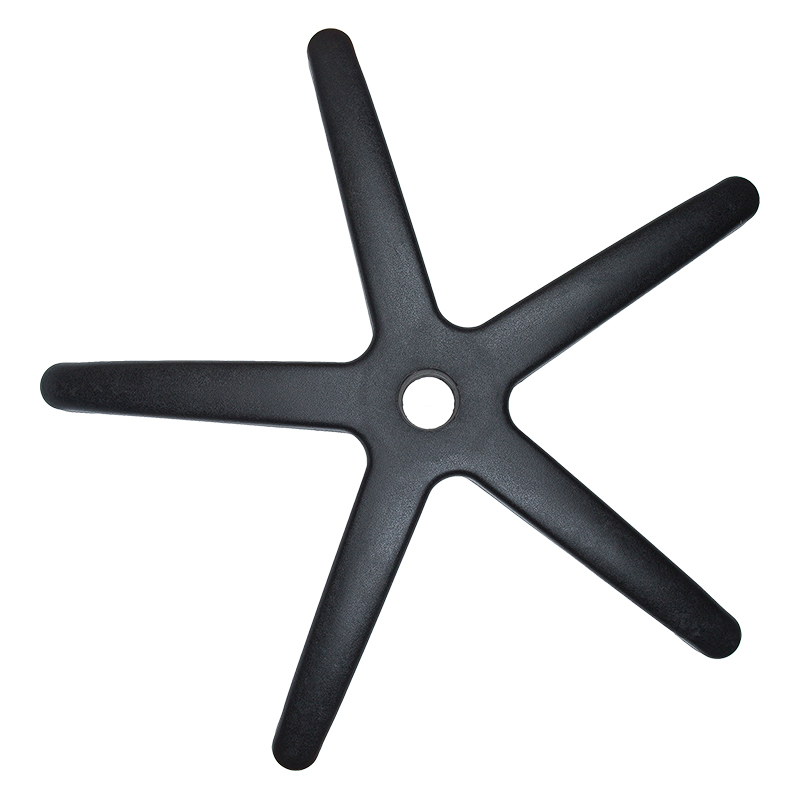
A leather-grain surface, for example, hides scuffs better than a glossy bake-painted finish when chairs are stacked on warehouse trolleys. A 350 mm leather-grain textured nylon base such as the R350 is a concrete example of a finish-and-dimension specification that buyers write into an RFQ.
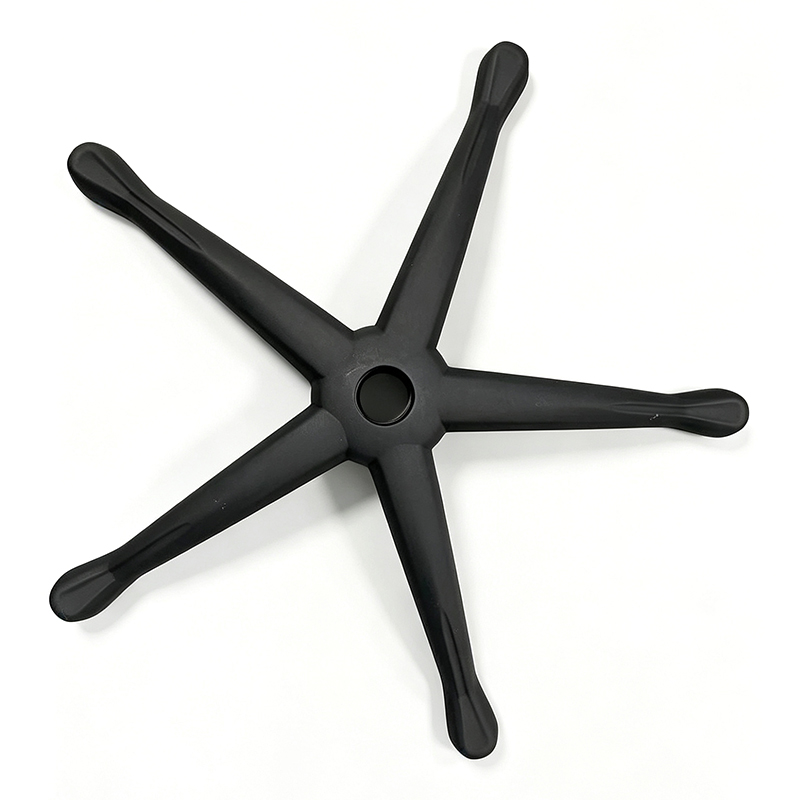 R350 Leather-Grain Textured Nylon Chair Base 350mmThis 350mm nylon base features an embossed leather-grain texture that masks scuffs better than glossy finishes. Its surface quality suits mid-range to executive chairs, making it a practical aesthetic upgrade for RFQ specifications.View Product →
| RFQ category | Minimum requirement | Why it matters |
| Material | PA6-GF30 or PA66-GF30 with ISO 11469 marking | Prevents PP substitution |
| Dimensions | 350 mm diameter, 50 mm hub, standard caster stem | Ensures model interchangeability |
| Load rating | 113 kg static minimum; 227 kg for heavy-duty seats | Directly links to BIFMA X5.1 classes |
| Surface finish | Baking paint or leather-grain, scratch-resistant | Reduces transit scuffs and complaints |
| Documentation | Material certificate plus third-party BIFMA report | Makes compliance auditable |
You choose a BIFMA certified chair base by verifying the test report and the compound, not by trusting the word "BIFMA" in a product title.
Check every response against three criteria. First, the report identity: the BIFMA test report must name the exact base model, material grade, and color you are buying; a report for another model or a different glass-fiber ratio is not acceptable. Second, the laboratory: UL, SGS, TUV, Intertek, or another recognized third-party lab should issue the report. Third, the standard version: BIFMA X5.1-2017 is the current reference; an RFQ that cites the 2011 edition will collect outdated documentation.
Typical static load capacity of 350 mm five-star base materials
Representative ranges for planning and comparison; confirm actual values with the supplier third-party test report.
For a deeper look at the compound choices behind these numbers, the nylon chair base types and load ratings buying guide covers PA6, PA66, and PP performance in office seating.
The strongest chair base RFQ clauses define sample approval, inspection, packaging, lot traceability, and Incoterms - five areas where overseas base projects break down.
If your volume projections are below container multiples, a knock-down design keeps transport cost low and lets you assemble locally.
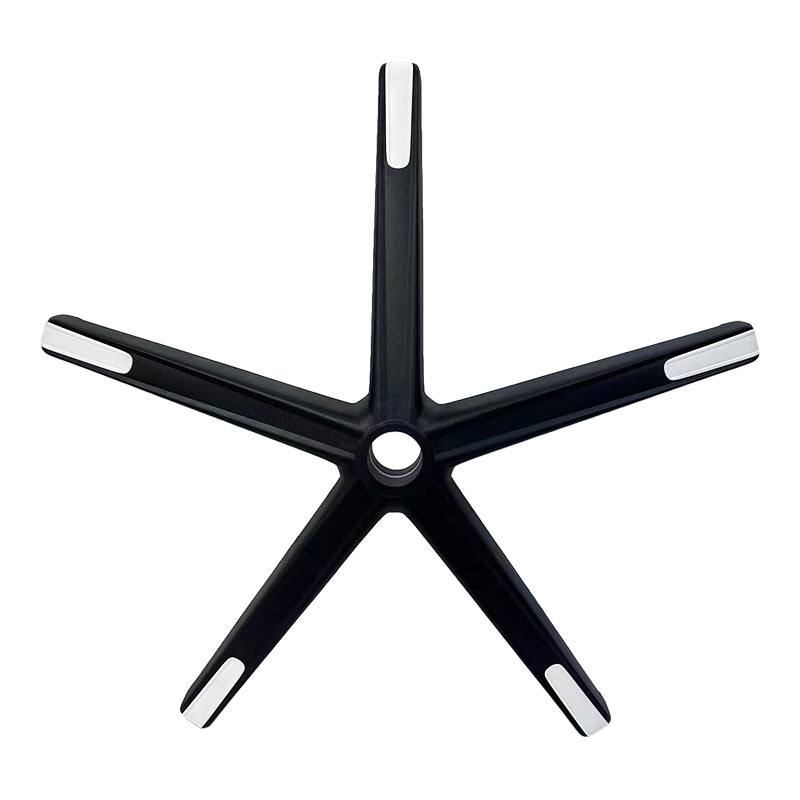 PA-T1-350 Disassembled Nylon Chair Base with Reinforced FiberDesigned for easy transport and local assembly, this knock-down nylon base uses 60% PA66 with 40% glass fiber for durability. Its standardized interface simplifies maintenance, ideal for volume shipping and versatile chair applications.View Product →
Compare suppliers on four factors: in-house molding capability, material sourcing, test equipment, and ODM flexibility.
A supplier that injection-molds its own nylon chair base controls the compound, the wall thickness, and the cooling cycle; a supplier that outsources molding is a trader, and your specification is at the mercy of their subcontractor. Confirm that the factory performs its own strength checks with a universal testing machine and a stability fixture. ODM flexibility matters when surface texture, color, or star geometry needs adjustment for your market. A base with full-scenario anti-slip contact points is the kind of performance attribute your RFQ should capture when the end user environment includes hard floors and small casters.
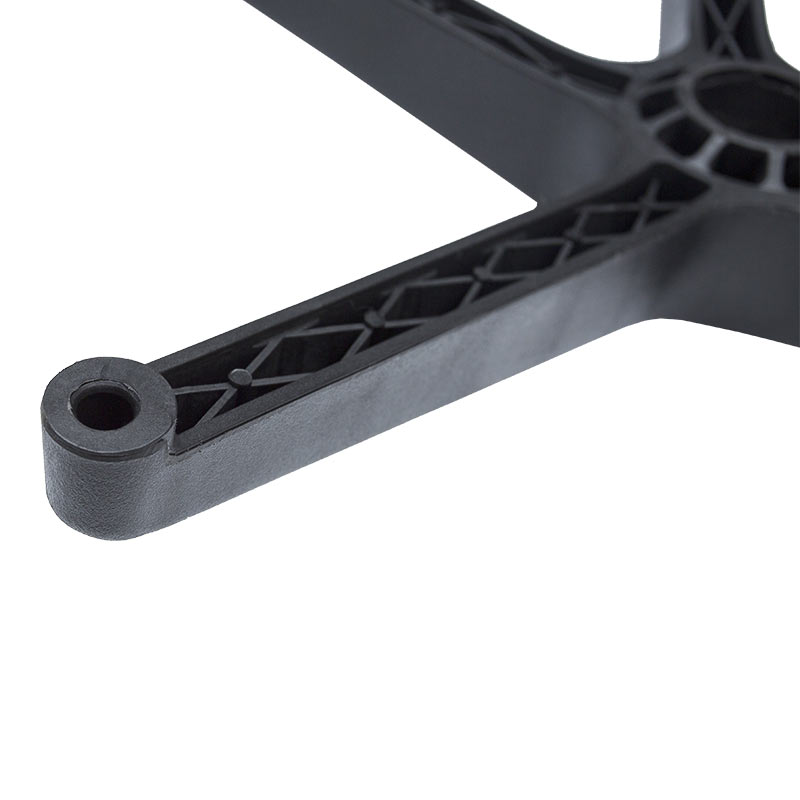 PA-B Tiger Claws Nylon Chair Base with Anti-Slip Contact PointsThis five-star base offers multiple radius options and full-scenario anti-slip contact points, crucial for hard floors and small casters. Its sturdy nylon construction and refined geometry make it a robust candidate for performance-focused RFQs.View Product →
You can compare candidate bases in the nylon chair base category before you issue the RFQ.
BIFMA X5.1 is voluntary, but it is the de facto entry requirement for the North American office furniture market. Most reputable global suppliers provide a third-party report for standard nylon bases at no additional cost. If a supplier cannot, treat the absence as a red flag.
320 mm and 350 mm are the two standard sizes. Specify 350 mm for ergonomic task chairs with a class 2 to 4 gas lift, and 320 mm only for compact or budget seats where the smaller footprint is a design requirement.
Yes. A properly ribbed, glass-fiber-reinforced nylon base with correct wall thickness passes the X5.1 strength and stability tests when the compound and geometry are engineered for the load. Nylon dominates the market because it combines strength with low weight and molded-in finish options.
The material certificate with ISO 11469 polymer marking and glass-fiber content, the third-party BIFMA X5.1 test report, the pre-shipment inspection report if you paid for one, and the packing list with lot numbers that trace to molded date codes on the bases.

Call Us
+86 0572-5911661

Need Support

Head Office
ADD:Baishuiwan Industrial Park, Anji County, Zhejiang Province
Copyright © 2025Zhejiang Lubote Plastic Technology Co. , Ltd.
All Rights Reserved.Custom Chair Replacement Accessories Factory

