

 En
En
 Español
Call Us
+86 0572-5911661

2026-08-17
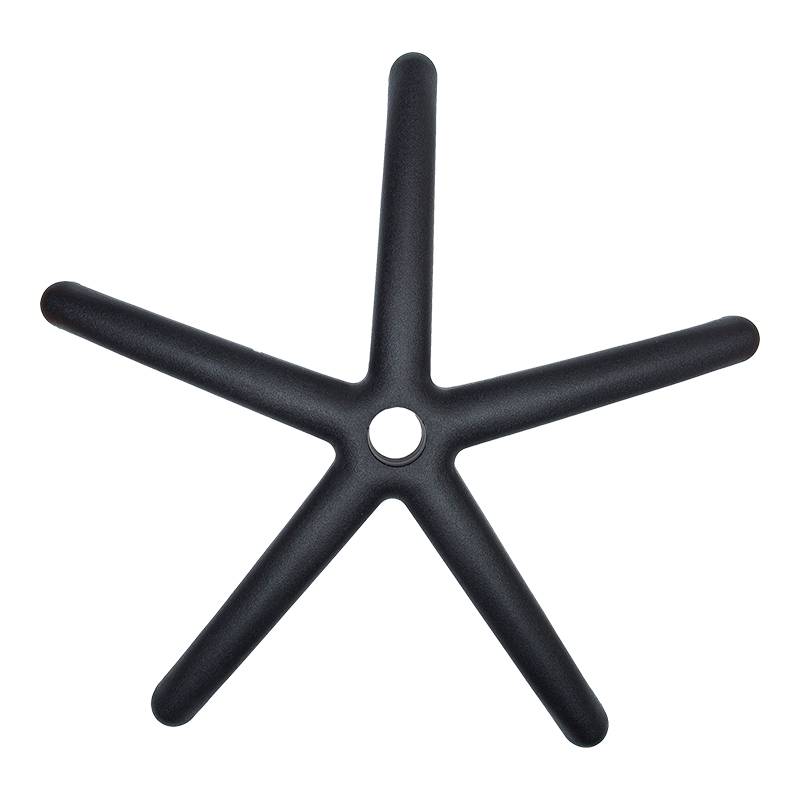
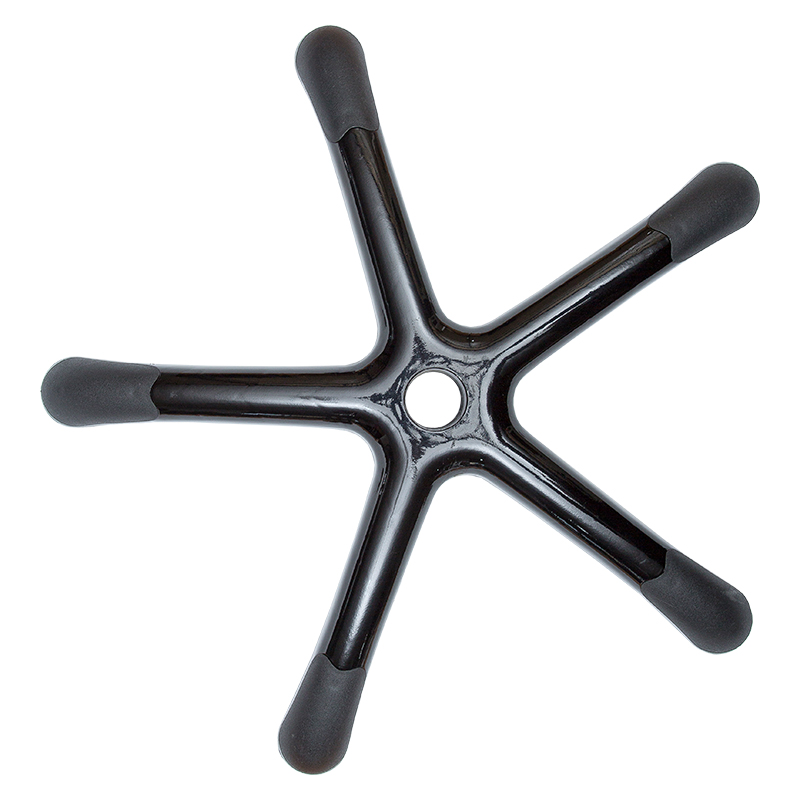
A nylon chair base is the five-star-shaped foundation at the bottom of most modern office chairs and gaming chairs. It serves as the central structural hub that connects the seat to the floor, distributing the user's weight across five legs while anchoring the casters and gas lift cylinder. Far from being a simple plastic part, a well-designed office chair base is an engineering component that must withstand daily dynamic loads, resist cracking under prolonged stress, and maintain smooth mobility for years. With the shift from traditional metal bases to advanced polymers, plastic chair base designs have evolved to offer a compelling combination of strength, reduced weight, and cost-effectiveness. Understanding the materials, construction, and design features of a nylon base for office chair—particularly those made from PA66 and reinforced nylon—is essential for anyone purchasing, replacing, or upgrading chair components for sustained comfort and durability.
Content
The five star chair base is the universal standard for ergonomic seating for a reason grounded in physics. By spreading the points of floor contact across five equally spaced legs, the base creates a wide stability footprint that resists tipping in any direction. A typical office chair base has a radius of approximately 320–360 mm from the center to each caster, providing stability even when the user leans forward or to the side. The five-star design also distributes the load evenly, with each leg carrying roughly 20% of the total weight, allowing the base to support total capacities of over 1,500 N (approximately 150 kg) in high-quality designs. This configuration accommodates smooth 360-degree swiveling and rolling without the base deforming or snapping. The central hub contains a precisely machined tapered hole that accepts the gas lift cylinder, and the ends of each leg are bored to accept caster stems. Every dimension and angle is designed to balance stability, strength, and mobility in a single molded component.
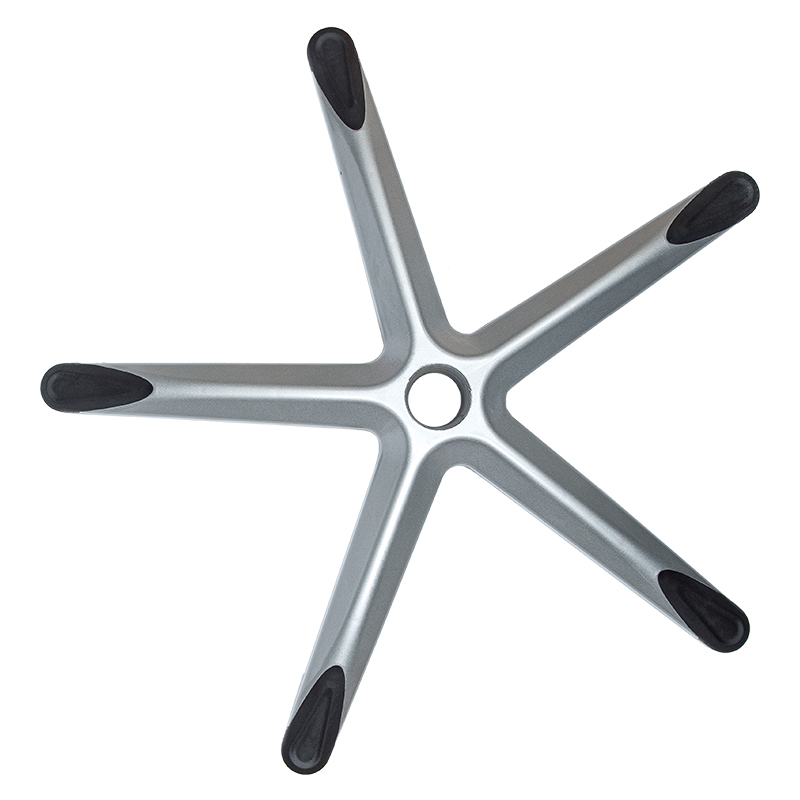
A typical chair base consists of several integrated chair base components, each with a specific function. The central hub houses the tapered socket that mates with the gas lift cylinder. Radiating from this hub are five hollow or ribbed legs, which connect to cylindrical caster sockets. Internal reinforcement ribs run along the underside of each leg to increase bending stiffness while minimizing material use. The entire assembly is produced through injection molded chair components technology, where molten nylon is injected into a precision steel mold under high pressure. The mold cavity forms all the intricate details—the hub, the leg profiles, the caster bores, and the reinforcement ribs—in a single cycle lasting only 60–90 seconds. This process ensures that every base in a production run is dimensionally identical, with tight tolerances on the gas cylinder bore and caster sockets. The use of injection molding also allows for the addition of glass fiber reinforcement directly into the nylon matrix, a key factor in creating a durable chair base that rivals metal in strength.
The material that separates a brittle, short-lived plastic chair base from a truly durable one is polyamide 66, commonly known as PA66 nylon. PA66 is a semi-crystalline engineering thermoplastic with a unique combination of high tensile strength, excellent fatigue resistance, and good impact toughness even at low temperatures. Its mechanical properties make it ideal for a component subjected to constant bending and twisting. In its unfilled form, PA66 has a tensile strength of around 80 MPa. However, for high-load chair bases, manufacturers use reinforced nylon chair base material—specifically PA66 that has been compounded with 30–35% glass fiber (GF). The glass fibers act as a rigid internal skeleton within the plastic matrix, increasing tensile strength to approximately 180–200 MPa and dramatically improving stiffness and creep resistance. Creep is the tendency of a plastic part to slowly deform under sustained load, and glass fiber reinforcement virtually eliminates this in a well-designed base, ensuring that the chair maintains its height and stability over years of daily use. When evaluating a nylon base for office chair, the designation "PA66+GF30" is a reliable indicator of a high-performance durable chair base material.
| Material | Tensile Strength (MPa) | Flexural Modulus (GPa) | Typical Use |
|---|---|---|---|
| Unfilled PA66 Nylon | 80 | 2.8 | Light-duty chairs, budget office chairs |
| PA66 + 30% Glass Fiber (GF) | 180 | 9.5 | High-end office chairs, gaming chairs, heavy-duty use |
| Polypropylene (PP) with filler | 30–40 | 1.5–2.0 | Low-cost, short-lifespan chairs |
The manufacturing environment also matters. A PA66 nylon chair base that is improperly dried before molding, or molded at the wrong temperature, will have reduced mechanical properties and may fail prematurely. Quality manufacturers control moisture content to below 0.2% before injection, ensuring the polymer chains retain their full strength. This is a hidden factor that differentiates a professional-grade base from an inexpensive import that looks similar but has unknown processing history.
Within the ecosystem of office chair parts and accessories, the base is the foundation upon which every other component depends. It interfaces directly with the gas lift cylinder, which in turn supports the seat mechanism and the seat itself. A common failure mode in office chairs is not the cylinder or the seat cushion, but a cracked or broken leg on the base, often at the caster socket or the junction where the leg meets the central hub. When replacing a worn-out office chair, it is often more cost-effective to upgrade to a nylon chair base of known quality rather than replacing the entire chair. The replacement process involves removing the old base from the cylinder—often requiring a rubber mallet to break the taper lock—and pressing the new base firmly onto the cylinder. This simple swap can extend the life of a comfortable, otherwise functional chair by years.
Gaming chairs, with their aggressive reclining mechanisms and higher-than-average user weight capacities, place particular stress on the base. A gaming chair base replacement is a common repair when the original base develops a crack, a stripped caster socket, or a deformed gas cylinder taper. The first sign is often a wobble that cannot be fixed by tightening the casters. When sourcing a replacement, compatibility is key. The base must match the cylinder diameter—most office and gaming chairs use a standard 50 mm hub bore for the gas cylinder, but some heavy-duty or specialty chairs use a 28 mm or other size. The caster stem sockets are typically 11 mm in diameter for standard grip-ring casters, but verifying this dimension prevents the frustration of casters that fall out or bind. A nylon base for office chair that is also rated for gaming chairs will specify its weight capacity and material composition, and an upgrade to a reinforced nylon chair base with PA66+GF is a worthwhile investment for heavy users or chairs that see prolonged daily use.
Selecting a nylon chair base that will perform reliably over the long term requires attention to several key indicators. Weight is a useful first filter: a high-quality PA66+GF base typically weighs between 2.5 and 4 kg, depending on the leg radius, whereas a base made from unfilled nylon or cheaper PP will feel noticeably lighter and less substantial. Inspect the underside for a dense pattern of structural ribs; these are the sign of an engineer optimizing the strength-to-weight ratio through careful mold design. The surface finish should be even, with no visible flow lines, splay, or sink marks that indicate improper molding. Most importantly, check the manufacturer's stated material. A base labeled simply as "nylon" or "plastic" may be adequate for light use, but for any chair that will be used for long hours, the designation "PA66 + GF30" or equivalent is the definitive quality mark. The caster sockets should be deep enough to fully seat the caster stem grip ring, and the gas cylinder socket should be free of flash or burrs that could prevent a solid taper lock. By applying these criteria, you ensure that the durable chair base materials you choose will keep the chair stable, mobile, and safe for the entirety of its service life.

Call Us
+86 0572-5911661

Need Support

Head Office
ADD:Baishuiwan Industrial Park, Anji County, Zhejiang Province
Copyright © 2025Zhejiang Lubote Plastic Technology Co. , Ltd.
All Rights Reserved.Custom Chair Replacement Accessories Factory

