

 En
En
 Español
Call Us
+86 0572-5911661

2026-08-10
"Gas lift cylinder" and "gas spring" refer to the same component — a sealed, nitrogen-charged cylinder that produces controlled extension force. The terminology split is mostly regional and industry-driven: "gas spring" is more common in furniture, automotive, and general engineering contexts, while "gas lift cylinder" or "gas strut" tends to appear more in industrial equipment and heavy machinery specifications. Some suppliers also use "gas strut" interchangeably with both terms, particularly for automotive tailgate and hood applications.
There's no functional difference implied by the name — buyers should specify by force rating, stroke length, and mounting type rather than assuming one term indicates a different internal mechanism than the other.
Content
Where "gas strut" and "gas spring" occasionally do diverge is in typical application framing rather than internal design. "Gas strut" is used more often for larger, higher-force components in automotive and heavy equipment — tailgates, truck caps, machine enclosures — while "gas spring" is the more common term for smaller-force components in furniture, seating, and cabinetry. Both terms describe the identical gas-and-piston mechanism; the distinction is essentially about market convention, not a technical category boundary.
Hydraulic cylinders and gas springs both use a piston inside a sealed tube, but they generate force through different working fluids and serve different purposes as a result. A gas spring uses compressed nitrogen gas to generate self-contained extension force with no external power input, while a hydraulic cylinder uses pressurized oil pumped in from an external source to generate much higher force, controlled by valves rather than internal gas pressure.
| Factor | Gas Spring | Hydraulic Cylinder |
|---|---|---|
| Power source | Self-contained, no external pump needed | Requires an external hydraulic pump/power unit |
| Force output | Lower, typically tens to hundreds of pounds | Much higher, scalable with system pressure |
| Control | Fixed force curve, some models lockable | Precisely controllable via valves |
| Typical use | Lifting/holding panels, doors, seating | Heavy lifting, presses, industrial actuation |
In practice, gas springs are chosen for applications needing simple, self-powered lift-and-hold behavior, while hydraulic cylinders are chosen when precise control, very high force, or powered actuation is required.
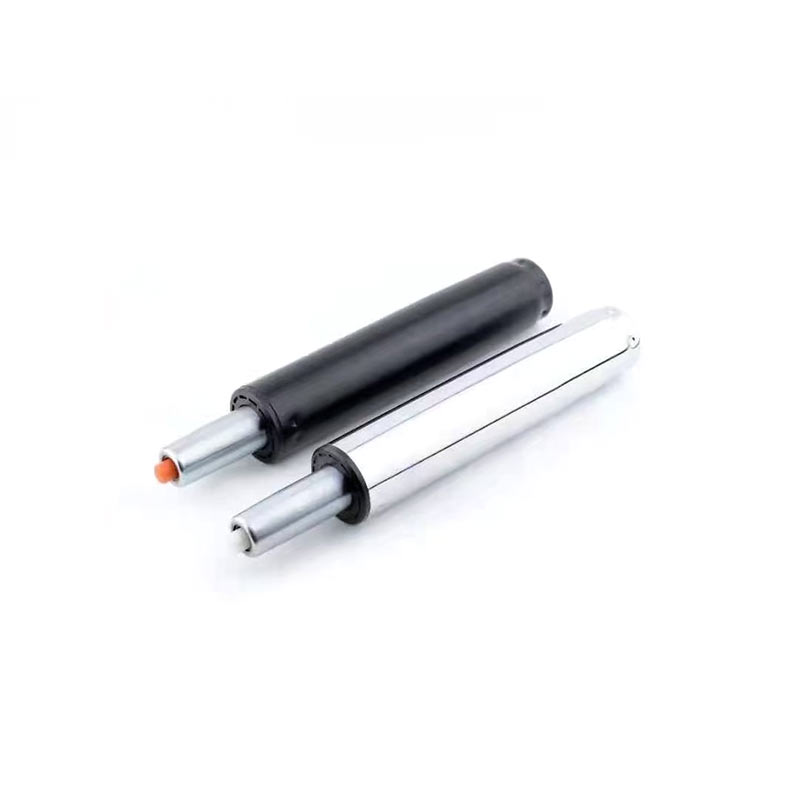
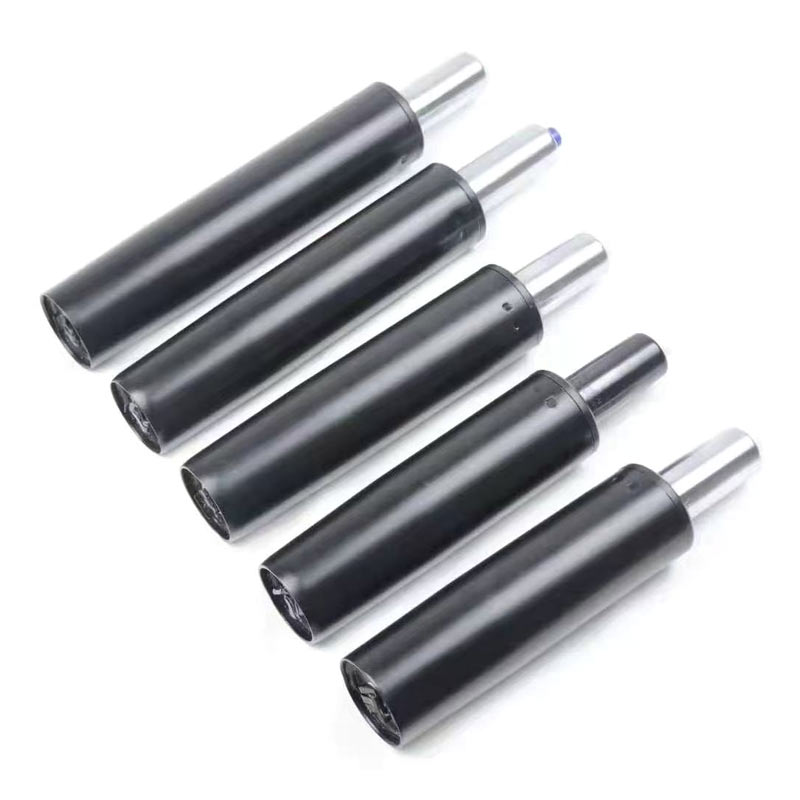
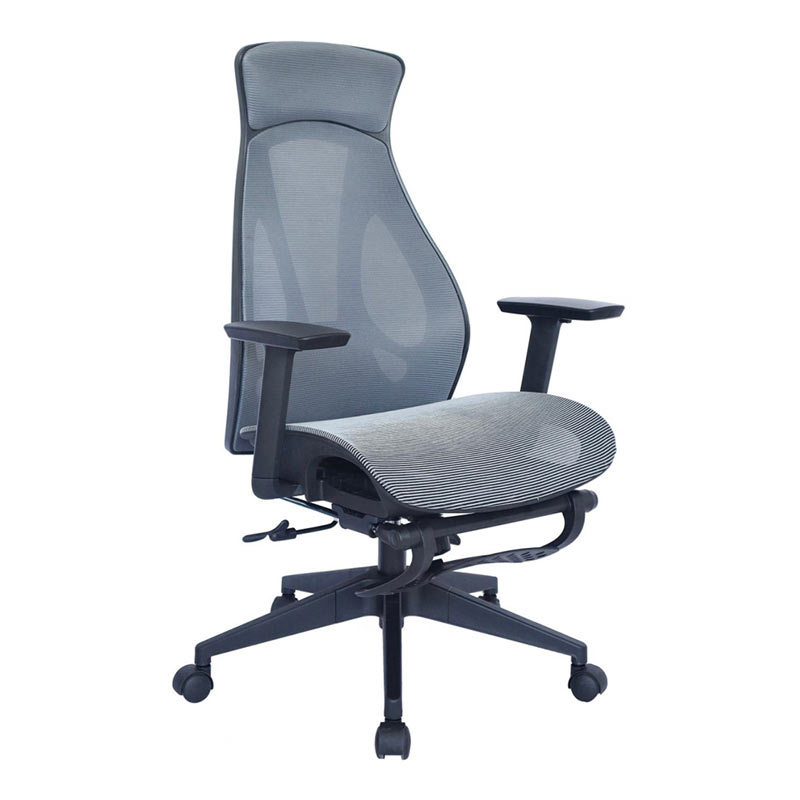
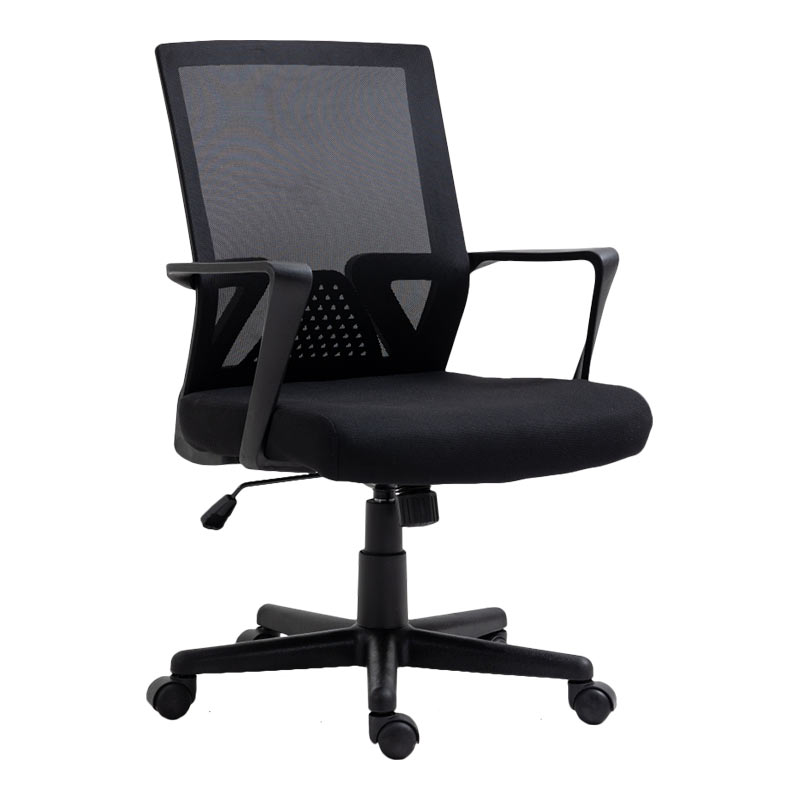
Office chair height adjustment relies on a specific class of gas lift cylinder built for vertical, axial loading rather than the angled lifting geometry used in doors and panels. Chair cylinders are rated by class — typically Class 3 for standard office use and Class 4 for heavier-duty or higher-weight-capacity chairs — with the rating reflecting tested load capacity and cycle durability rather than lifting force in the panel-lifting sense.
These cylinders combine a locking mechanism, triggered by the chair's height-adjustment lever, with a controlled-speed gas spring core, allowing the seat to rise or drop to a set height and lock firmly under the seated user's weight.
Automotive gas struts handle tailgates, hoods, trunk lids, and rear hatches, where they need to hold heavy panels open reliably against gravity while also tolerating temperature swings, road vibration, and years of outdoor exposure. Automotive-grade gas springs typically use corrosion-resistant coatings and heavier-duty seals than furniture-grade units, since they're rated for a wide temperature range and much higher cycle counts over a vehicle's service life.
Force rating and mounting geometry are especially critical in automotive use — a panel that closes too hard or won't stay open reliably is both an inconvenience and a safety concern, which is why replacement gas struts should always be matched to the original manufacturer's force specification rather than approximated.
Cabinet door gas springs are generally lower-force units designed to provide a soft-close or hold-open function on lightweight doors and lids, common in kitchen cabinetry, RV storage compartments, and consumer furniture. These typically use smaller-diameter cylinders and lighter mounting hardware than industrial or automotive applications.
Heavy-duty gas lift cylinder applications — machine access covers, truck bed caps, industrial enclosure lids — sit at the opposite end of the range, using larger-bore cylinders with higher force ratings and reinforced end fittings capable of withstanding repeated heavy cycling and, in many cases, harsher outdoor or industrial environments than furniture-grade units are built for.
Adjustable gas lift cylinders allow the output force or extension position to be tuned, most commonly used in height-adjustable furniture, ergonomic equipment, and applications where a single fixed force wouldn't suit the full range of use cases or user weights. Locking gas lift cylinders add a mechanical or valve-based lock, triggered by a lever, button, or cable, that holds the rod at any point along its stroke rather than only at full extension or full compression.
Locking mechanisms matter most in applications like adjustable desks, medical tables, and industrial workstations, where the component needs to stay fixed at a user-selected position under load, not just return to a default open or closed state.

Call Us
+86 0572-5911661

Need Support

Head Office
ADD:Baishuiwan Industrial Park, Anji County, Zhejiang Province
Copyright © 2025Zhejiang Lubote Plastic Technology Co. , Ltd.
All Rights Reserved.Custom Chair Replacement Accessories Factory

