

 En
En
 Español
Call Us
+86 0572-5911661

2026-07-20
Content
Caster material has a bigger impact on performance than most buyers expect — the same wheel size and load rating can behave completely differently on a warehouse floor depending on whether it's nylon, polyurethane, rubber, or steel. This guide covers where nylon casters excel, how they stack up against other common materials, and how to choose the right material for your floor and application.
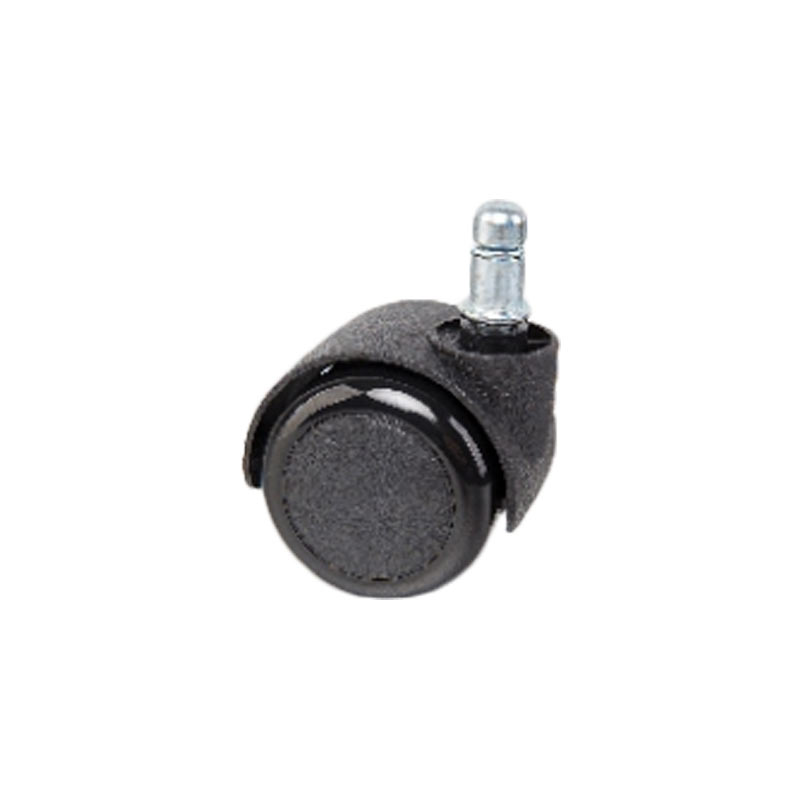
Nylon casters use a rigid, high-strength nylon polymer for the wheel tread, giving them excellent load capacity and chemical resistance in a lightweight package compared to metal wheel options. Because nylon is hard and doesn't compress under load, nylon casters roll with very low rolling resistance, making them a common choice wherever heavy loads need to move easily across smooth, hard flooring.
Nylon's rigidity allows a compact wheel to support significant weight without deforming.
The hard tread surface makes heavy loads easier to push on smooth flooring.
Performs well in washdown areas and environments with solvent exposure.
| Factor | Nylon Casters | Polyurethane Casters |
|---|---|---|
| Hardness | Rigid, minimal give under load | Softer, some cushioning under load |
| Floor protection | Can mark or damage softer floors | Gentler on finished and softer flooring |
| Noise level | Louder on hard floors | Quieter rolling due to cushioning |
| Load capacity | Very high for wheel size | High, slightly lower than comparable nylon |
| Best floor type | Smooth concrete, tile, hard industrial flooring | Finished floors, mixed surface conditions |
Comparison of nylon and polyurethane caster materials.
Nylon vs polyurethane casters is often a trade-off between maximum load capacity and floor protection. Nylon is the stronger, more economical choice on hard industrial flooring, while polyurethane's cushioning makes it the better choice when protecting finished floors or reducing noise matters more than squeezing out maximum load capacity.
Rubber casters offer significantly more cushioning and shock absorption than nylon, along with better grip and quieter operation, but at the cost of higher rolling resistance and lower load capacity for a given wheel size. Nylon casters roll more easily and support heavier loads, but transmit more vibration and noise, particularly on uneven or textured flooring.
Rubber is generally the better choice for uneven floors, sensitive equipment needing vibration dampening, or environments where quiet operation matters. Nylon is the better choice where floors are smooth and load capacity or chemical resistance is the priority.
| Factor | Nylon Casters | Steel Casters |
|---|---|---|
| Weight | Lighter, easier to maneuver empty | Heavier, adds to overall equipment weight |
| Corrosion resistance | Naturally resistant, no rust concern | Requires plating or coating to resist rust |
| Noise | Moderate rolling noise | Louder, especially on hard or uneven surfaces |
| Extreme load capacity | High, but has an upper practical limit | Higher ceiling for the heaviest industrial loads |
Comparison of nylon and steel caster materials.
Steel casters are typically reserved for the heaviest-duty applications where load capacity requirements exceed what nylon can reliably support, while nylon remains the more practical choice for the wide range of moderate-to-heavy loads found in most warehouse and industrial settings.
| Application | Why Nylon Works Well |
|---|---|
| Warehouse equipment | Hand trucks and carts moving heavy loads on smooth floors |
| Food & beverage | Washdown-rated equipment benefiting from chemical and moisture resistance |
| Manufacturing | Workstations and heavy fixtures requiring high load capacity |
| Industrial storage | Shelving and storage racks needing occasional, easy repositioning |
Common nylon caster applications and why the material fits.
| Floor Type | Recommended Material |
|---|---|
| Smooth concrete / hard industrial flooring | Nylon or steel for maximum load capacity |
| Finished or coated floors | Polyurethane to reduce marking and surface wear |
| Uneven or textured flooring | Rubber for cushioning and shock absorption |
| Wet or chemically exposed areas | Nylon or polyurethane for corrosion and chemical resistance |
General caster material recommendations by floor type.
Floor type: match wheel hardness to floor hardness — mismatched combinations cause excess wear on one surface or the other.
Load requirements: confirm the wheel's rated capacity comfortably exceeds the maximum load it will carry.
Environment: chemical exposure, moisture, or washdown requirements point toward nylon or polyurethane over untreated steel.
Noise sensitivity: quieter environments benefit from rubber or polyurethane over harder materials.
Rolling effort: frequent manual repositioning favors lower rolling-resistance materials like nylon.
Matching caster material to your specific floor surface and operating environment — rather than defaulting to the cheapest or highest load-rated option — is what determines whether casters roll smoothly and last for years, or wear out and damage flooring prematurely.
Recommended Products

Call Us
+86 0572-5911661

Need Support

Head Office
ADD:Baishuiwan Industrial Park, Anji County, Zhejiang Province
Copyright © 2025Zhejiang Lubote Plastic Technology Co. , Ltd.
All Rights Reserved.Custom Chair Replacement Accessories Factory

