

 En
En
 Español
Call Us
+86 0572-5911661

2026-07-29
Content
Beyond material choice, getting a nylon caster's configuration right — swivel or rigid, braked or free-rolling, correctly sized for the load — is what determines whether it performs reliably for years or fails prematurely. This guide covers how to choose, size, and install nylon casters for heavy duty and industrial use.
Choosing nylon casters comes down to matching four variables to your equipment and environment: load capacity, swivel versus rigid configuration, wheel size, and whether braking is needed. Getting any one of these wrong can undermine an otherwise well-chosen caster.
Confirm rated capacity exceeds actual per-caster load, with a safety margin.
Swivel for maneuverability, rigid for straight-line tracking.
Larger wheels roll easier and clear obstacles better.
Needed anywhere equipment must stay stationary during use.
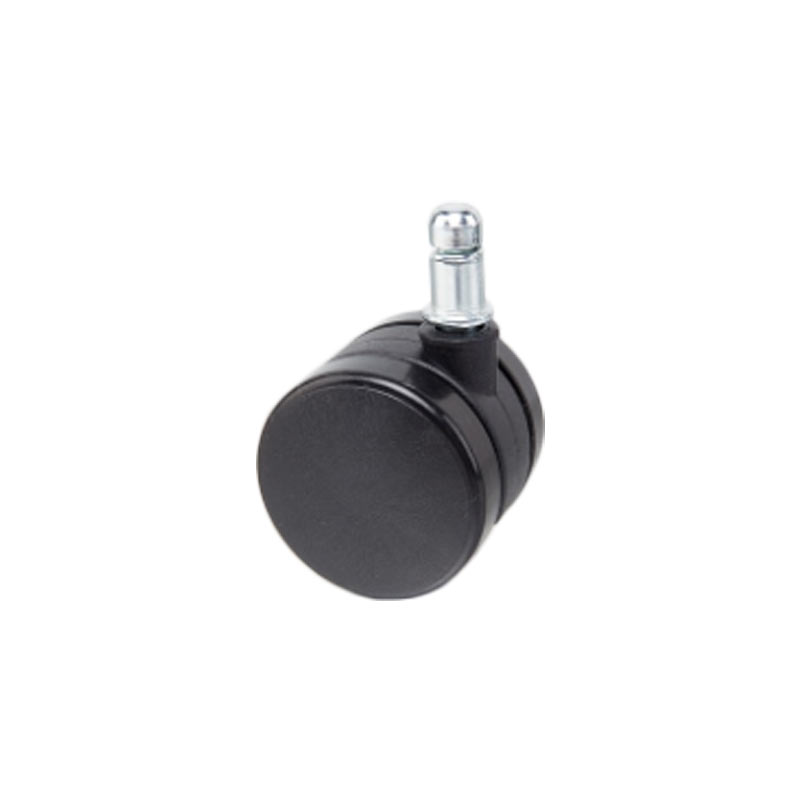
Swivel casters rotate 360 degrees around a vertical axis, allowing equipment to turn and maneuver in any direction — essential for carts, workstations, and equipment that needs to navigate around obstacles or turn in tight aisles. Rigid casters only roll in a fixed direction, offering more stable, predictable straight-line tracking under heavy loads.
Most mobile equipment uses a mix of both: swivel casters at one end for steering and maneuverability, paired with rigid casters at the other end for stability and straight-line control, particularly important on longer carts or equipment carrying heavy, unevenly distributed loads.
Nylon casters with brakes add a locking mechanism that prevents the wheel from rolling once engaged, which is important for any application where equipment needs to stay stationary during loading, unloading, or use. Common brake types include a simple wheel-lock brake that stops rotation, and a total-lock brake that stops both wheel rotation and swivel movement for maximum stability. Braked casters are standard practice on equipment like medical carts, workstations, and any mobile equipment used on a slope or near foot traffic where unintended movement would be a safety concern.
| Wheel Diameter | Typical Load Capacity per Caster | Common Use |
|---|---|---|
| 2"-3" | Light duty, up to ~250 lbs | Light carts, small equipment |
| 4"-5" | Medium duty, ~300-600 lbs | General warehouse and workstation equipment |
| 6"-8" | Heavy duty, ~700-1,200+ lbs | Industrial equipment, heavy carts, machinery bases |
General nylon caster load capacity ranges by wheel diameter. Always confirm exact ratings with the manufacturer's specification sheet.
Total equipment load capacity is not simply the sum of each caster's rating — as a standard safety practice, divide the total expected load by the number of casters and then apply a safety margin (commonly 25-30%) to account for uneven weight distribution and dynamic loads encountered during movement.
Wheel size affects more than load capacity. Larger wheels roll more easily over small obstacles, cracks, and uneven flooring, and generally require less effort to push a given load compared to smaller wheels. Smaller wheels keep equipment lower to the ground, which can matter for stability or clearance requirements, but they concentrate more pressure on a smaller contact area and can struggle with floor transitions or debris that a larger wheel would roll over easily.
| Feature | What It Does |
|---|---|
| Reinforced wheel core | Resists deformation under sustained heavy loads |
| Precision bearings | Sealed ball bearings support smoother rolling and higher load capacity than basic bushings |
| Reinforced mounting | Thicker mounting plates and forks distribute load stress across a larger area |
| Higher temperature tolerance | Industrial-grade nylon resists softening in warmer environments |
What separates heavy duty and industrial nylon casters from standard models.
Industrial nylon casters are typically rated and tested to higher standards than general consumer-grade casters, which matters for equipment running continuously in a production environment rather than occasional use.
Nylon caster applications span warehouse equipment, manufacturing workstations, hand trucks, storage racks, and food and beverage equipment where chemical and moisture resistance matter alongside load capacity. The right combination of swivel/rigid configuration, braking, and wheel size varies significantly by application — a manufacturing workstation moved occasionally has very different requirements than a warehouse cart in constant motion throughout a shift.
Confirm mounting type: plate mount, stem mount, and bolt-hole patterns are not interchangeable — match the caster to your equipment's existing mounting hardware.
Check swivel clearance: swivel casters need enough clearance to rotate fully without contacting the equipment frame.
Tighten to specification: under-tightened mounting hardware is a common cause of premature wobble or failure.
Position for balance: distribute casters to support the load evenly, particularly on equipment with an uneven weight distribution.
Test before full loading: roll the equipment empty first to confirm smooth operation before adding full load.
Correct installation is as important as choosing the right caster in the first place — even a well-specified heavy duty nylon caster can fail early if mounted incorrectly or loaded unevenly across the full set.
Recommended Products

Call Us
+86 0572-5911661

Need Support

Head Office
ADD:Baishuiwan Industrial Park, Anji County, Zhejiang Province
Copyright © 2025Zhejiang Lubote Plastic Technology Co. , Ltd.
All Rights Reserved.Custom Chair Replacement Accessories Factory

