

 En
En
 Español
Call Us
+86 0572-5911661

2026-07-14
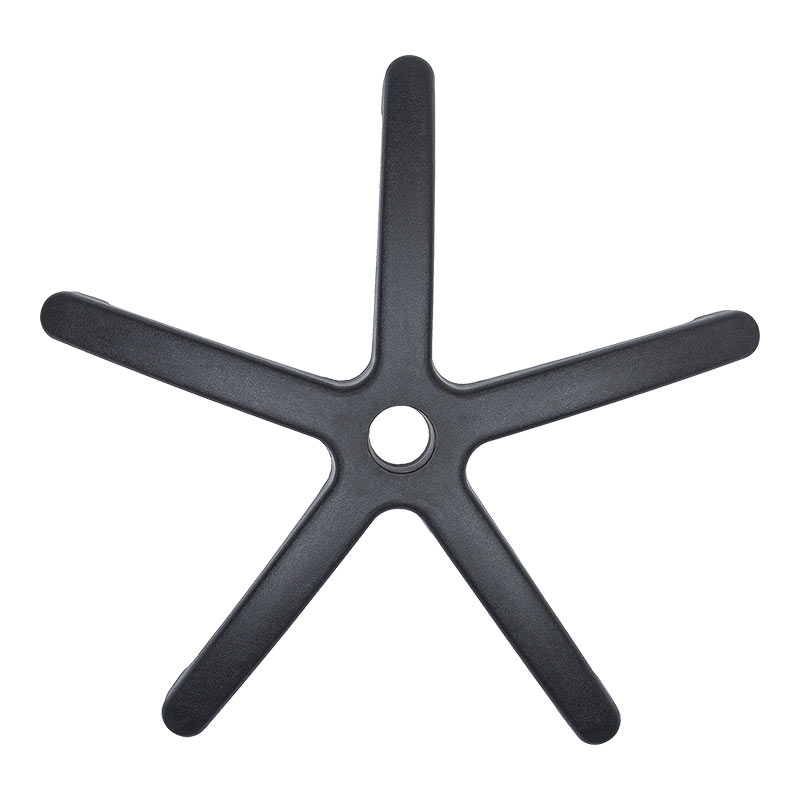
The base is the single most load-bearing component on any office chair, yet it's usually the last thing buyers evaluate. Material choice determines weight capacity, flex behavior, durability under daily rolling and swiveling, and how the base holds up over years of use. This guide covers how to identify, compare, and choose a chair base by material, and what to check before a replacement purchase.
Content
Both are plastic bases, but they are not interchangeable in performance.
| Factor | Nylon (PA) | Polypropylene (PP) |
|---|---|---|
| Rigidity | High — holds shape under sustained load | Lower — more flex, can deform over time |
| Impact resistance | Strong, especially glass-fiber reinforced grades | Moderate; more prone to cracking under sudden impact |
| Typical weight capacity | Higher, commonly 300–350+ lbs on reinforced grades | Lower, typically suited to lighter-duty seating |
| Cost | Higher | Lower |
| Common use | Mid-to-high-end office and task chairs | Budget and entry-level seating |
Nylon is the stronger choice for daily commercial use, while PP is acceptable for lighter, occasional-use chairs where cost is the priority.
Three factors narrow the decision quickly:
Good balance of strength, flex resistance, and cost. The most common material on mid-range office chairs.
Glass fibers embedded in the nylon matrix raise both rigidity and weight capacity significantly over standard nylon, without the cost jump of metal.
Lightweight and inexpensive, but softer and more prone to long-term deformation under heavy or constant load.
The highest strength-to-weight option, standard on premium and executive chairs. Resistant to cracking and holds up well under heavy daily use, at a higher price point.
Very high load capacity and a common look in traditional task chairs, though heavier than nylon or aluminum and vulnerable to plating wear over time.
For general commercial office use, glass fiber reinforced nylon is the most common recommendation — it covers the weight and durability needs of daily use without the added cost and weight of aluminum. For executive seating or heavier-duty environments, aluminum is the step up worth paying for.
| Factor | Aluminum | Nylon (glass fiber reinforced) |
|---|---|---|
| Strength-to-weight | Best in class | Good, slightly heavier per unit strength |
| Cracking risk | Very low | Low, but higher than aluminum under extreme impact |
| Corrosion resistance | High if coated or anodized | Not applicable — plastic doesn't corrode |
| Cost | Higher | Moderate |
| Typical positioning | Premium and executive chairs | Mid-range to commercial-grade chairs |
Weight capacity depends heavily on whether the nylon is reinforced and how many caster arms the base has (five-star bases are standard for stability).
| Base Type | Typical Weight Capacity |
|---|---|
| Standard (unreinforced) nylon | Approx. 220–250 lbs |
| Glass fiber reinforced nylon | Approx. 300–350+ lbs |
| Aluminum | Approx. 300–400+ lbs |
| Chrome-plated steel | Approx. 350–450+ lbs |
Always check the manufacturer's rated capacity rather than relying on material type alone, since arm thickness, base diameter, and caster quality all factor into the final rating.
Standard five-star bases typically range from 24 to 27 inches (60–70cm) in diameter, wide enough to prevent tipping under normal recline and lean. Wider bases generally correlate with higher stability and are common on drafting chairs, executive chairs, and bases rated for heavier users. When replacing a base, matching the original diameter and the center post attachment type matters more than matching the material exactly.
Most plastic chair bases — nylon and PP alike — are produced by injection molding, where molten material is forced into a steel mold under high pressure and cooled into the finished five-star shape in a single piece. This process is what allows glass fiber to be evenly distributed through the base for consistent strength, and it's also why mold quality varies noticeably between manufacturers — inconsistent wall thickness from a poor mold is a common cause of premature caster arm cracking.
"Universal" bases are designed to fit the standard center post/gas cylinder diameter used across most office chairs, but fit isn't guaranteed across every brand. Before buying a replacement:
For most replacement or new-build purchases, prioritize in this order:

Call Us
+86 0572-5911661

Need Support

Head Office
ADD:Baishuiwan Industrial Park, Anji County, Zhejiang Province
Copyright © 2025Zhejiang Lubote Plastic Technology Co. , Ltd.
All Rights Reserved.Custom Chair Replacement Accessories Factory

