

 En
En
 Español
Call Us
+86 0572-5911661

2025-12-05
Content
In the vast landscape of material handling and manufacturing, there exists a critical, yet often overlooked, component that underpins the entire operational flow: Heavy-Duty Casters. These are not mere wheels; they are engineered systems designed to bear massive weights and withstand continuous, rigorous use in the most demanding environments. Their role extends far beyond simple movement; they are foundational to efficiency, safety, and productivity, enabling the seamless transport of everything from massive machinery parts to fully stocked, high-capacity storage racks. Choosing the correct caster can mean the difference between smooth, uninterrupted workflow and constant maintenance issues or, worse, catastrophic failure. As a core element of industrial infrastructure, understanding their specifications, capabilities, and the environments they are built to thrive in is essential for any professional involved in logistics, facility management, or equipment design. Their robust construction and specialized features are a testament to their importance, truly making them the unsung heroes of industrial mobility.
Defining Heavy-Duty Casters is fundamentally about classifying casters designed for applications requiring superior load-bearing capabilities, typically exceeding 1,000 pounds per caster, and often incorporating specialized features to handle abrasive environments, temperature extremes, or high-impact shock. Unlike light or medium-duty models, these casters are constructed from robust materials like forged steel, extra-thick plates, and precision-machined components to ensure structural integrity under dynamic and static loads. Their crucial role is to maintain mobility and stability for some of the largest and most valuable assets in any facility—think aerospace assembly jigs, automotive stamping dies, or large-scale food processing equipment. The sophistication lies in the quality of the bearings and the hardened swivel raceways, which allow heavy loads to be steered and repositioned with minimal effort and maximal durability. This level of engineering is non-negotiable in settings where failure is costly and dangerous, making them an indispensable investment.
Selecting the optimal Heavy-Duty Casters involves a deep technical assessment of several interdependent factors that directly affect performance, longevity, and safety. The complexity arises because a caster's suitability is a function of the load, the operating environment, the floor condition, and the required duty cycle. Miscalculating any of these variables can lead to premature wear, difficulty in pushing/pulling, and potential equipment failure. Professionals must not only calculate the total weight but also account for dynamic forces like impact loading, cornering stress, and the effort required for initial movement (breakaway force). A holistic approach considers the complete system, from the mounting plate to the tread composition, ensuring that every component is specified to perform reliably under the predicted worst-case scenarios. This meticulous selection process is the foundation for a truly efficient and safe material handling solution.
Load capacity is the most fundamental metric when choosing Heavy-Duty Casters, representing the maximum static weight a single caster can safely support. However, relying solely on this number is a common professional oversight. True operational safety requires incorporating a significant safety margin—typically a factor of $2 \times$ or $3 \times$ the calculated dynamic load—to account for factors that dramatically increase stress, such as shock loading from impacts, uneven surfaces causing momentary weight concentration on fewer wheels, and the initial force needed to break the load away from a static position. Industry standards recommend calculating the capacity per caster based on the total load divided by $N-1$ (where $N$ is the number of casters) to simulate one wheel losing contact with the floor. This cautious approach ensures that the casters can reliably handle not just the dead weight, but the inevitable, unpredictable forces encountered in a busy industrial environment, thus guaranteeing the structural integrity of the equipment and the safety of the personnel.
The wheel material is arguably the single most critical component influencing a caster’s performance, durability, and compatibility with the operational environment. Materials like polyurethane, nylon, rubber, and cast iron each offer a unique balance of load capacity, floor protection, rolling resistance, and resistance to environmental factors such as moisture, chemicals, and heat. For instance, extremely high loads might necessitate the rigidity of steel or V-groove wheels, which offer minimal floor protection but maximum capacity, whereas softer polyurethanes might be chosen for quieter operation and enhanced floor preservation. When dealing with specialized conditions, like high-heat industrial ovens or cryogenic freezers, the material must be rated to maintain its mechanical properties without cracking or permanent deformation. A careful analysis of the entire operating spectrum—from initial startup to peak use and even long periods of idleness—is essential to select a material that maximizes both equipment lifespan and workplace ergonomics.
When selecting Industrial Casters for Extreme Temperatures, the wheel and bearing materials become paramount, as conventional components can degrade rapidly. High-heat applications (e.g., paint curing ovens, autoclaves) require specialized metals like high-heat forged steel, high-temperature phenolic, or glass-filled nylon wheels, often paired with custom high-temperature grease or self-lubricating graphite bushings to prevent bearing seizure. Conversely, cryogenic or freezer environments require materials that do not become brittle, such as certain types of polyurethane or specialized cold-resistant nylon, along with stainless steel components to prevent rust from condensation. The challenge in these extreme environments is finding a material that maintains both its structural integrity and its ability to roll without excessive resistance across the entire thermal spectrum.
| Operating Condition | Best Wheel Material | Key Advantage | Primary Limitation |
| High Heat ($180^{\circ}\text{C}$ to $260^{\circ}\text{C}$) | High-Temp Phenolic / Forged Steel | Does not soften or melt; maintains capacity. | High rolling resistance; poor floor protection. |
| Cold/Cryogenic (below $0^{\circ}\text{C}$) | Polypropylene / Cold-Resistant Nylon | Resistant to cracking and becoming brittle. | Lower load capacity compared to steel. |
| Corrosive Chemicals/Washdown | Stainless Steel / Polyurethane (Stainless Rig) | Excellent resistance to rust and chemical attack. | Higher initial cost. |
The type and condition of the operating floor have a profound, often overlooked, impact on the selection of Heavy-Duty Casters. A caster system perfectly suited for smooth, polished epoxy might fail rapidly or require excessive push force on rough, pitted concrete or gravel. A common goal is to minimize the vibration and shock transmitted to the load and the operator, which necessitates a larger diameter wheel and, often, a resilient tread material to absorb impacts. Uneven surfaces amplify dynamic forces, requiring higher safety margins and more forgiving tread compounds. Conversely, on precision or static-sensitive floors, the focus shifts to non-marking, non-conductive materials. Properly matching the wheel to the floor not only protects the floor investment but significantly extends the life of the caster bearings, reduces noise pollution, and ensures the ergonomic safety of the cart's handler.
Choosing the ideal Heavy Duty Casters for Concrete Floors and rough terrain presents a unique engineering challenge, as concrete is often uneven, cracked, or littered with debris. The harsh, abrasive nature of concrete necessitates wheels with extreme hardness and resistance to chipping, while the rough texture demands a large diameter to reduce the impact of bumps and obstacles. Smaller, hard wheels on concrete can generate tremendous noise and vibration, leading to fast wear and potential load shifting. Therefore, the optimal solution generally involves very hard, thick-tread polyurethane or forged steel wheels (for very heavy loads), often combined with shock-absorbing rigs. Polyurethane offers a superior balance, providing the necessary hardness for capacity and wear resistance, yet enough elasticity to dampen vibrations and offer a quieter, more ergonomic roll. For very rough, outdoor asphalt or gravel, the use of pneumatic wheels on a heavy-duty rig becomes necessary to prevent the load from being damaged by constant impact and to maintain continuous contact with the uneven ground.
| Floor Type | Recommended Wheel Material | Key Feature for Floor | Mobility/Noise Impact |
| Rough/Cracked Concrete | High-Load Polyurethane or Pneumatic | Shock absorption and durability. | Good mobility; moderate noise (Poly). |
| Smooth Epoxy/Polished Concrete | Non-Marking Polyurethane or Nylon | Floor protection and easy rolling. | Excellent mobility; low noise. |
| Grating/Metal Decking | Cast Iron or Forged Steel | High hardness prevents tread damage. | Poor floor protection; high noise. |
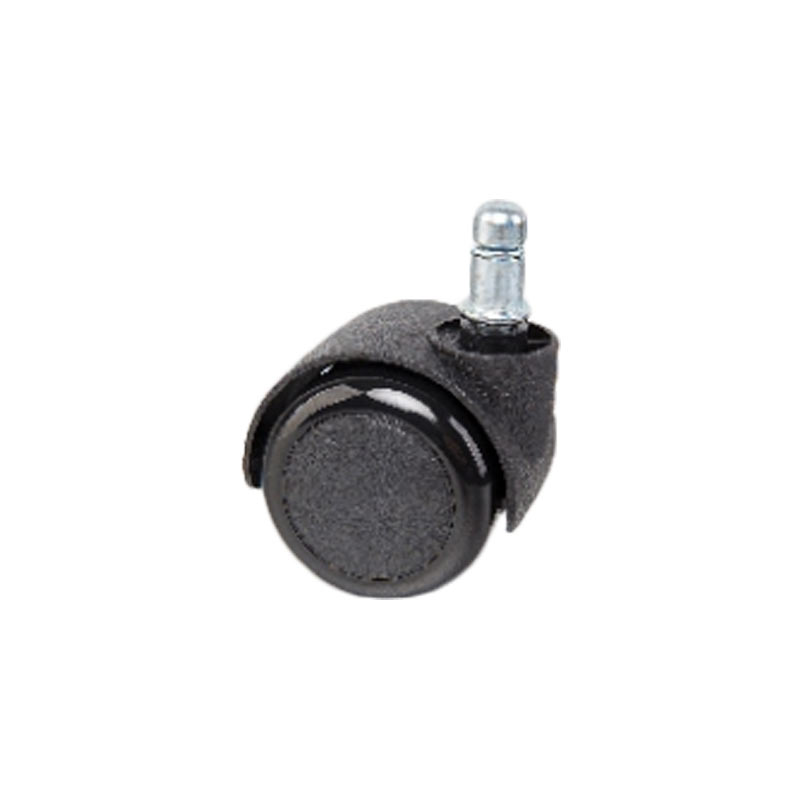
The choice between swivel, rigid, and specialized directional casters is crucial for defining the maneuverability and stability of the equipment, a key consideration for maximizing the efficiency of Caster Wheels for High Load Capacity Carts. Swivel casters provide $360^{\circ}$ rotation, offering maximum maneuverability in tight spaces, but can compromise tracking and stability over long distances. Rigid casters, fixed in a straight line, are essential for ensuring directional stability and preventing "caster flutter" at higher speeds. The optimal setup often involves a combination—a common configuration being a "diamond pattern" with two rigid casters in the center and two swivel casters at the ends, which balances control with turning ability. Understanding the intended use environment—tight aisles versus long factory floors—dictates the ratio and placement of these caster types, directly impacting the operator's effort and the safety of the load. This design choice is fundamental to the ergonomic and functional success of the mobile unit.
The fundamental distinction between Swivel vs Rigid Heavy Duty Casters lies in their rotational capability, a design choice that governs the overall handling dynamics of any mobile equipment. Swivel casters feature a top plate or kingpin that allows the wheel to turn $360^{\circ}$, providing exceptional cornering and positioning ability, crucial for complex maneuvers in constrained areas. However, this flexibility means they require constant steering input and can be unstable when towed at speed. Conversely, rigid casters have a fixed orientation, only moving forward and backward. Their primary advantage is directional stability; they force the equipment to track straight, reducing operator fatigue and increasing safety when pushing or towing large, heavy loads over long distances. A standard four-caster cart will typically use two rigid and two swivel casters to achieve a balanced blend of control and steering ease. For very heavy or long carts, the decision often leans toward configurations that prioritize rigid casters or incorporate swivel locks to maintain predictable directional movement, ensuring that the heavy payload remains securely on track.
| Caster Type | Primary Function | Best For | Limitation |
| Swivel Caster | $360^{\circ}$ Directional Change | Tight turns, maneuvering around obstacles, precise positioning. | Poor tracking, potential for "flutter" at high speed. |
| Rigid Caster | Fixed, Straight-Line Movement | Towing carts, long distance travel, maintaining directional stability. | Cannot be used for steering; requires substantial space to turn. |
The application of Caster Wheels for High Load Capacity Carts extends far beyond standard warehouse usage, often requiring specialized, custom-engineered solutions. In sectors like aerospace and heavy machinery manufacturing, these carts are designed to handle immense concentrated loads, such as fully assembled aircraft components or massive industrial tooling. This specialization demands casters with features like dual wheels for improved load distribution and reduced floor damage, or even flanged wheels designed to run on embedded rails, combining the mobility of casters with the precision tracking of rail systems. Furthermore, applications in cleanrooms or electrostatic discharge (ESD) environments necessitate the use of non-contaminating and conductive wheel materials. The engineering focus shifts from simple load-bearing to solving complex movement problems, ensuring that precision loads are transported with minimal shock and maximum positional accuracy. The final caster selection is a direct reflection of the cart's mission, whether it's navigating a complex assembly line or providing stable, temporary storage for critical, high-value components.
Maximizing the lifespan of Heavy-Duty Casters is not just about choosing the right initial product; it requires a proactive and rigorous maintenance regimen. Given the high stress and continuous use typical in industrial settings, components like the swivel raceways and wheel bearings are subject to inevitable wear. Regular lubrication with the correct type of high-pressure or high-temperature grease, as specified by the manufacturer, is the single most important maintenance activity to prevent premature failure. Inspections should routinely check for loose hardware (like axle nuts and mounting bolts), signs of corrosion, and tread wear. The use of brakes and swivel locks must also be monitored, as their failure can pose significant safety risks. Implementing a scheduled maintenance program ensures that small issues—a dry bearing or a cracked wheel tread—are identified and corrected before they lead to catastrophic equipment failure, thereby protecting the overall investment and maintaining the peak efficiency of the material handling fleet.
While the rated static load is provided by the manufacturer, professional safety margins dictate a much more conservative approach for dynamic applications. When selecting Heavy-Duty Casters, a common best practice is to divide the total intended load (including the weight of the cart itself) by three, not four, and then select a caster with a rated dynamic capacity that meets or exceeds this resulting number. This $N-1$ calculation accounts for the scenario where the equipment encounters a bump or uneven floor, causing one wheel to momentarily lift or offload, placing the entire weight onto the remaining three casters. For high-impact or shock-loading environments, such as those where carts are frequently dropped or towed over very rough ground, an even greater safety factor—up to $2 \times$ the $N-1$ calculated capacity—is highly recommended. This conservative sizing ensures longevity, prevents bearing failure, and provides a significant safety buffer against structural damage to the cart and potential workplace accidents.
Minimizing the push/pull force, a critical ergonomic factor for Caster Wheels for High Load Capacity Carts, involves optimizing several interconnected components. The primary factors are wheel diameter, wheel material, and bearing quality. Larger Wheel Diameter is the most effective change, as it reduces rolling resistance and rolls over obstacles more easily. Wheel Material should be chosen for low hysteresis, with high-quality polyurethanes typically outperforming rubber or cast iron in reducing rolling friction. Crucially, the use of Precision Ball Bearings or Tapered Roller Bearings in both the wheel hub and the swivel raceway dramatically reduces the breakaway and rolling force compared to plain or sleeve bearings. Furthermore, ensuring the Heavy-Duty Casters are properly lubricated and the floor is clean of debris will maintain this low-force state. Finally, for extremely heavy loads, consider adding a fifth, centrally-located caster to aid in pivoting and steering, further reducing the necessary effort.
Specialized Industrial Casters for Extreme Temperatures are absolutely necessary and cannot be reliably substituted or adapted from standard casters. The failure mode for standard casters in extreme heat is the degradation of the wheel material (softening, melting, or cracking) and the breakdown of standard lubricants, leading to bearing seizure and structural failure of the swivel assembly. In extreme cold, standard wheel materials can become brittle and fracture, while common lubricants thicken, making the cart nearly impossible to move. Specialized casters use materials like high-temperature phenolic resin, silicone wheels, or graphite bushings for heat, and cold-resistant compounds (like certain nylons and stainless steel) for freezing environments. Attempting to adapt standard casters will result in costly, rapid failure, downtime, and significant safety hazards, reinforcing the need to invest in casters explicitly rated for the operational temperature range.
Recommended Products

Call Us
+86 0572-5911661

Need Support

Head Office
ADD:Baishuiwan Industrial Park, Anji County, Zhejiang Province
Copyright © 2025Zhejiang Lubote Plastic Technology Co. , Ltd.
All Rights Reserved.Custom Chair Replacement Accessories Factory

