

 En
En
 Español
Call Us
+86 0572-5911661
 Home / News / Industry news / Gas Lift Cylinder: Height Adjustment, SGS Certification, and Selection
2026-03-23
Content
A gas lift cylinder is a pneumatic device that provides smooth, controlled height adjustment in chairs, stools, tables, and other adjustable furniture and equipment. It is the mechanism behind the effortless raise-and-lower function that users expect from office chairs, desk chairs, gaming chairs, laboratory stools, and any other adjustable seating or work surface where the seated height must be matched to the user's proportions and the work task.
The gas lift cylinder is a pressurized component -- it operates by containing compressed gas (typically nitrogen) that resists the user's weight when the locking mechanism is engaged and allows controlled movement when the actuator is released. Because it is a pressurized vessel integrated into furniture that supports a person's weight, a gas lift cylinder has both performance and safety implications that make the quality and certification of the component critical considerations for manufacturers, specification buyers, and end users.
SGS certification -- issued by SGS SA, the world's largest inspection, testing, and certification company -- is one of the primary third-party verification marks used to validate that a gas lift cylinder has been tested and confirmed to meet defined performance, durability, and safety standards. Understanding what SGS certification means for a gas lift cylinder, what tests it requires the product to pass, and how to interpret certification claims in the marketplace provides a foundation for making informed purchasing and specification decisions.
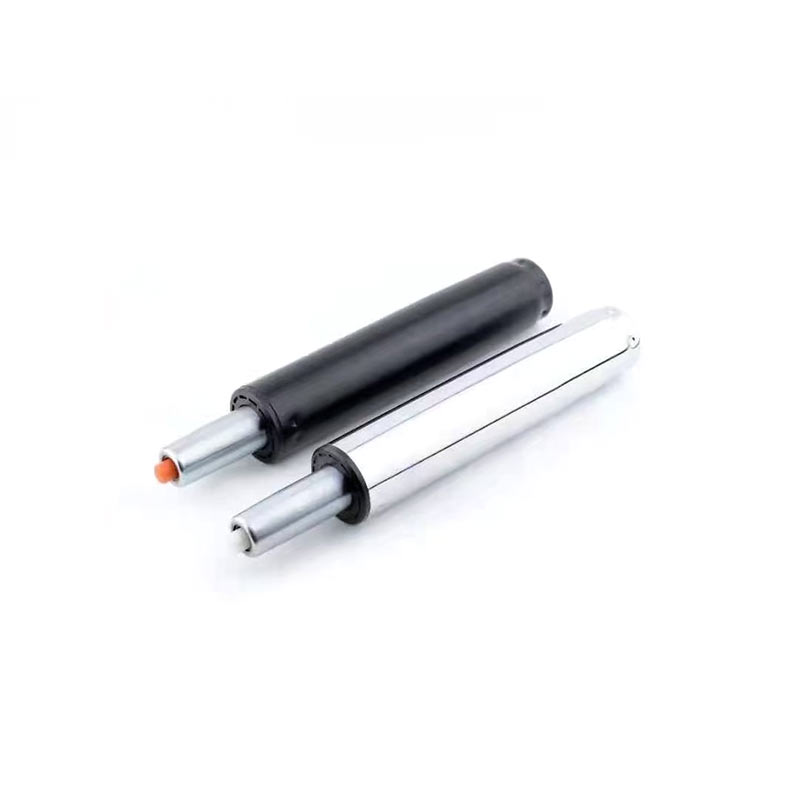
The gas lift cylinder operates as a single-acting pneumatic piston assembly. The cylinder body consists of an outer steel cylinder, an inner piston rod assembly, a sealed gas chamber containing compressed nitrogen, and a valve mechanism at the top of the inner cylinder that controls whether the gas can flow and the piston can move.
When the height adjustment lever on the chair (connected to the actuating button at the top of the cylinder) is pressed, the control pin depresses the valve at the top of the inner piston rod, opening a passage that allows nitrogen gas to transfer between the two chambers on either side of the piston -- the lower chamber (between the bottom of the outer cylinder and the piston) and the upper chamber (between the piston and the top seal). This equalization of pressure allows the piston to move freely in either direction.
The direction of movement when the valve is open depends on the net force acting on the piston assembly: if the user is seated and presses the lever, their body weight overcomes the gas pressure in the lower chamber and the seat descends. If the user stands and presses the lever, the gas pressure in the lower chamber is no longer opposed by the user's weight and pushes the piston upward, raising the seat to its highest position. When the lever is released, the valve closes and the piston is locked at its current position by the trapped gas pressure difference across the valve, maintaining the seat at the selected height until the lever is pressed again.
This operating principle means that the gas lift cylinder functions as both a gas spring (providing the upward force that raises the seat) and a pneumatic locking mechanism (maintaining the selected height against the user's weight without any mechanical detent or friction lock). The quality of the valve, the integrity of the gas seals, and the precision of the piston-to-cylinder clearance are the three factors that most directly determine the cylinder's performance: how smoothly it adjusts, how reliably it holds height, and how long it maintains those characteristics before the seals degrade and gas begins to leak past them.
Nitrogen is used as the working gas in gas lift cylinders for specific practical reasons. Unlike air, nitrogen is an inert gas that does not support oxidation (rusting) of the steel cylinder components it contacts, does not contain moisture that would cause internal corrosion or freeze at low temperatures, and does not contain oxygen that would slowly oxidize the lubricating oil on the piston and seals. The nitrogen is charged at a specific initial pressure during manufacturing -- typically 80 to 120 bar depending on the cylinder class and rated load capacity -- which determines the extension force (the force with which the empty cylinder pushes to its full extension).
Gas lift cylinders do not need to be recharged with nitrogen during their service life -- the initial charge is sealed within the cylinder and should remain stable for the full working life of the component. A cylinder that gradually sinks during use has developed a leak in the valve or the piston seals, allowing nitrogen to slowly escape, and cannot be repaired in the field -- it must be replaced.
Gas lift cylinders are produced in standard classes defined by their stroke length (the range of height adjustment they provide), their installed height, and their load capacity. These parameters are largely standardized across the industry, which is why a replacement cylinder from any manufacturer in the correct class will typically fit a chair originally equipped with a cylinder from a different manufacturer.
The most commonly encountered classes in the seating industry are designated by numbers that reflect the approximate stroke length:
The class designation alone does not fully define a gas lift cylinder's dimensions -- the outside diameter of the outer cylinder, the taper dimensions at the top and bottom (which connect to the seat mechanism and the five-star base), and the overall installed length in both compressed and extended positions are also key dimensional parameters. In the standard office chair market, the taper dimensions are almost universally standardized (28mm upper taper, 22mm lower taper at the tip), which enables the broad interchangeability between cylinders from different manufacturers that makes replacement straightforward.
Gas lift cylinders are rated for a maximum user weight -- the load that the cylinder can support at any position within its stroke range without the nitrogen gas compressing enough to allow the piston to contact the cylinder bottom. Standard cylinders are typically rated for 100 to 130 kilograms. Heavy-duty cylinders are rated for 150 kilograms, 180 kilograms, or 200 kilograms and above, using heavier-walled outer cylinders, larger piston seals, and a higher initial nitrogen charge pressure to provide the required support force at maximum weight.
Using a standard-rated cylinder in a chair rated for a heavier user than the cylinder is designed for will result in the cylinder gradually sinking during use as the gas pressure is insufficient to support the load at the set height -- the same symptom as seal failure, but from load overrating rather than seal degradation. Always verify that the replacement or original cylinder's weight rating matches or exceeds the chair's rated maximum user weight.
SGS SA is a Swiss multinational company that provides inspection, verification, testing, and certification services across a wide range of industries and product categories. Its certification mark is recognized globally as a credible third-party validation that a product has been tested by an independent laboratory against defined standards and has passed those tests at the time of certification.
For a gas lift cylinder, SGS certification typically involves testing against one or more of the following standards:
The core performance tests that a gas lift cylinder must pass for BIFMA or EN 1335 certification focus on cycle life (how many height adjustment cycles the cylinder completes before failing) and height retention (whether the cylinder holds its set height within acceptable limits under sustained user weight loading). Typical certification test parameters include:
SGS certification claims on gas lift cylinder products should be verifiable by requesting the test report from the supplier. A genuine SGS test report identifies the specific product tested (by model number and specification), the standard or standards against which it was tested, the test results for each individual test within the standard, and the overall pass/fail determination. The report carries an SGS reference number and the issuing laboratory's credentials.
A product claiming SGS certification but unable to provide the corresponding test report is either uncertified or certified under a standard that does not cover the tests the buyer is relying on. In the gas lift cylinder market, where low-cost products from less established manufacturers sometimes carry ambiguous or misleading certification language, requesting and reviewing the actual test report is the only reliable way to confirm that the product has been independently tested against a defined standard and passed.
While SGS certification is one of the most widely recognized third-party validation marks for gas lift cylinders in the global market, several other standards and certifications are relevant depending on the market and application of the cylinder.
TUV Rheinland and TUV SUD are German technical inspection and certification organizations with global reach that perform product certification and testing services comparable to SGS across many product categories. TUV certification of gas lift cylinders is common in European markets and is equivalent in credibility to SGS certification when testing is performed against the same standards. Some manufacturers carry both TUV and SGS certification for different market regions.
In the North American market, BIFMA certification through BIFMA's product certification program (administered by accredited third-party testing laboratories including SGS) is the primary standard reference for commercial seating specification. Contract furniture buyers in the United States and Canada routinely require BIFMA certification for office chairs and seating components as part of their procurement specifications for corporate, government, healthcare, and education environments.
CE marking on a gas lift cylinder indicates compliance with applicable European Union directives for the product. For gas lift cylinders, the relevant EU directives may include the Pressure Equipment Directive (PED, 2014/68/EU) for pressurized components above defined pressure thresholds, and the Machinery Directive where the cylinder is integral to a height-adjustable work surface or platform. CE marking is a self-declaration by the manufacturer that the product meets the applicable directives, which may be supported by third-party testing -- but CE marking alone does not indicate which specific tests have been performed or which third-party organization reviewed the technical file.
While the office chair is the most familiar application for gas lift cylinders, the same technology is applied across a broader range of height-adjustable furniture and equipment where controlled height adjustment is required.
Manual height-adjustable desks and work surfaces use gas lift cylinders as the primary height adjustment mechanism in configurations where the simplicity and low cost of a pneumatic gas spring is preferred over the electric motor drives used in premium sit-stand desks. Gas spring tables are adjusted by a lever mechanism that releases the cylinder to move under the weight of the table surface or the applied manual force, and lock in position when released. The larger load capacity requirements of a work surface compared to a seating application drive the use of heavy-duty cylinders rated for the table surface weight plus applied vertical loads from leaning or pressing down on the table.
Examination chairs, treatment tables, and clinical stools in medical and dental settings use gas lift cylinders as height adjustment mechanisms where the smooth, quiet, one-handed adjustment they provide is critical to clinical workflow. Medical-grade cylinders are typically specified to higher cycle life requirements than commercial office furniture equivalents and may require certification against healthcare-specific standards (such as EN 1021 flammability in the case of the complete seating assembly) in addition to the standard furniture seating tests.
Industrial stools and laboratory chairs for cleanroom, electronics assembly, and precision manufacturing environments use gas lift cylinders in configurations that may include anti-static (ESD) requirements (where the cylinder is part of the electrical ground path from the seated operator to the floor), chemical resistance requirements for the outer cylinder finish in laboratory environments, and specific height ranges suited to production line work surface heights that differ from standard office desk heights.
Height-adjustable shower chairs, bathroom stools, and mobility aid seating use gas lift cylinders for height adjustment in configurations where ease of use for people with limited mobility is the primary design criterion. The single-lever, one-handed adjustment of a gas lift cylinder -- requiring minimal hand strength and coordination -- is a specific functional advantage for this application compared to threaded adjustment mechanisms or pin-and-hole adjusters that require both hands or stronger grip strength to operate.
For furniture manufacturers, buyers specifying seating for commercial environments, and procurement teams evaluating gas lift cylinder suppliers, the following parameters represent the minimum information required for accurate specification and meaningful comparison between products.
Recommended Products

Call Us
+86 0572-5911661

Need Support

Head Office
ADD:Baishuiwan Industrial Park, Anji County, Zhejiang Province
Copyright © 2025Zhejiang Lubote Plastic Technology Co. , Ltd.
All Rights Reserved.Custom Chair Replacement Accessories Factory

