

 En
En
 Español
Call Us
+86 0572-5911661
 Home / News / Industry news / Adjustable Armrests, Padded Armrests & Fixed Armrests: Selection Guide
2026-04-02
Content
Armrests are consistently underweighted in seating procurement decisions, yet their configuration has a measurable impact on upper body musculoskeletal load. When armrests are set at the correct height, forearm support reduces trapezius muscle activity by 10–20% during sustained keyboard and mouse work — a meaningful reduction for workers spending six or more hours per day at a desk. Poorly positioned armrests achieve the opposite: set too high, they elevate the shoulders and compress the cervical spine; set too low, they provide no support and are simply ignored.
The fundamental distinction between armrest categories — adjustable, padded, and fixed — reflects different design priorities: adaptability to the individual, comfort for sustained contact, and structural simplicity for high-use environments. Understanding where each type excels prevents misapplication that results in expensive seating investments delivering poor ergonomic outcomes.
Armrest width relative to shoulder width also matters. Armrests spaced wider than the user's shoulders force forearm abduction, creating lateral load on the elbow joint over time. Many users in open-plan offices work without using armrests at all — not because they prefer it, but because standard-width chairs don't fit their body geometry. This is one of the primary ergonomic arguments for chairs with inward-pivoting or width-adjustable armrest options.
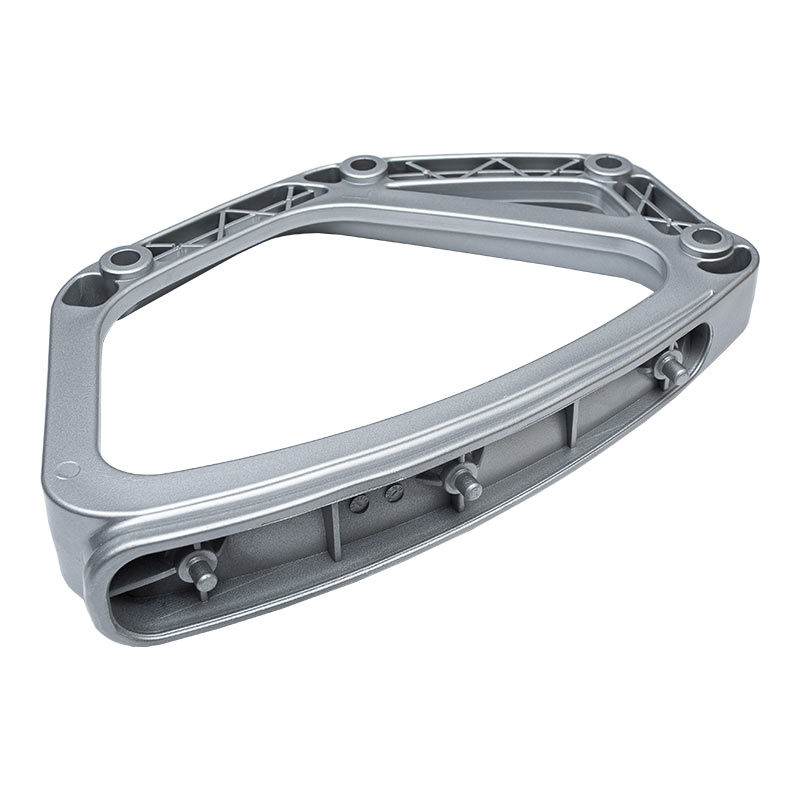
Adjustable armrests are marketed across a wide range of adjustment axes, and the naming conventions — 2D, 3D, 4D — are not standardized across manufacturers. Understanding what each axis of adjustment contributes helps prioritize which features justify the cost premium in a given application.
In shared workstation environments or hot-desking setups, 4D adjustable armrests provide the most complete accommodation across different users. For single-user dedicated seating where the chair is correctly set once and rarely changed, 2D height-and-width adjustment typically captures 80–90% of the ergonomic benefit at a lower cost point.
Padded armrests address a specific failure mode of hard-surface armrests: point pressure concentration at the olecranon (elbow tip) during sustained forearm contact. Hard polyurethane or nylon surfaces create localized pressure that becomes uncomfortable within 30–60 minutes, leading users to shift posture or avoid the armrest entirely. Padding distributes this contact pressure over a larger area, extending the duration of comfortable supported use.
The performance of padded armrests over time varies significantly by foam grade and cover material:
Replaceable pad caps — where the foam and cover unit can be removed and replaced without replacing the entire armrest mechanism — are a practical feature for high-use commercial seating that significantly reduces total lifecycle cost.
Fixed armrests eliminate all adjustment mechanisms, which has real advantages in specific applications. With no moving parts subject to wear, loosening, or breakage, fixed armrests maintain consistent geometry over years of heavy use — a meaningful advantage in public seating, waiting areas, transportation seating, and institutional environments where maintenance resources are limited and vandal resistance matters.
The structural argument for fixed armrests is also relevant in seating designed for users who use armrests for standing assistance — elderly users, patients, or workers transitioning between seated and standing tasks. A fixed armrest transfers load directly into the chair frame without any mechanism in the load path that could shift or collapse under the dynamic forces involved in a person pushing themselves upright. For this application, a high-quality fixed armrest with a robust frame attachment is safer than an adjustable armrest with a worn height-lock mechanism.
The key limitation of fixed armrests is population fit. A fixed height that works well for a user of average stature creates poor ergonomic conditions for users at the extremes of the height distribution. For this reason, fixed armrests are best suited to:
When specifying fixed armrests for office environments, selecting a height that corresponds to the 50th percentile seated elbow height (approximately 240mm above the compressed seat surface for a mixed adult population) minimizes the average ergonomic compromise across users who cannot adjust the chair to fit themselves.
Recommended Products

Call Us
+86 0572-5911661

Need Support

Head Office
ADD:Baishuiwan Industrial Park, Anji County, Zhejiang Province
Copyright © 2025Zhejiang Lubote Plastic Technology Co. , Ltd.
All Rights Reserved.Custom Chair Replacement Accessories Factory

