

 En
En
 Español
Call Us
+86 0572-5911661
 Home / News / Industry news / Engineering Comfort: The Role of Advanced Plastic Materials in Ergonomic Backrest Design
2026-03-07
Content
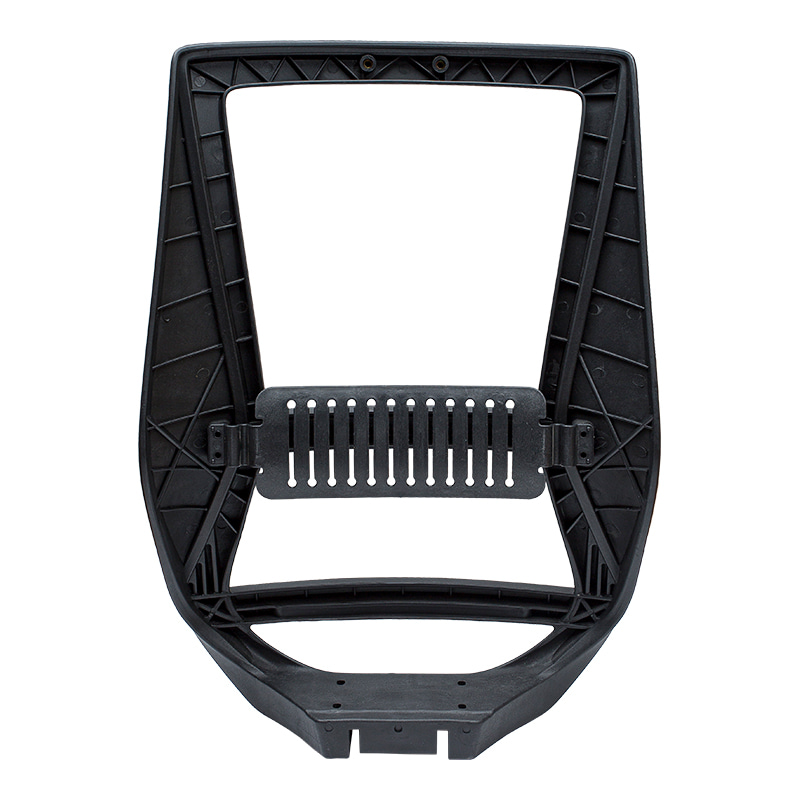
In the modern workplace, the focus on physical well-being has shifted from luxury to necessity. As professionals spend increasing hours at their desks, the design of seating furniture has evolved to meet complex physiological requirements. Among these components, the ergonomic backrest serves as the primary interface between the user and the chair, tasked with maintaining spinal alignment and reducing mechanical stress. While various materials exist, engineered plastics have emerged as the dominant medium for creating high-performance, durable, and precisely contoured ergonomic backrests. This article explores the science behind plastic-based ergonomic backrests, the engineering materials involved, and how these designs fundamentally improve user comfort.
The human spine possesses a natural S-shaped curvature consisting of the cervical, thoracic, and lumbar regions. When sitting for extended periods, the natural tendency is to slouch, which flattens the lumbar curve and puts immense pressure on the intervertebral discs. An ergonomic backrest is designed to counteract this by providing firm, targeted support to the lumbar lordosis (the inward curve of the lower back).
To be truly ergonomic, a backrest must satisfy three criteria:
Plastic is frequently chosen for ergonomic backrests due to its unparalleled versatility in manufacturing. Unlike fabric or leather, which are primarily upholstery materials, high-grade engineering plastics allow for complex geometries that can be molded to precise ergonomic specifications.
| Material Feature | Benefits for Ergonomic Backrests |
|---|---|
| High Modulus of Elasticity | Allows for controlled flex, providing support while moving with the user. |
| Precision Injection Molding | Enables intricate internal ribbing for structural integrity without excessive weight. |
| Impact Resistance | Ensures longevity in high-use environments like offices and schools. |
| Surface Finish Versatility | Can be textured to prevent slipping or finished for aesthetic integration. |
The term “plastic” covers a wide spectrum of polymer technologies. In professional office furniture, specific engineered resins are utilized to ensure both safety and performance.
Polypropylene (PP): Often used in its reinforced form, PP is valued for its lightweight nature and cost-effectiveness. It offers good chemical resistance and can be molded into thin, flexible sections that provide necessary lumbar support while maintaining structural shape.
Polyamide (PA / Nylon): Known for its superior toughness and high tensile strength. Reinforced nylon is frequently the material of choice for the core frame of high-end ergonomic backrests. Its ability to withstand fatigue—meaning it can bend thousands of times without permanent deformation—makes it ideal for chairs with a “recline” or “flex” function.
ABS (Acrylonitrile Butadiene Styrene): While less common in the primary load-bearing zones of the backrest, ABS is often used for decorative shells or adjustment mechanisms due to its high impact resistance and superior surface finish quality.
Many users debate the comfort of a rigid plastic backrest versus a soft, upholstered one. However, the modern standard often combines both. A high-quality plastic backrest acts as the “chassis” of the support system, providing the necessary rigid geometry for spinal alignment, while thinner foam or breathable mesh overlays provide the tactile comfort.
The primary advantage of the plastic-based approach is consistency. Foam cushions can compress and permanently deform (collapse) over time, losing their ergonomic profile. A well-engineered plastic frame retains its shape indefinitely, ensuring that the lumbar support stays where it is needed for the life of the product.
Modern manufacturing allows for “zonal support” in plastic backrests. Through varying the thickness of the plastic or utilizing different injection patterns (such as open-lattice or honeycomb designs), manufacturers can make the upper backrest more flexible to allow for shoulder movement, while keeping the lumbar area significantly stiffer to provide necessary spinal stabilization.
Furthermore, plastic backrests are significantly easier to sanitize and maintain than upholstered counterparts. This has made them the preferred choice in healthcare settings, laboratories, and high-traffic communal workspaces, where hygiene is as important as ergonomics.
The development of the ergonomic backrest is a testament to the intersection of material science and human physiology. By leveraging the specific properties of high-performance plastics, manufacturers can create seating solutions that are not only durable and sustainable but also deeply aligned with the biological needs of the human body. As workplace design continues to prioritize health and productivity, the role of engineered plastic in providing consistent, supportive, and adaptive backrest solutions will only continue to grow.

Call Us
+86 0572-5911661

Need Support

Head Office
ADD:Baishuiwan Industrial Park, Anji County, Zhejiang Province
Copyright © 2025Zhejiang Lubote Plastic Technology Co. , Ltd.
All Rights Reserved.Custom Chair Replacement Accessories Factory

