

 En
 Español
Call Us
+86 0572-5911661
 Home / News / Industry news / Adjustable vs Padded vs Fixed Armrests: What B2B Buyers Must Know First

2026-11-16
Content
When a 2,000-unit chair order produced 38 warranty returns for cracked armrest brackets, the root cause was not material quality. A supplier had quietly swapped a fixed four-point bracket for a cheaper two-point version to win the bid. Adjustable vs padded vs fixed armrests is not a comfort debate for B2B buyers; it is a decision about warranty liability, assembly consistency, and how the end user describes your chair six months after delivery. Each architecture uses a different component count, different test standards, and different field failure patterns. Procurement teams at office furniture and gaming chair manufacturers face this trade-off on every new model, and component suppliers such as Zhejiang Lubote Plastic Technology Co., Ltd. see the same failure patterns across ODM and OEM programs. For a structured comparison of the options, read our armrest selection guide first, then compare structures before comparing prices.
Adjustable armrests add moving joints, padded armrests add a soft composite layer, and fixed armrests are single-piece structural brackets. The right architecture depends on the user's posture range, the chair's price band, and the tolerance that your assembly line and after-sales service can absorb.
An adjustable armrest carries a height, angle, or width mechanism on top of the bracket, typically built from a gas spring, a sliding rail, a locking pin, and a release button. A 2D armrest moves in two axes; a 4D armrest moves in four. Every added axis adds components and inspection points. The buying question is whether the mechanism will survive 20,000 to 50,000 adjustment cycles without losing clamping force.
Padded armrests place a foam cushion and a cover material over the load-bearing structure. Three variables determine durability: foam density, cover abrasion resistance, and the bond between them. High-density, low-VOC polyurethane foam in the 30 to 45 kg/m3 range holds its shape; lower-density foam flattens within 6 to 12 months and converts a chair sale into a warranty claim. Leather-wrapped versions add a tactile surface but need the same structural testing as the bare bracket.
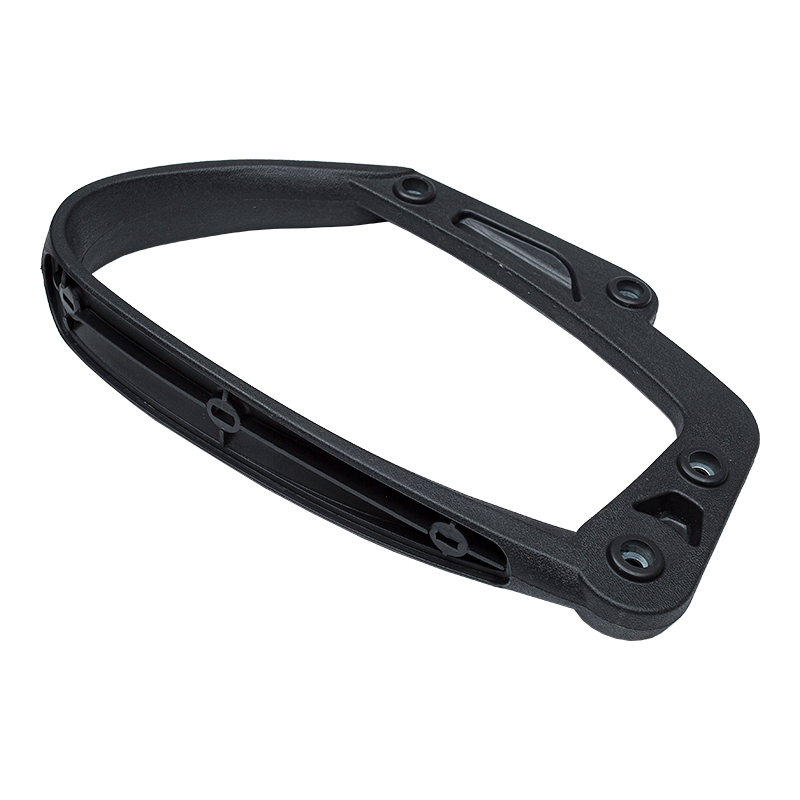 YX-002 Leather Armrest with PP Base and Imitation Leather CoverA lightweight padded armrest with a curved imitation leather surface, suited for corporate and training chairs where comfort and visual appeal are expected without adding extra adjustment complexity.View Product →
Fixed armrests are one-piece brackets, usually injection-molded polypropylene or nylon, bolted directly to the seat frame or backrest. With no moving parts and no cushion, they produce the most consistent assembly result and the shortest inspection time. The trade-off is posture mismatch: a user who cannot adjust the armrest must adapt to the chair, and not every sitter accepts that.
| Armrest type | Typical components | Primary field failure | Assembly effort |
| Fixed plastic bracket | 3 | Mounting stress cracks | Low |
| Padded fixed armrest | 6 | Foam flattening and cover wear | Medium |
| 2D adjustable | 9 | Lock release and rail wobble | High |
| 4D adjustable | 14 | Multi-axis play after wear | High |
Field failure data separates armrest designs faster than any marketing claim. Each architecture fails at a predictable point: adjustable armrests fail where motion occurs, padded armrests fail where touch occurs, and fixed armrests fail where stress concentrates.
Adjustable and padded armrests carry 8 to 14 parts. Field failures appear between 6 and 24 months as locks slip, rails develop play, foam flattens, and covers peel. These designs require 3 to 5 dimensional inspections per mechanism and a full-chair test before shipment.
Fixed armrests carry 2 to 4 parts and can be tested as a single component. Field failures cluster at the mounting boss, usually from over-torqued screws or recycled material with inconsistent flow. One mounting plane is enough to verify the part.
Typical component count per armrest assembly
Component counts are typical for one armrest assembly based on production BOM analysis and vary with mechanism design.
Adjustable mechanisms that connect to the backrest recline add a shared pivot to the load path. A two-point linkage bracket must be cycle-tested in the assembled backrest, not as a standalone component.
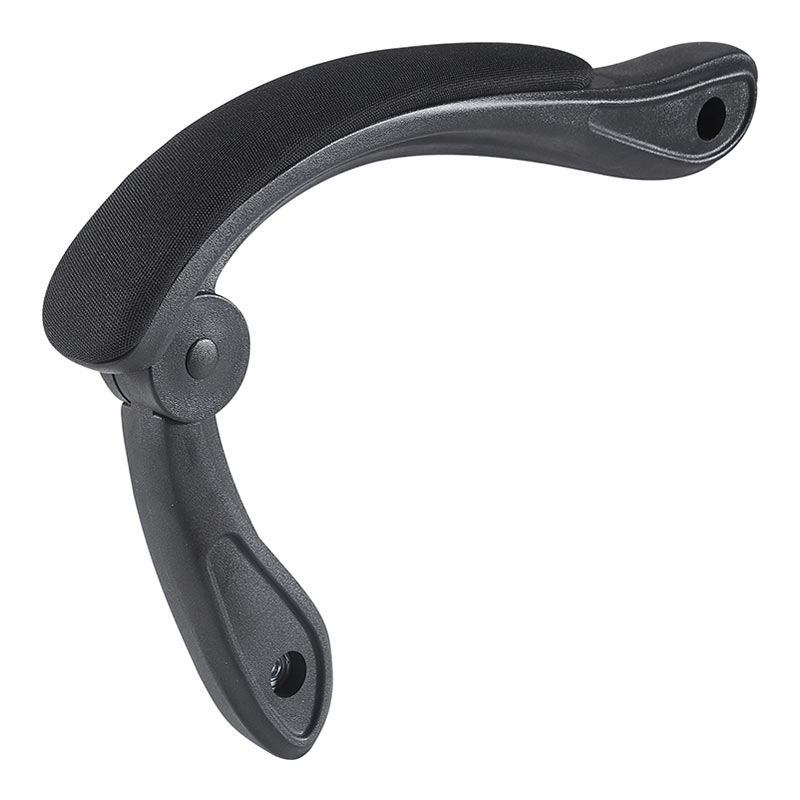 YX-073PP Two-Point Linkage Reclining Plastic Armrest BracketThis PP armrest bracket uses a two-point linkage to recline up to 150 degrees, synchronizing left and right sides. It suits gaming and mesh chairs needing stable support during lean-back postures.View Product →
The end user determines the armrest specification; the price gap between armrest types is small compared with the cost of a dissatisfied customer. Call-center chairs, corporate desks, home offices, and gaming seats need different defaults.
Call centers and shared workstations see the heaviest leaning and the widest range of body sizes, so a durable fixed or 2D adjustable armrest is the rational choice. Corporate chairs assigned to a single user benefit from 3D or 4D adjustability, provided the mechanism passes the cycle test. Home and gaming users want padded leather looks plus adjustability, but they rarely change settings after the first month, so surface quality matters more than mechanism range.
| Segment | Recommended type | Key priority | Budget direction |
| Call center | Fixed or 2D adjustable | Cover durability | Mid |
| Corporate office | 3D or 4D adjustable | Mechanism cycle life | Higher |
| Home task chair | Padded adjustable | Foam density and cover | Mid |
| Gaming and executive | Padded 4D | Comfort and recline linkage | Higher |
For fixed-armrest programs, load distribution is the key detail. A four-point style bracket spreads the load across four fixing positions instead of two, reducing stress per mounting point and raising the safety factor for high-lean tasks.
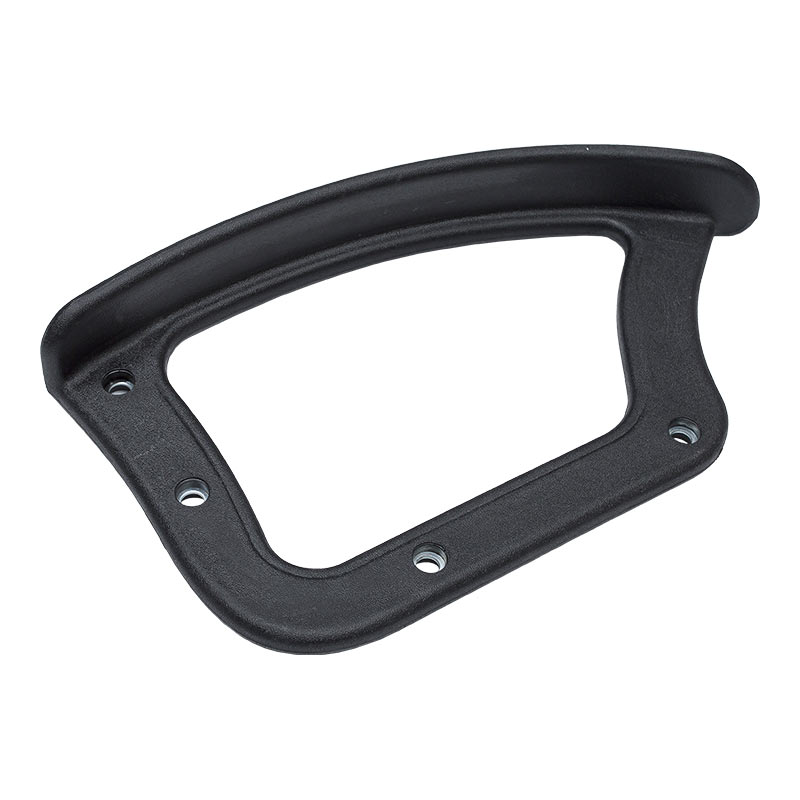 818 Four-Point Style Plastic Armrest Bracket with Leather TextureA cost-effective fixed armrest bracket with a four-point mounting design that distributes load across multiple points, enhancing stability. Its leather-textured surface suits home and office seating applications.View Product →
Every meaningful armrest specification can be written as a pass/fail test, and an RFQ should contain at least six of them. A product photo confirms the shape; only test data confirms the structure, materials, and process that the photo hides.
Duty cycle test
A duty cycle test runs the adjuster from one extreme to another under a defined load, typically 10,000 to 50,000 repetitions. A quality mechanism keeps consistent clamping force beyond 30,000 cycles. A weak mechanism starts to slip before 8,000. This single number predicts most of the warranty cost you will carry.
The opening scenario happened because a bracket substitution was never re-tested. A specification sheet prevents that: when a supplier changes a four-point bracket to a two-point version or replaces a pad material, the test report catches the change. Adjustable vs padded vs fixed armrests is ultimately a documentation challenge as much as a design challenge.
Fixed armrests have the lowest acquisition cost and the lowest failure rate, but they carry a hidden cost when users need posture variation. For shared multi-shift workstations, fixed wins. For single-user corporate seating, a 2D or 3D adjustable armrest with a tested mechanism usually delivers lower per-seat cost over three years.
Yes, if the mounting hole pattern is compatible and the seat frame can handle the extra lateral load. The practical limits are the backrest bracket geometry and the clearance under the seat. A supplier like Lubote will ask for a bracket compatibility check before quoting a conversion.
Specify high-density, low-VOC PU foam between 30 and 45 kg/m3. Below this range, the pad flattens in under a year. Above it, the pad feels hard and material cost rises for no comfort gain. For daily multi-shift use, the foam should also pass a 50,000-cycle compression set test.
Leather armrests last longer in perceived quality, not structural strength. A PU-leather-wrapped pad resists abrasion and feels better than bare plastic, but the structure underneath is still a plastic bracket. Buy the bracket on its structural test data first, then judge the cover material against the use environment.
Recommended Products

Call Us
+86 0572-5911661

Need Support

Head Office
ADD:Baishuiwan Industrial Park, Anji County, Zhejiang Province
Copyright © 2025Zhejiang Lubote Plastic Technology Co. , Ltd.
All Rights Reserved.Custom Chair Replacement Accessories Factory

