

 En
En
 Español
Call Us
+86 0572-5911661

2026-04-29
Content
Removing office chair wheels is a straightforward task that takes under ten minutes and requires no specialist tools in most cases. The process differs slightly depending on whether the casters use a grip-ring stem (the most common type) or a threaded stem, but the core approach is the same: tilt the chair onto its side, access the caster stem where it meets the base socket, and pull or unscrew it free.
Grip-ring stem casters account for approximately 90% of standard office chairs sold globally. They are identified by a smooth, cylindrical metal or plastic stem with a spring-loaded ring that clips into the base socket.
Threaded stem casters are more common on heavy-duty or industrial chairs. The stem screws directly into a threaded insert in the base leg.
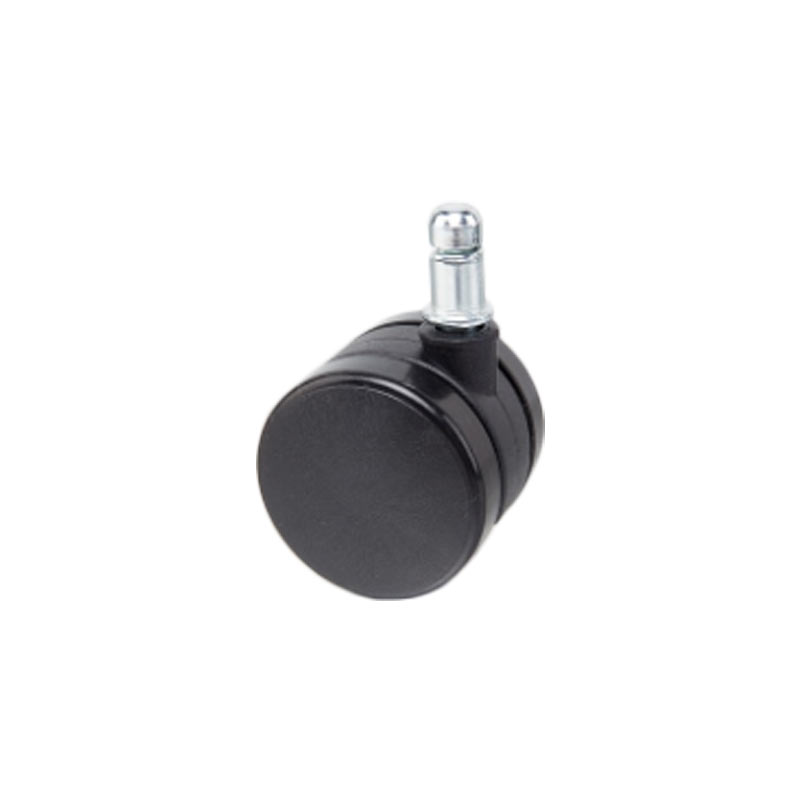
Before purchasing replacement casters, it is essential to match three specifications to the original: stem type and diameter, wheel diameter, and floor surface compatibility. Installing the wrong stem size results in a loose or non-fitting connection; choosing the wrong wheel material damages floors or reduces mobility.
The vast majority of office chairs use a 7/16 inch (11 mm) diameter grip-ring stem, which is considered the near-universal standard for residential and commercial task chairs. However, European chairs and some heavy-duty models use a 10 mm or 12 mm stem. Before ordering replacements, measure the stem diameter of one removed caster with a caliper or vernier gauge. Attempting to press an oversized stem into a base socket will crack the plastic leg; an undersized stem will not lock securely and will pull free under load.
| Wheel Material | Best Floor Surface | Notes |
|---|---|---|
| Hard nylon (standard) | Carpet | Rolls easily on carpet; scratches hard floors over time |
| Polyurethane (PU) | Hardwood, tile, laminate, vinyl | Soft compound; will not scratch or dent hard surfaces |
| Rubber-coated | Mixed or hard floors | Good grip; reduced rolling speed |
| Steel | Industrial / concrete | High load capacity; not suitable for finished floors |
| Dual-wheel (rollerblade style) | Hard floors and carpet | PU outer; smooth on all surfaces; popular upgrade |
Polyurethane rollerblade-style casters are the most versatile replacement upgrade for home office environments where the chair moves between carpet, hardwood, or tile. They also reduce rolling resistance compared to standard nylon casters, which lessens the strain on castors and the chair base over time.
Installation of grip-ring stem replacements is the reverse of removal. Align the stem with the base socket opening and push firmly until the grip ring clicks into place. A correctly seated caster will not pull free with hand pressure and will pivot and roll smoothly with no side-play. If a caster feels loose after installation, the stem diameter may be undersized for the socket — do not use the chair until a correctly sized replacement is fitted, as an unsecured caster under full body weight can cause the chair to collapse suddenly.
There are several reasons to lock or immobilize office chair wheels: preventing the chair from rolling on sloped floors, providing a stable platform for tasks requiring precision or sustained pressure, or meeting workplace safety requirements in certain environments.
The most reliable locking solution is replacing standard casters with locking casters — also called brake casters — which incorporate a foot-operated lever that engages a brake pad against the wheel. When the lever is pressed down, the wheel is locked and cannot rotate or swivel. Pressing it up releases the brake. Locking casters are available in the same stem sizes as standard casters and install identically. They are widely used in medical, laboratory, and industrial seating where chair movement during procedures poses a hazard.
For a non-permanent solution that does not require replacing the casters, caster cups (also called chair cups or castor cups) are placed under each wheel. The cups cradle the wheel in a recessed socket, preventing it from rolling while the cup itself sits flat on the floor. They are available in hard plastic for carpets and rubber-lined versions for hard floors. Caster cups require no tools or modifications and can be repositioned instantly — making them a practical choice for rental offices or shared workspaces.
On hard floors, a chair mat with a textured or studded underside grips the floor surface and significantly increases rolling resistance without fully locking the wheels. This does not immobilize the chair completely but substantially reduces unintended movement — particularly useful on polished concrete or tiled floors with a slight grade.
If permanent immobility is the goal, casters can be replaced entirely with fixed floor glides — plastic or rubber feet that fit into the same base sockets as caster stems. The chair becomes stationary, functioning more like a stool. Glides are available with felt pads for hard floors and rubber bases for carpet. This is a common modification for standing-desk stools and drafting chairs where mobility is not required.
Not every rolling problem requires full caster replacement. Understanding the failure mode helps determine the most cost-effective fix.
A complete set of five replacement casters typically costs between $15 and $50 depending on material and load rating, making replacement far more economical than purchasing a new chair base. Most standard office chairs have a caster load rating of 100–150 kg per set; heavy-duty replacements rated to 200 kg or more are available for bariatric or industrial applications and use the same grip-ring stem standard.
Recommended Products

Call Us
+86 0572-5911661

Need Support

Head Office
ADD:Baishuiwan Industrial Park, Anji County, Zhejiang Province
Copyright © 2025Zhejiang Lubote Plastic Technology Co. , Ltd.
All Rights Reserved.Custom Chair Replacement Accessories Factory

