Why Knowing Chair Part Names Matters
Whether you are repairing a broken component, ordering a replacement part, or communicating with a furniture manufacturer, knowing the correct names for chair parts eliminates ambiguity and saves time. A "seat cushion" and a "seat pan" are different components; a "gas cylinder" and a "chair base" serve different functions. Precise terminology applies across chair types — office chairs, dining chairs, recliners, and bar stools share many structural components by name even when their designs differ significantly.
The seat is the primary load-bearing surface and consists of several distinct parts:
- Seat pan (seat shell): The structural base of the seat — typically moulded plastic, plywood, or formed steel — that supports the cushioning and upholstery above it. When a seat cushion is removed, the seat pan is what remains.
- Seat cushion (seat pad): The foam, fibre, or spring-supported upholstered layer on top of the seat pan that provides comfort. In dining chairs this is often a single removable pad; in office chairs the foam is typically bonded to the seat pan and covered in fabric or mesh.
- Seat foam: The internal padding material, most commonly polyurethane foam rated by density (kg/m³) and ILD (Indentation Load Deflection, a measure of firmness). Higher-density foam — above 45 kg/m³ — resists compression fatigue significantly longer than economy-grade foam in sustained daily use.
- Seat upholstery (seat cover): The fabric, leather, vinyl, or mesh covering that wraps the seat cushion. Attached by staples, clips, or a slip-on cover depending on the chair design.
- Waterfall edge: A design feature where the front edge of the seat curves downward rather than ending in a hard right angle. Reduces pressure behind the knees during extended sitting and is a named specification in ergonomic office chairs.
The Backrest Assembly
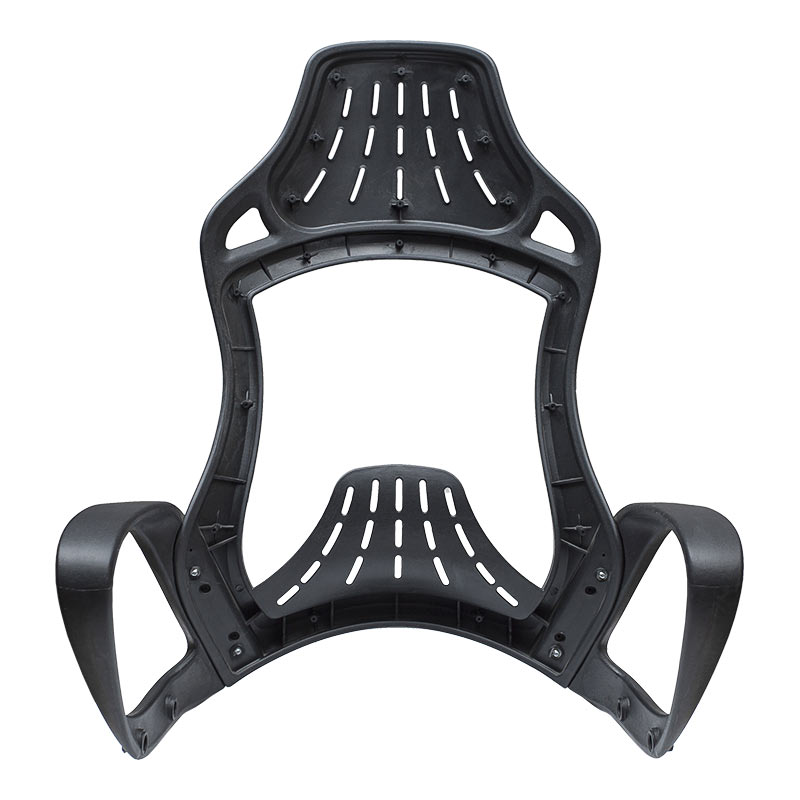
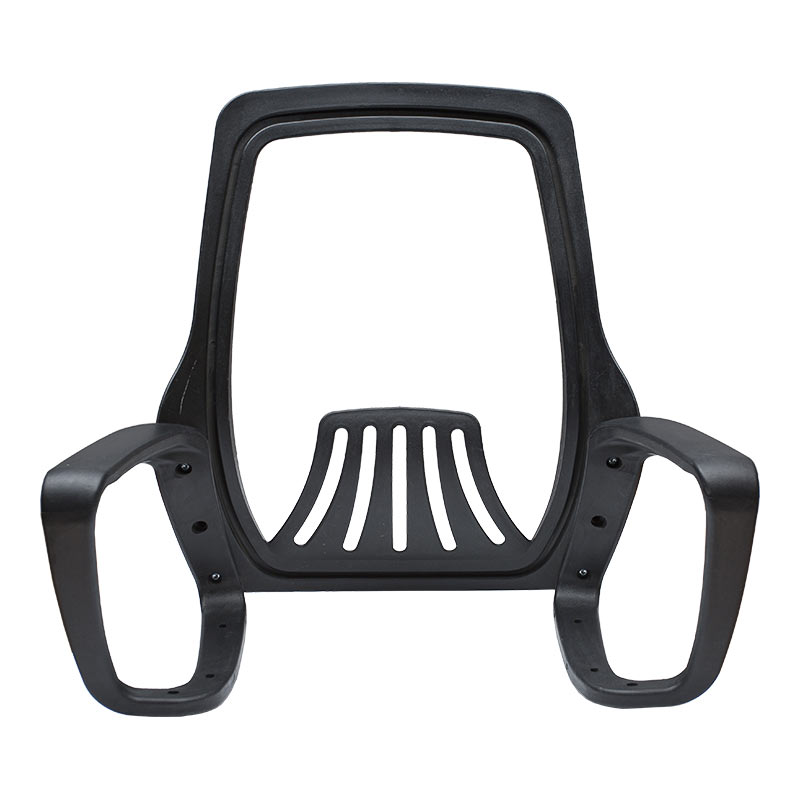
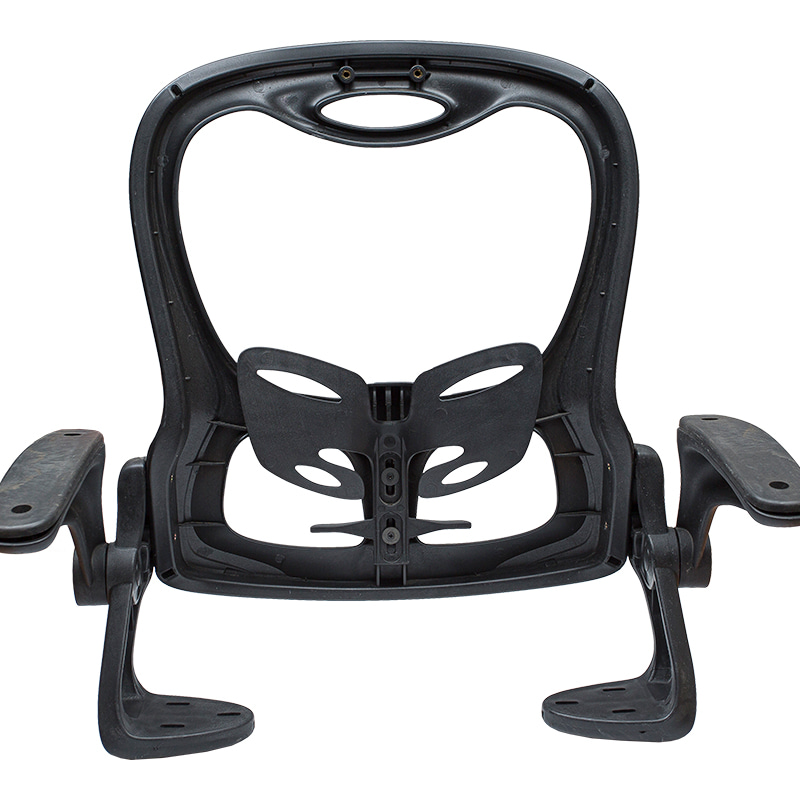
- Backrest (back panel): The vertical surface that supports the sitter's back. In upholstered chairs this is a padded panel; in office chairs it is often a mesh-stretched frame or moulded plastic shell.
- Lumbar support: A contoured protrusion or adjustable pad in the lower portion of the backrest that supports the lumbar curve of the spine. In premium ergonomic chairs, lumbar support is independently height- and depth-adjustable.
- Headrest (neck rest): An extension above the main backrest that supports the head and neck. Common in high-back executive chairs and increasingly standard in ergonomic task chairs. May be fixed or adjustable in height and angle.
- Back upholstery: The covering material on the rear-facing surface of the backrest. On many chairs the rear face uses a different, less expensive material than the front since it is not in contact with the user.
- Back frame: The internal structural skeleton of the backrest — typically steel rod, aluminium extrusion, or moulded plastic — to which upholstery or mesh is attached. Visible on wire-frame and exposed-frame chair designs.
Armrests and Their Components
- Armrest (arm): The horizontal surface on which the user rests their forearm. May be fixed or adjustable. Described by their adjustment axes: height-adjustable (1D), height and width-adjustable (2D), height, width and pivot-adjustable (3D), or height, width, pivot and depth-adjustable (4D).
- Arm pad (armrest pad): The cushioned or padded top surface of the armrest that contacts the forearm. Often replaceable as a separate part; common materials include PU foam, PVC, gel, and fabric.
- Arm bracket (arm support): The structural bracket connecting the armrest to the seat pan or chair mechanism below. Usually steel or reinforced nylon.
- Flip-up arm: An armrest designed to fold upward out of the way, typically specified in chairs used in healthcare, education, and training room environments where access from the side is frequently required.
The Chair Mechanism and Height Adjustment
In office and task chairs, the interface between seat and base contains the adjustment and movement mechanisms that distinguish an ergonomic chair from a static one:
- Chair mechanism (tilt mechanism, control mechanism): The metal plate assembly mounted beneath the seat pan that controls tilt, recline, and rocking functions. The mechanism housing contains the tension spring, lock, and pivot points. Common types include single-lever, multi-function, synchronised tilt (where the seat and backrest tilt in a defined ratio), and free-float mechanisms.
- Gas cylinder (pneumatic cylinder, gas lift): The spring-loaded nitrogen-filled cylinder connecting the mechanism to the chair base that provides height adjustment. Pressing the seat height lever releases the valve; body weight compresses the cylinder to lower the seat, and removing body weight allows the nitrogen pressure to raise it. Standard cylinders provide a 100–150 mm height adjustment range; tall cylinders extend this to 200 mm or more.
- Tension knob (tilt tension adjuster): A knob, usually located under the seat front, that adjusts the spring resistance of the tilt mechanism — allowing heavier or lighter users to set the recline effort to their preference.
- Tilt lock lever: Locks the backrest in the upright or a chosen reclined position. Releasing the lock allows free rocking or recline.
The Base, Legs, and Caster Assembly
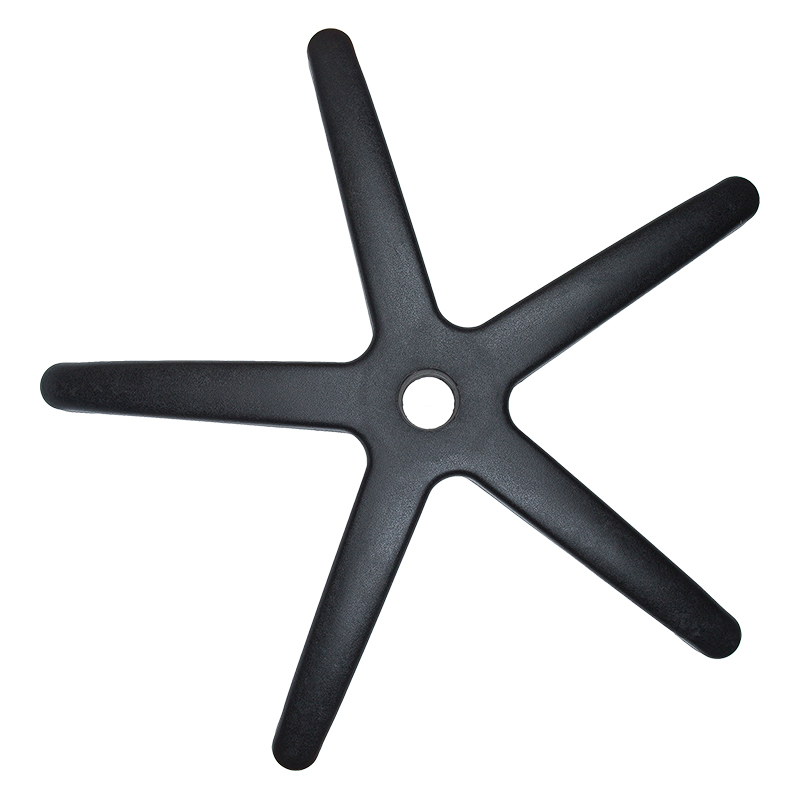
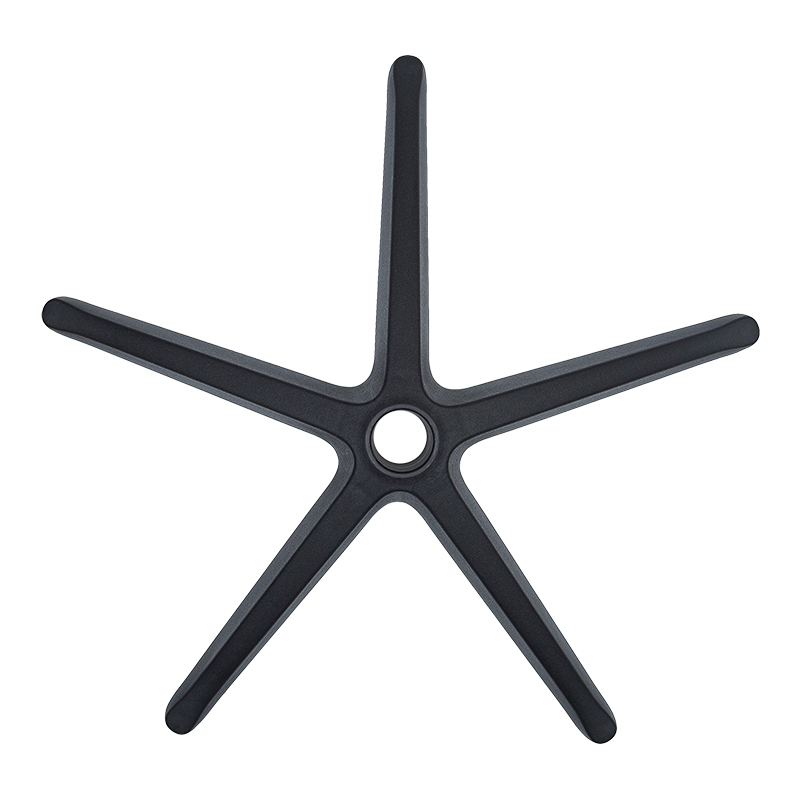
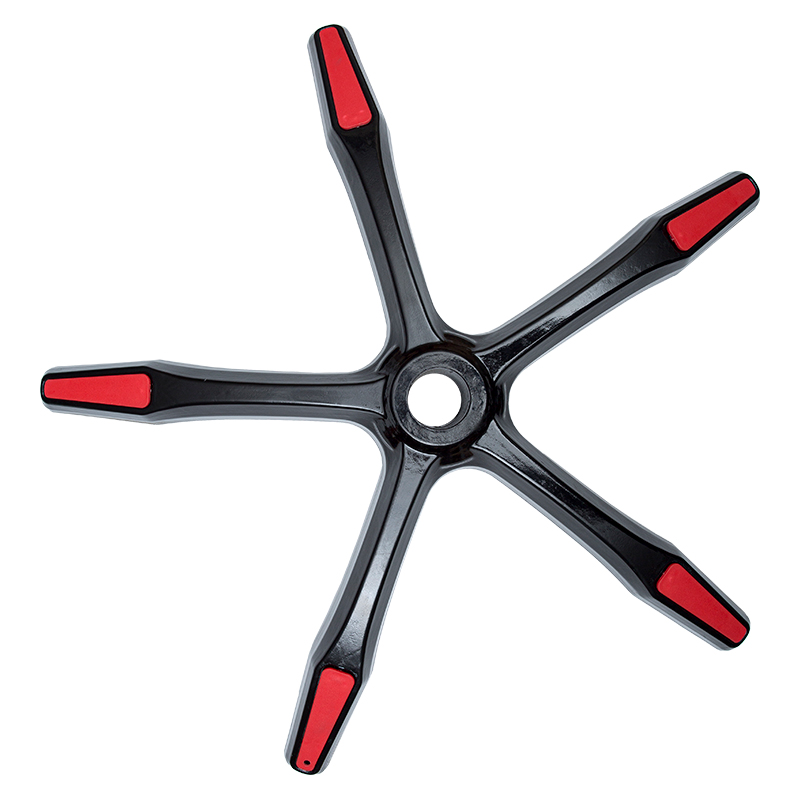
- Chair base (star base, five-star base): The radial support structure at the bottom of an office chair, typically with five arms extending from a central hub. A five-point base is the industry standard for stability — four-point bases are inherently less stable and are rarely used in professional seating. Bases are made from nylon (glass-filled for strength), aluminium alloy, or steel.
- Base arm (base leg, base ray): Each individual arm radiating from the centre hub of the star base. The number and length of base arms determines the footprint and tipping resistance of the chair.
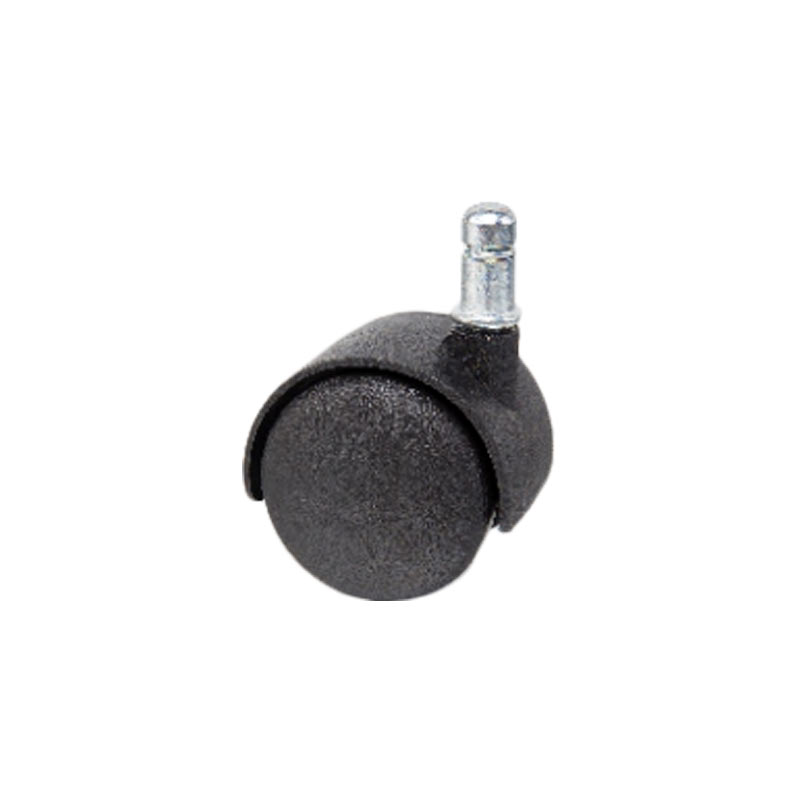
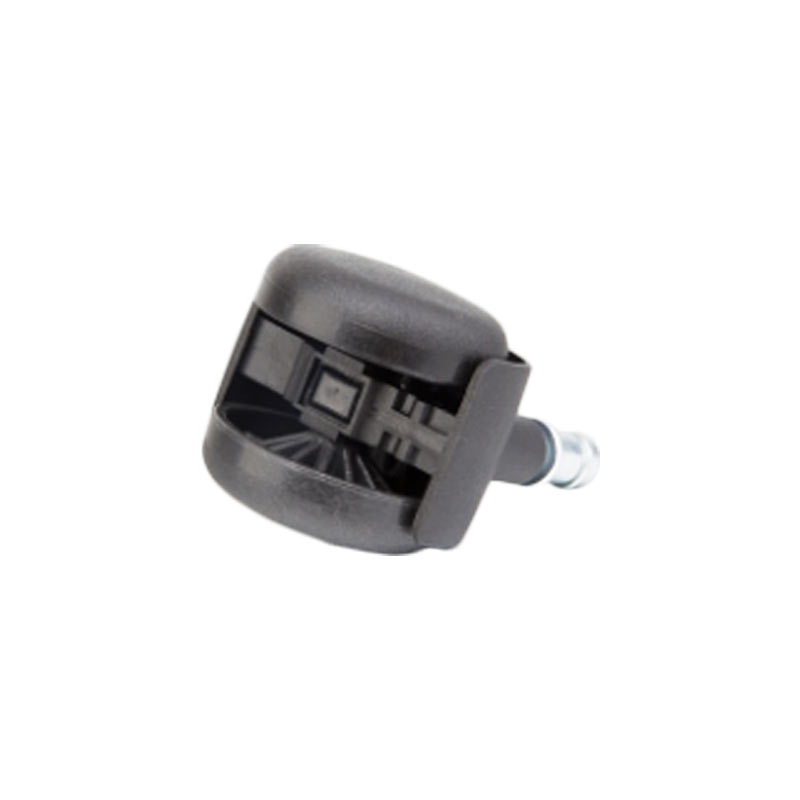
- Caster (castor, office chair wheel): The wheeled assembly at the tip of each base arm that allows the chair to roll. Each caster consists of a wheel (or twin wheels), a housing, a stem, and a swivel bearing that allows 360° rotation. Caster wheel materials include nylon (hard, for carpeted floors), polyurethane (soft, for hard floors), and rubber.
- Caster stem (caster post, caster pin): The vertical pin on the caster that inserts into the socket in the base arm to secure the caster. The most common type is the grip ring stem (also called a friction stem) — a plain cylindrical pin with a spring-clip ring that locks it in the socket. Stem diameter and length must match the base socket; the most common size is 11 mm diameter × 22 mm length (also called 7/16 in stem).
- Glide (foot glide, chair foot): A non-rolling plastic or rubber cap that fits the base arm socket in place of a caster. Used on hard floors where rolling is not desired, or on chairs intended for fixed placement.
Dining and Side Chair Part Names
Non-rolling chairs share many seat and backrest terms with office chairs but have their own structural vocabulary for the leg assembly:
- Front legs / rear legs: The vertical structural members supporting the seat at front and back. On traditional wooden chairs, rear legs typically extend upward to form the back stiles.
- Stile (back post, back upright): The vertical side members of the backrest frame. On a ladder-back or Windsor chair, the stiles are the two vertical posts that define the sides of the back.
- Rail (cross rail, stretcher): Horizontal members connecting the legs to provide structural rigidity. A seat rail connects the legs just below the seat level; a back rail is the horizontal member spanning the stiles. Stretchers are lower-level horizontal braces between legs.
- Splat: The central vertical decorative and structural panel in the middle of a chair backrest — characteristic of traditional and Queen Anne style chairs. Shaped and carved splats are a primary identifier of antique chair styles.
- Apron (seat apron, skirt): The horizontal panel running around the perimeter of the seat frame between the tops of the legs, concealing the seat construction and providing structural rigidity to the leg-to-seat joint.
- Foot cap (leg cap, foot glide): A plastic, rubber, or felt cap fitted to the base of each leg to protect the floor surface and prevent leg splitting on hard floors.


 En
En
 Español