

 En
En
 Español
Call Us
+86 0572-5911661
 Home / News / Industry news / The Ultimate Guide to Chair Base Selection: Materials, Types, and Compatibility
2026-02-04
Selecting the right chair base is a critical yet often overlooked aspect of office, home, and commercial seating. It forms the literal foundation of a chair, impacting its stability, durability, aesthetics, and overall user experience. This comprehensive guide delves into the intricacies of chair bases, providing the detailed information needed to make an informed decision. As a leading innovator in the field, Zhejiang Lubote Plastic Technology Co., Ltd. combines advanced manufacturing with deep material science expertise to produce high-performance bases that meet diverse needs.
Content
More than just a stand, the chair base is a pivotal component that distributes weight, enables mobility, and ensures safety. A poorly chosen base can lead to premature chair failure, safety hazards, and discomfort. Key functions include:
The choice between nylon and metal is fundamental, with each offering distinct advantages. The decision hinges on the specific application environment and performance requirements.
While metal bases are traditionally associated with brute strength, modern engineering-grade nylon offers remarkable resilience. For instance, high-quality nylon bases are exceptionally resistant to corrosion from spills or humidity, a common issue with some metals. They also operate more quietly and don't scratch floors as easily. A comparison is best illustrated in the table below.
| Feature | Nylon Base | Metal Base |
| Corrosion Resistance | Excellent; impervious to rust and most chemicals. | Varies; steel may rust without coating, aluminum is better. |
| Weight | Lighter, making chairs easier to move. | Heavier, which can add to perceived stability. |
| Floor Protection | Generally softer, less likely to scratch or dent floors. | Harder; requires protective caps to prevent floor damage. |
| Noise Level | Quieter operation, especially with casters. | Can be noisier, particularly if finishes wear off. |
| Impact Strength | High; can flex under impact and return to shape, resisting cracks. | High, but may dent or bend permanently under extreme force. |
Zhejiang Lubote Plastic Technology Co., Ltd. specializes in advanced nylon formulations, creating bases that rival and often surpass metal in rigorous durability tests for many applications.
Protecting expensive hardwood flooring is a top priority. The right chair base and caster combination is essential.
Replacing a cracked or worn chair base can extend your chair's life at a fraction of the cost of a new one. Follow this general guide:
For big and tall users or demanding environments like laboratories and workshops, a heavy duty chair base is non-negotiable. Key features include:
Manufacturers like Lubote design their heavy-duty components with these precise engineering principles in mind, ensuring safety and longevity.
An ergonomic chair's effectiveness can be undermined by an incompatible base. Compatibility affects tilt, swivel, and stability.
When sourcing components, it's vital to ensure all parts—from the chair base and gas lift to the mechanism—are designed to work as a cohesive system.
Modern chair bases are marvels of material engineering. The industry has moved far beyond simple plastic or metal.
High-performance nylon, such as PA6 or PA66 with glass fiber reinforcement, is a premier choice. Its properties include:
Choosing the right type is as important as choosing the material.
The most common type for task and office chairs. Five prongs offer optimal stability, while four prongs are sometimes used for cost-saving or specific designs.
Common on side chairs, dining chairs, and fixed-height stools. Provides excellent stability without swivel or casters.
Often seen on bar stools and counter stools. Features a single, central column that attaches directly to the seat.
Founded in 2019, Zhejiang Lubote Plastic Technology Co., Ltd. exemplifies the modern approach to chair base manufacturing. Our process ensures top-tier quality:
This integrated approach allows Lubote to deliver reliable, innovative seating components to the global market.
Generally, no. The mounting mechanism for the gas lift cylinder and the chair's control mechanism are designed for a specific base configuration. Swapping a 4-prong for a 5-prong typically requires changing the entire chair mechanism, which is not feasible. Always replace with an identical or manufacturer-approved compatible model.
A standard office chair base is typically rated for 250 to 300 pounds (113 to 136 kg). For users or environments requiring more support, specifically rated heavy duty chair base options are available, with capacities ranging from 350 to 500+ pounds. Always check the manufacturer's specified weight capacity.
Absolutely. Modern engineering-grade nylon bases, especially those reinforced with materials like glass fiber, are exceptionally durable. They excel in commercial settings due to their resistance to corrosion, impact, and wear. When comparing nylon vs metal chair base durability in environments with spills or humidity, high-quality nylon often proves more resilient in the long term.
For carpet, you need casters designed to roll easily on a soft surface. Look for "carpet casters" or "dual-wheel casters" with a wide, soft tread. The base material itself is less critical for carpet protection, but a wider stance (larger diameter base) can help prevent the chair from sinking too deeply into plush carpet.
Signs you need a replacement include visible cracks or splits in the material (especially near the center hub or arm connections), a persistent wobble that isn't from the gas lift, broken caster stems, or if the chair feels unstable when tilting. Following an office chair base replacement guide can help you diagnose and fix the issue.
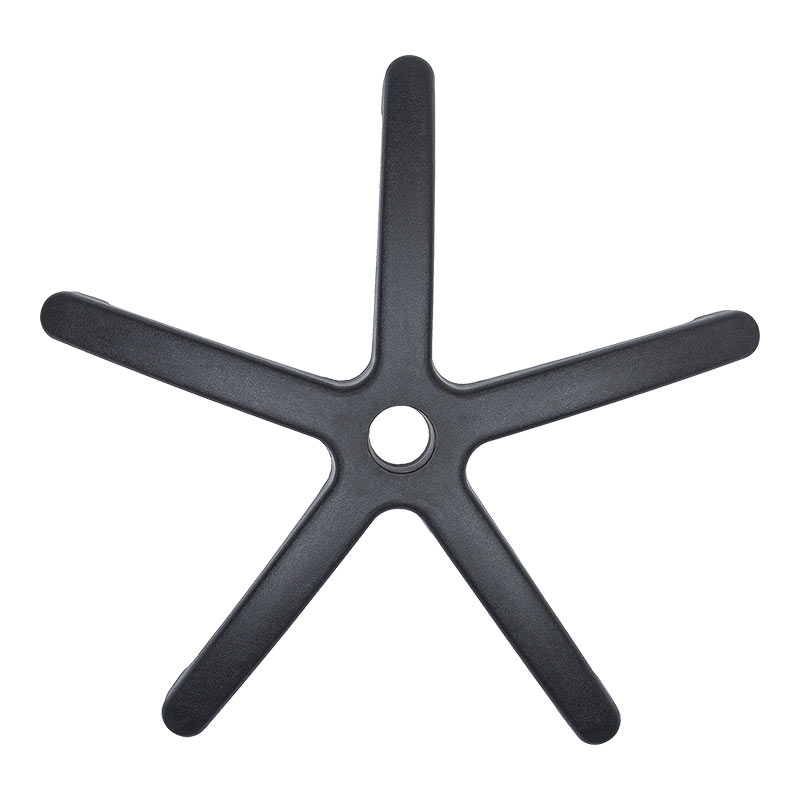
The chair base is a foundational component that demands careful consideration. From material science—whether evaluating nylon vs metal chair base durability—to practical concerns like how to choose a chair base for hardwood floors, each factor plays a role in performance and safety. Understanding ergonomic chair base compatibility factors ensures your chair functions as intended, while knowing heavy duty chair base weight capacity guarantees support. Whether you're undertaking an office chair base replacement guide or specifying for new production, partnering with a technologically advanced manufacturer like Zhejiang Lubote Plastic Technology Co., Ltd. ensures access to components where innovation, testing, and quality manufacturing converge to create the reliable foundation every good chair deserves.
[1] BIFMA International. (2018). *BIFMA X5.1 Standard for Office Chairs*. Section 7: Chair Base and Stability Tests. This standard outlines testing procedures and safety factors for chair base load capacity, noting that tested chairs must withstand loads significantly higher than their rated capacity.
[2] Ehrenstein, G. W. (2001). *Polymeric Materials: Structure, Properties, Applications*. Hanser Gardner Publications. This text provides a foundational understanding of polymer fatigue behavior, explaining how materials like reinforced nylon resist failure under cyclic loading, which is directly applicable to chair base design.

Call Us
+86 0572-5911661

Need Support

Head Office
ADD:Baishuiwan Industrial Park, Anji County, Zhejiang Province
Copyright © 2025Zhejiang Lubote Plastic Technology Co. , Ltd.
All Rights Reserved.Custom Chair Replacement Accessories Factory

